
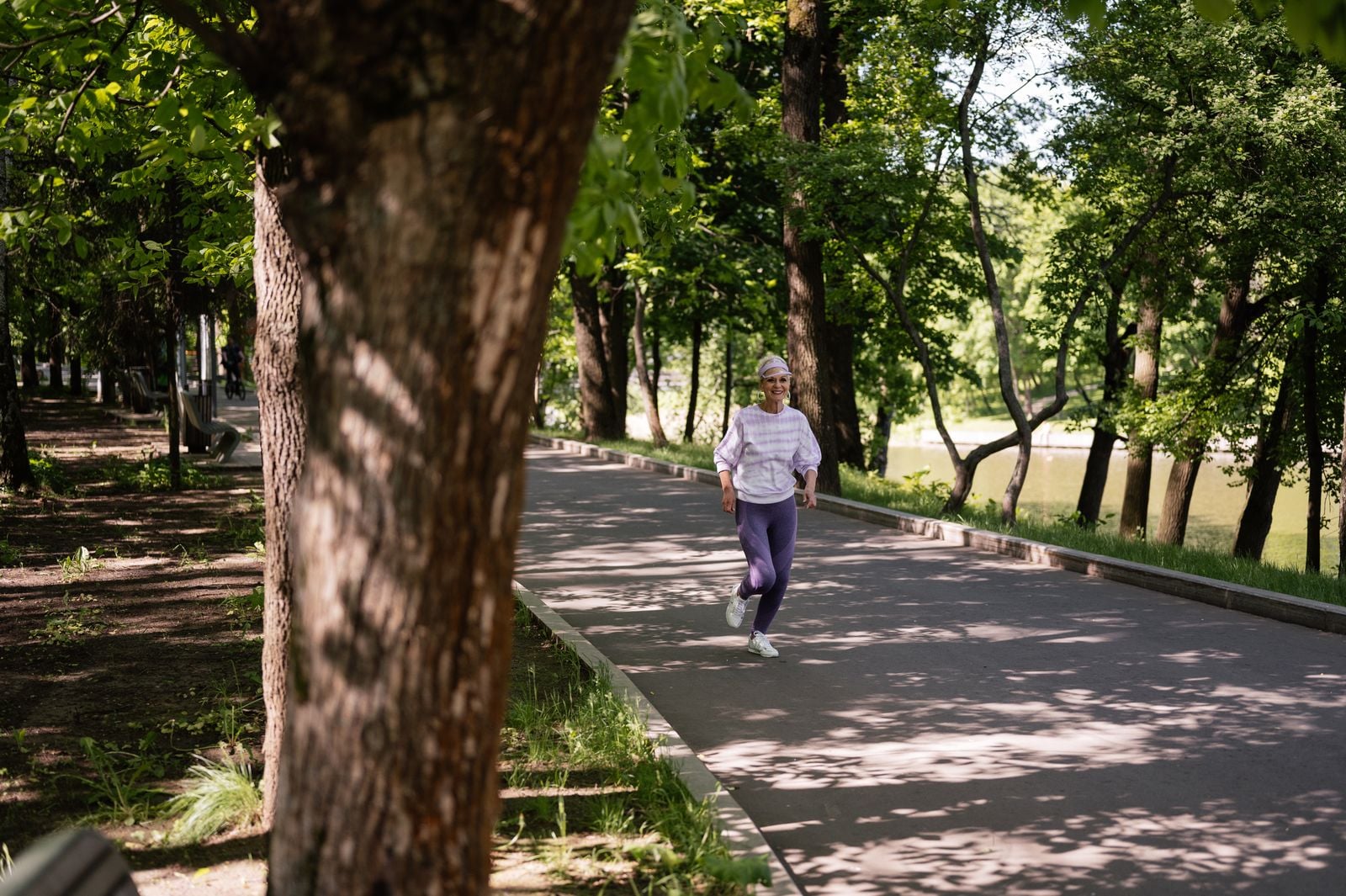
The idea that running slowly is good for you sounds like an excuse, which is part of why it is so easy to dismiss. Most of us learned that a run only counts if it leaves you wrecked. So it is worth slowing down over the claim that easy, unglamorous running might be the most useful kind, especially for a parent trying to stay active in the cracks of a full week.
We are parents and writers, not doctors, physiologists, or coaches. What follows is a careful reading of the research, not medical or fitness advice.
The short version is that two very different bodies of evidence, one from ordinary people and one from elite athletes, point the same way: a lot of the benefit of running shows up at a pace far gentler than most people push themselves to.
The Artful Age
A weekly letter on aging well, family across generations, and the creative life after the kids leave home.
What the Danish study found
The most cited piece of evidence here comes from the Copenhagen City Heart Study. In a 2015 paper in the Journal of the American College of Cardiology, Peter Schnohr and colleagues followed about 1,100 healthy joggers and nearly 4,000 non-joggers for around twelve years, tracking not just whether people ran but how much, how often, and how fast. You can read the study summary on PubMed.
The group with the lowest death rate over those years was not the hardest runners. It was the light joggers: people who ran at a slow to moderate pace, for something like one to two and a half hours a week, spread over no more than three sessions. Compared with people who did not jog at all, that light group had markedly lower all-cause mortality across the study.
Two cautions matter a great deal here. This is one observational study, not settled consensus, and observational work can show a link without proving the running caused it. People who jog gently a few times a week may differ from sedentary people in many other ways. The study also drew attention for suggesting the most strenuous joggers did no better than the sedentary, but that strenuous group was very small, only a handful of people, so that particular claim is statistically shaky and should not be leaned on. The reliable takeaway is narrower and calmer: a light, slow jogging habit was linked to good long-term outcomes, and there is no evidence here that you need to run hard to benefit.
Why elite runners go slow on purpose
The second line of evidence comes from the opposite end of the ability range. The sport scientist Stephen Seiler spent years measuring how the best endurance athletes in the world actually distribute their training, across running, cycling, rowing, and cross-country skiing. The pattern he described has become known as polarized, or 80/20, training: roughly 80 percent of sessions done at an easy, conversational intensity, and only about 20 percent done hard.
The easy pace is genuinely easy. It is the pace at which you could hold a conversation in full sentences. Elite runners are not going slow because they are tired or lazy. They go slow deliberately, most of the time, because that is what builds the aerobic base that lets them race fast on the days they push. A 2024 systematic review of polarized training, available through the National Library of Medicine, found this distribution compared favorably with training that spends more time in the moderate, always-a-bit-hard zone.
The people with the most reason to train hard, in other words, spend most of their time not doing it.
What slow running actually does
The mechanisms behind this are reasonably well understood, even if any single study is only a piece of the picture. Easy-paced aerobic running develops the parts of your fitness that respond to time on your feet rather than to suffering: your heart’s capacity, the small blood vessels feeding your muscles, and the muscles’ ability to use fat for fuel. Those adaptations come from volume and consistency, and slow running lets you accumulate both without wrecking yourself.
There is also the plain matter of staying uninjured. Running hard all the time raises the load on tissues that need time to adapt, and injury is the main reason people stop running altogether. A slower pace is easier to recover from, which means you can do it more often and keep doing it for years. For a parent, that sustainability is not a small side benefit. It is close to the whole point. A gentle run you will actually repeat next week beats a punishing one that leaves you sore, discouraged, and done.
Slow running is also just more compatible with a life full of other people. You can do it pushing a stroller, or beside a kid on a bike, or early before the house wakes up, without needing to steel yourself for something grim.
What this does not prove
None of this means hard running is bad, or that intensity has no place. It means the case for easy running is stronger than its dull reputation suggests, and that you do not have to hurt to get most of the benefit. The research points at a pattern, not a prescription, and what suits any particular body varies.
If you are starting to run, coming back after time off, pregnant, or living with a heart, joint, or other health condition, the sensible move is to talk with your doctor before you change what you are doing. An article is not the right tool for that decision.
What we find quietly appealing about all this, on a site mostly about making things with children, is how familiar the shape of it is. The lasting version of almost anything worth doing tends to be the one that does not require heroics. Kids notice how the adults around them treat their own bodies, and a parent who moves regularly and without drama models something steadier than a parent who periodically punishes themselves into fitness and then quits. You can go slow, most of the time, and still be going years from now.