

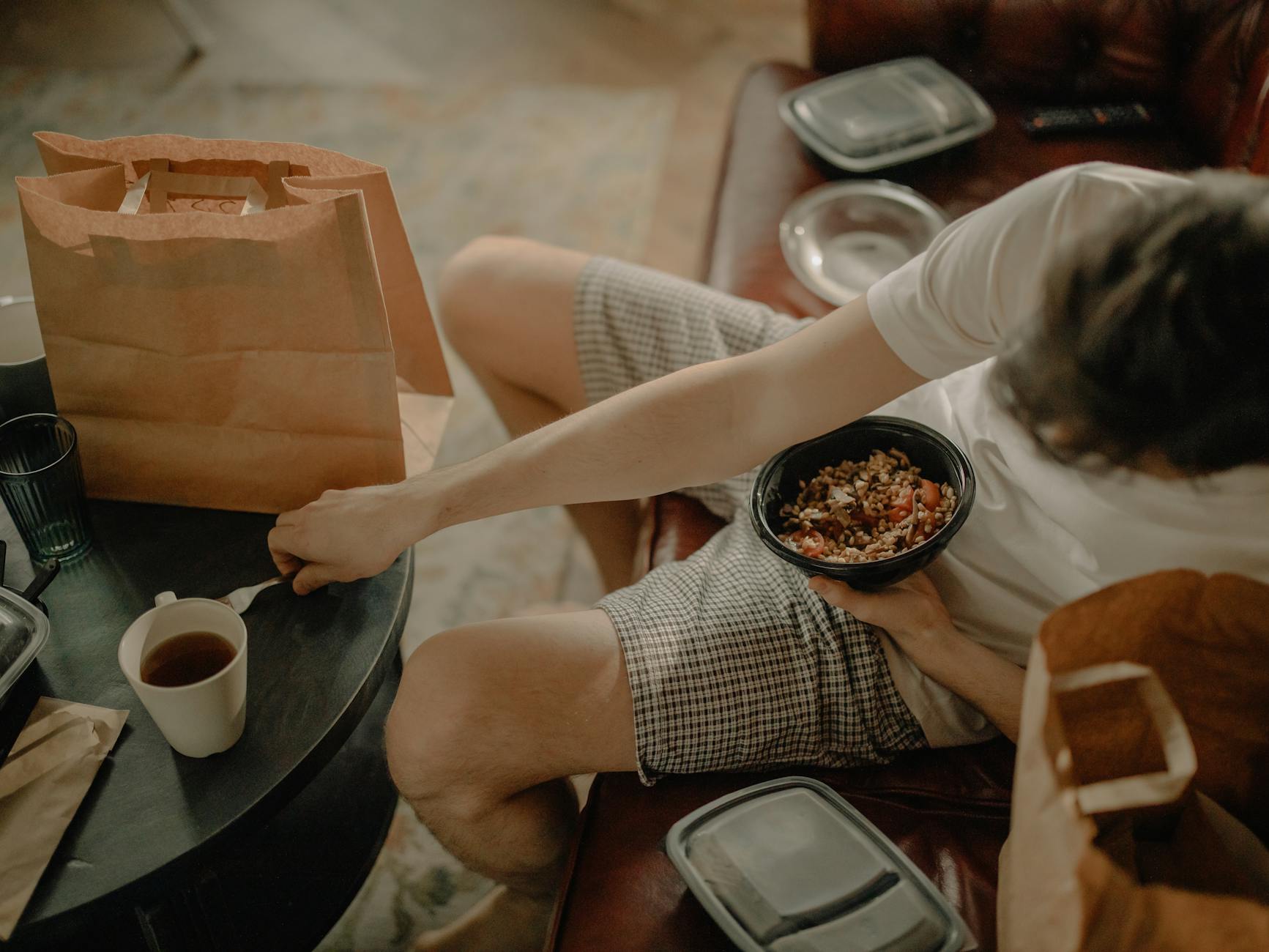
My mother, Margaret, ate reheated soup from a ceramic bowl with a chipped rim every night for the last year of her life, and she never once mentioned it. I found out after she died, when I was cleaning her kitchen and noticed the single placemat on a table built for six, the one bowl rinsed and drying in the rack, the stack of condensed soup cans lined up in the pantry like soldiers waiting for orders. She had four children. She had eleven grandchildren. She had hosted Christmas dinner for twenty-seven consecutive years. And she had been eating alone, night after night, in a house full of photographs of people who loved her but never thought to call and ask what she’d had for dinner.
I keep thinking about that bowl.
The Architecture of Being Indispensable
My mother built her entire identity around being the person everyone needed. She was the one who remembered birthdays, who called when someone was sick, who kept the freezer stocked with casseroles for whoever might show up. She coordinated holidays like a general coordinating troop movements. She knew everyone’s allergies, everyone’s schedule, everyone’s sore spots. She was the emotional switchboard for our entire extended family, routing calls, smoothing conflicts, making sure no one drifted too far from the center. And the center, always, was her kitchen.
When I was small, I thought this was just what mothers did. I thought it was biological, the way some women could hold forty schedules in their heads while simultaneously icing a three-layer cake. I thought the reason my mother knew that Uncle Ray couldn’t sit next to Aunt Diane, or that my cousin Marcus needed his green beans separate from everything else on the plate, was because mothers were simply wired for this kind of encyclopedic emotional management.
It took me years (and therapy, and my own stumbling attempts at parenting Ellie and Milo) to understand that my mother wasn’t wired for it. She had built herself for it. She had constructed an identity so thoroughly fused with being needed that when the needing stopped, she didn’t know who she was anymore.
Studies suggest this transition is an ongoing process rather than a single moment, a gradual unraveling of purpose that begins long before the last child physically leaves. My mother’s version of this unraveling was silent and slow. She didn’t announce it. She didn’t complain. She just quietly transitioned from feeding twelve to feeding one, and none of us noticed because we had been trained, by her, to believe she was fine. She was always fine. Fine was her entire brand.
The Difference Nobody Taught Us
Here’s what I’ve been sitting with since finding that bowl: my mother was needed for decades. Needed to cook, to organize, to remember, to smooth over, to show up, to hold everything together. And she mistook that needing for wanting. She assumed that because people relied on her, they also desired her company. That because they came to her table every December, they were choosing her.
But they were choosing the table. They were choosing the food, the tradition, the structure she provided. When she stopped providing it, nobody said, “Mom, we miss you.” They said, “So what are we doing for Christmas this year?” Stepping back from hosting can reveal how invisible the labor was to the people who benefited from it.
Being needed is transactional. Someone has a problem; you solve it. Someone is hungry; you feed them. Someone is lonely; you call. The relationship has a clear function, and your value within it is measurable. You can point to the casserole, the clean house, the coordinated holiday, and say: See? I matter.
Being wanted is something else entirely. Being wanted means someone seeks you out when they don’t need anything. They call not because they’re in crisis but because they were thinking about you. They show up not because there’s a holiday on the calendar but because your presence, your actual self, adds something to their day that your absence would diminish.
My mother, I think, was rarely wanted in that way. And the cruel thing is that she helped create the conditions for that absence. She made herself so useful, so essential to the machinery of the family, that people forgot to want her. They forgot she was a person with preferences and humor and loneliness, because she had spent forty years presenting herself as a function.
How We Learn to Disappear Into Service
I’ve written before about how growing up in a house where we didn’t air our dirty laundry taught me to read everyone else’s emotions while going mute about my own. My mother grew up in a similar house, maybe worse. Her mother, my grandmother, didn’t have a dishwasher until 1978. She raised four kids. The emotional vocabulary in that house was: fine, tired, and grateful. That was the entire range.
So when my mother became the family’s central node, she wasn’t choosing it the way you’d choose a career. She was defaulting to the only model of female value she’d ever been shown: you matter because you serve. You are loved because you are useful. The moment you stop being useful, you’d better find a way to be useful again, fast, before anyone notices you’re just a person standing there with needs of your own.
My therapist has helped me see how I absorbed this same template. When Matt and I first had Ellie, I threw myself into parenting with an intensity that looked like devotion but was closer to panic. I meal-prepped obsessively. I tracked developmental milestones with the focus of someone preparing for an audit. I made sure the house was organized, the co-op schedule was coordinated, the pediatrician appointments were booked months in advance. And if you had asked me why, I would have said: “Because someone has to.”
But the truth underneath that sentence was: Because if I’m not the one holding this together, what am I?

The generation now aging into quiet houses was taught that their worth lived in their output. They cooked, cleaned, organized, earned, drove, and managed. They did it without complaint because complaint was weakness. And now, with the cooking done and the driving over and the managing no longer needed, they are discovering something important: a sense of purpose has to be broader than your function within a family, or the loss of that function can feel like the loss of yourself.
What I’m Trying to Do Differently (and Why It’s Hard)
Ellie is five. Milo is two. I am deep in the years when being needed is constant and physical and loud. Someone always wants a snack, a story, a lap to sit on. Matt makes his Saturday pancakes, and the kitchen fills with the noise of small people who think I am the center of the known universe.
And I catch myself, sometimes, sinking into that feeling like a warm bath. The feeling of being essential. The feeling that this household would collapse without me. It feels so good, that feeling. It feels like proof of something. Like evidence that I matter.
But I think about my mother’s bowl.
I think about how she must have felt that same warm bath for decades, and how slowly, so slowly she didn’t notice, the water cooled. The kids grew up. The holidays got delegated. The phone stopped ringing. And she was left sitting at her table with a can of soup and no one to feed but herself, having never once practiced the skill of being someone people wanted to be around when she wasn’t doing something for them.
So I’m trying, clumsily, to build something besides usefulness. I’m trying to let Matt handle dinner without hovering. I’m trying to sit with Ellie and do nothing productive, just be there, as a person she might enjoy rather than a person she requires. I’m trying to have conversations with friends that aren’t about coordinating schedules or solving problems but are about absolutely nothing important. I’m trying to say, when someone asks how I am: something honest. Something that isn’t “fine.”
The National Academies report on social isolation in older adults describes how repeated experiences of eating alone and lacking meaningful social contact compound over time, affecting both physical and mental health. My mother didn’t get lonely overnight. She got lonely across thirty years of mistaking being needed for being known.
The bowl on the table
I kept my mother’s chipped ceramic bowl. It sits in my pantry behind the organic strawberries I still feel guilty about buying. Ellie asked me about it once, and I told her it was Grandma’s special bowl. She said, “Can I eat cereal in it?” and I said yes, and watched her slurp milk out of it at the kitchen table, getting cereal in her hair, completely unbothered by the history it carried.
I don’t want my children to find a single placemat and a stack of soup cans when I’m gone. I want them to find evidence that I was a person. That I had interests and opinions and friends who came over for no reason. That I was someone they actually knew, rather than someone they simply relied upon.
I’m still learning what that looks like. That internal pull toward making myself indispensable fires up every single day, and every single day I have to choose something different. Some days I manage it. Some days I’m back in the warm bath of being needed, eyes closed, pretending the water isn’t cooling.
But I think about the bowl. And I set the table for more than one.
