


We tend to assume that connection and loneliness are opposites, that being included in a conversation protects us from feeling alone. But studies suggest a more complicated story: loneliness is a subjective emotional state we experience when we lack meaningful social connections, and proximity to people, even digital proximity, can actually intensify it. I know this because I imagine it every time I think about the future. Someday my children will be grown, and they’ll probably create a family group chat, and I’ll probably check it forty times a day. Most of the messages will be between them. I’ll be able to see them talking, laughing, referencing things I don’t understand. I’ll be in the room. I just won’t be in the conversation.
And that digital hallway, where I’ll watch my children love each other without needing me, is the most modern kind of loneliness I can imagine.
The Phone That Never Rings the Way It Used To
My mother calls me on the phone. Actual phone calls, the kind where you hear someone breathing between sentences. She calls to tell me about the weather, about the neighbor’s dog, about a recipe she saw on television. Sometimes she calls to hear her own thoughts repeated back in a voice that makes them sound more certain. I used to find these calls mildly exhausting. Now I understand them as the last remaining technology of connection she trusts.
The group chat I picture is a different animal entirely. It will arrive on my phone without ceremony. My kids will add me. I’ll be grateful, genuinely grateful, to be included. But within a week, I’ll notice the rhythm. My children will message each other in bursts, rapid-fire exchanges filled with shorthand I’ll barely follow. They’ll send links I won’t click fast enough. They’ll reference a show I haven’t watched, a meme format I don’t recognize, a shared joke from a trip they took together. I’ll read everything. I’ll absorb their warmth toward each other like standing near a fire someone else built.
Sometimes I’ll type a response and then delete it. Not because I have nothing to say, but because by the time I’ve composed a thought, the conversation will have moved three topics ahead and my contribution would land like a stone dropped into a river that’s already flowed past.
Watching Love You Built Exist Without You
Here is the thing no one prepares you for: that group chat will be evidence that I did something right. That my children genuinely like each other. That they check on each other. That they share vulnerabilities with each other that they might never share with me. Their closeness will be a gift I helped create, and watching it from the periphery will fill me with pride and ache in equal measure.
I grew up in a home where conversation stayed on the surface. My father would read the newspaper at dinner while my mother served the same Sunday roast chicken every week, and I’ve written before about how that meal was its own language of love. My sister and I didn’t have the kind of bond I want my children to have someday. We were polite. We were fine. But we never had a running conversation that lasted days, a digital thread connecting us across distance. Part of me is raising Ellie and Milo specifically to have what I didn’t, and someday they’ll have it, and I’ll be standing at the window watching them play in a yard I built but can’t quite enter.

My therapist asked me recently what exactly I was afraid of. I said it feels like being a retired architect driving past a building you designed. The building is beautiful. People are living inside it. They don’t think about who drew the blueprints. They shouldn’t have to. But you still slow the car.
Forty Times a Day
I can already picture myself checking that group chat forty times a day. Compulsive checking behaviors can involve the overwhelming urge to repeatedly verify something, driven by anxiety that something might be missed or might go wrong. I don’t think I have a clinical condition. But I do think the mechanism will be similar: each check will be a small reassurance that my children are still there, still talking, still alive in the way that matters most to a parent, which is connected to each other.
The checking will also feed the loneliness. Every time I open the chat and see seventeen new messages, none addressed to me, the ache will refresh. I know this about myself already. I’ll keep checking anyway. Because the alternative, not looking, will feel worse. Not looking would mean I wouldn’t know that Milo helped Ellie think through a decision. I wouldn’t know that Ellie sent Milo a photo of a sunset that reminded her of our backyard. These will be the breadcrumbs of their inner lives, and I will take breadcrumbs over nothing.
I already know Matt won’t check a chat like that as often. Right now he puts his phone down after a glance and goes back to whatever he’s building. When I told him I worry about the kids needing us less someday, he looked at me like I’d asked if water was wet. “That’s the whole point,” he said. “We’re raising them to have each other.” He’s right, and also he’s missing the piece that I can’t seem to put down: the wanting to always be needed in the way I’m needed right now, when Ellie presses her whole body against my leg and Milo cries if I leave the room. I know this stage is fleeting. I can feel the future pulling at its edges already.
The Generation That Built the Table, Then Sat at Its Edge
I think about my mother’s loneliness differently now. She spends her evenings watching television alone. She never learned to text comfortably, doesn’t have a group chat to check, doesn’t have the particular ache of being included but peripheral. Her loneliness is the older kind: the quiet house, the phone that doesn’t ring enough, the sense that her children never learned to just be with her because she never taught them how. She taught them dinner could be on the table at six. She taught them that the house would be clean. She didn’t teach them how to sit with her and talk about something real, because no one taught her, either.
My loneliness will be the newer version. I’m doing the work. I’m reading the books. I go to therapy. I learned to say “I love you” in a home where those words were never spoken. I’m building the emotional vocabulary my parents never had. And my reward will be that my children are emotionally fluent with each other in ways that sometimes bypass me entirely, because they’ll have what they need. They’ll have the connection. They just won’t always need me to be part of it.
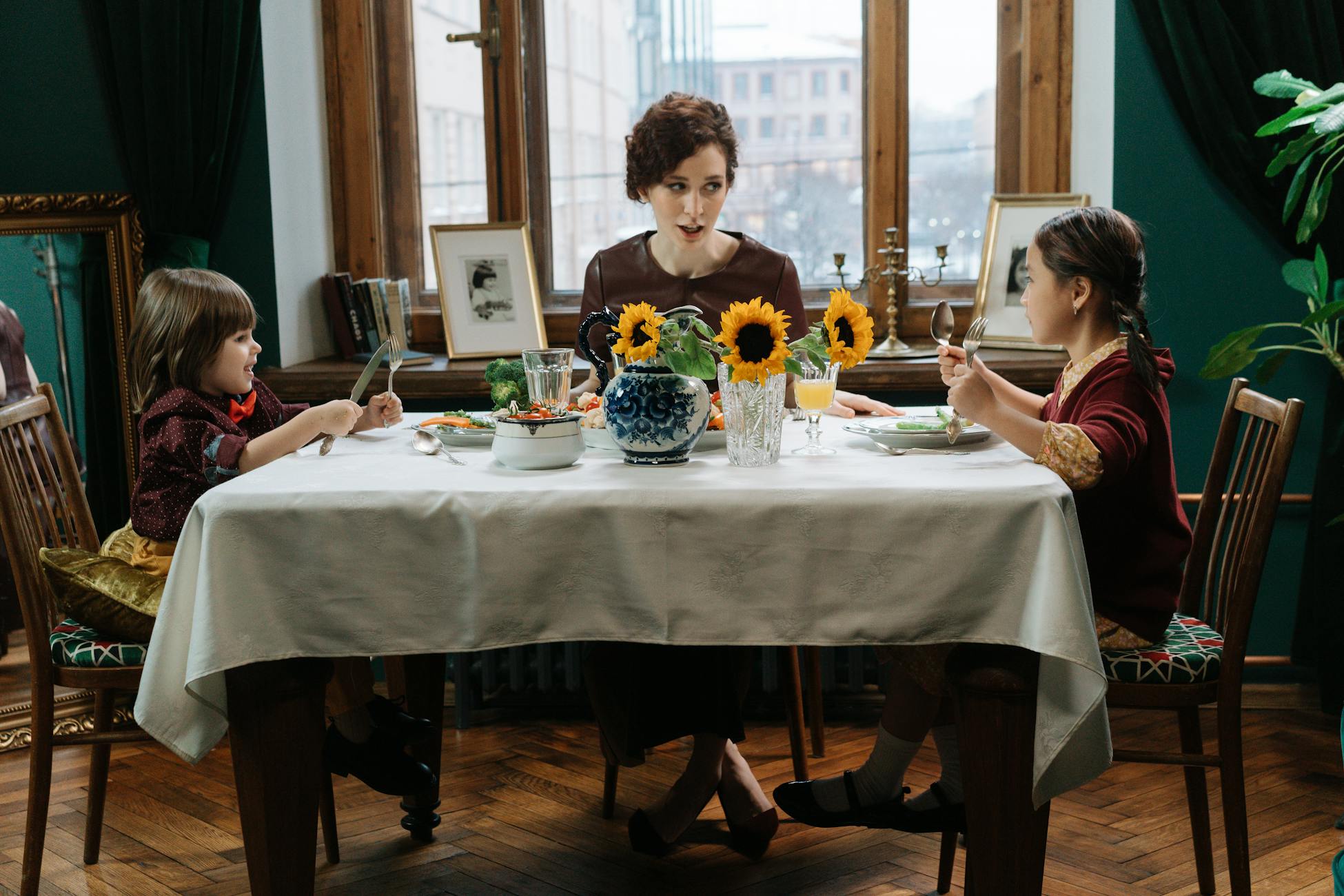
I’ve thought a lot about the loneliness that follows when caregiving roles end, and I understood it intellectually before. Now, with Ellie at five and Milo at two, I already feel the first tremors of it every time one of them solves a problem without me, every time they turn to each other instead of turning to me.
What I’ll Say When I Do Speak
I’m already practicing being more intentional about what I say when my kids don’t need me to talk. Not more frequent. More honest. I picture myself someday writing in that group chat: “I love watching you two be close. It makes me happier than you probably know.” Ellie will respond with a heart emoji. Milo will write, “Love you, Mom.” The conversation will move on. But those three words from him—I’ll carry them around for days like a smooth stone in my pocket.
I think about calling them individually someday. Not to insert myself into their shared world, but to have my own thread with each of them, the way my mother calls me. Sometimes Milo will answer and we’ll talk for forty minutes about nothing in particular. Sometimes Ellie will text back, “In a meeting, call you tonight?” and then call at nine and we’ll talk while she walks her dog. These conversations will be mine. They won’t happen in the group chat. Nobody else will read them or react with a thumbs up.
I think this is what parenthood is always moving toward. You raise children who don’t need you the way they once did, and you find your footing in a new kind of relationship where presence is offered, not demanded. Where love is ambient, not urgent. Where you’re the person they know is always reading, even when they’re not writing to you.
The Fire I’m Building
Last night before bed, I checked on the kids one more time. Ellie was curled around her stuffed rabbit, mouth slightly open. Milo had kicked his blanket off, one arm flung over his head. I stood in the hallway between their rooms, and I could already see it: the future where they send each other photos of their cats sleeping in shoes, where they laugh at each other’s stories, where Ellie writes, “We need to get Mom a cat,” and Milo writes, “She’d name it something ridiculous,” and Ellie writes, “She’d name it Professor Whiskers and talk to it in a British accent.”
They’ll be talking about me. Affectionately, warmly, with the kind of casual knowing that only comes from being deeply loved by someone for your entire life. They’ll be carrying me in the conversation even when they’re not addressing me. I’ll be there. I’ll be the context. The whole person underneath the role of parent will be someone they know, someone they find funny, someone they want to get a cat for.
I closed their doors softly and lay down in the dark next to Matt, who was already asleep, and I let myself feel both things at once: the loneliness I can already sense waiting for me and the warmth of knowing I’m building something inside these two small people that will outlast their need for me. I’m building the fire. Someday they’ll sit around it. And some nights, I’ll feel the heat from where I stand.
And some nights, that will be enough.
