
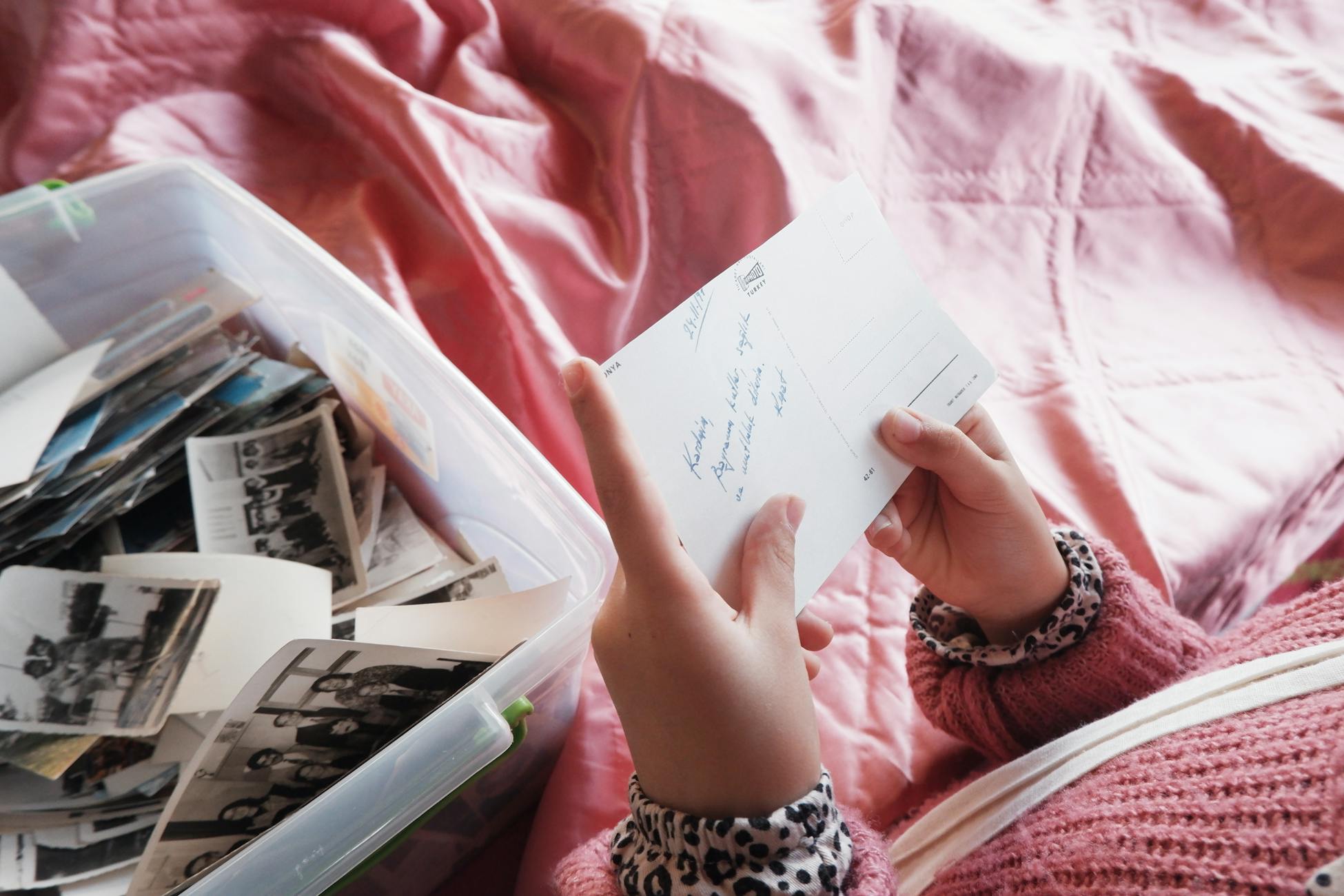
The eldest daughter who holds the family together was never asked if she wanted the job. She was handed it — piece by piece, year by year — through small delegations that looked like trust but functioned as recruitment. “Can you watch your brother for a minute?” “You’re so good at remembering things.” “I don’t know what we’d do without you.” Each compliment was a brick in a structure she’d spend decades living inside, mistaking the walls for her own skin.
Most people believe eldest daughters who run the family calendar, manage the emotional temperature of every gathering, and send the birthday cards on time are simply wired that way. Responsible. Mature. Natural leaders. The conventional wisdom frames this as personality — something encoded, something she’d be regardless of birth order. But what I keep finding, both in my own unraveling and in observations over the past few years, is that this framing is dangerously incomplete. The competence is real. The “natural” part is a myth.
What happened is simpler and harder to sit with: a child was given a role inside a family system before she had the language or perspective to evaluate it, and she performed it so well that everyone — including her — forgot it was assigned.
The Family Ecosystem Nobody Audits
Every family is an emotional ecosystem. Children find their niche inside it the way organisms adapt to an environment — not by choice, but by necessity. In family systems, children naturally take on different roles to help the family function and to secure their own place within it. The responsible one. The funny one. The invisible one. These roles feel permanent because they’re reinforced thousands of times across childhood, but they begin as survival strategies, not identity.
The eldest daughter’s role tends to crystallize earliest. She’s the first child, which means she’s the first audience for her parents’ anxieties, the first witness to their limitations, and the first person available when the system needs a backup. If a younger sibling cries, she’s closest. If a parent is overwhelmed, she’s old enough. If nobody has planned dinner, she notices.
And she gets praised for noticing. That praise becomes fuel.
I think about this when I watch Ellie, who’s five, already picking up Milo’s toys without being asked. She does it because she sees me do it, and because the one time she did it spontaneously, Matt and I both said, “Wow, that’s so helpful, Ellie.” A tiny moment. But I caught it — the way her face changed, the way she stood a little taller. She was learning that helpfulness earns a specific kind of attention. And I had to ask myself whether I was watching a generous impulse or watching the first rehearsal of a role she might spend thirty years performing.
That distinction matters enormously.
Capability Rewarded Until It Becomes a Cage
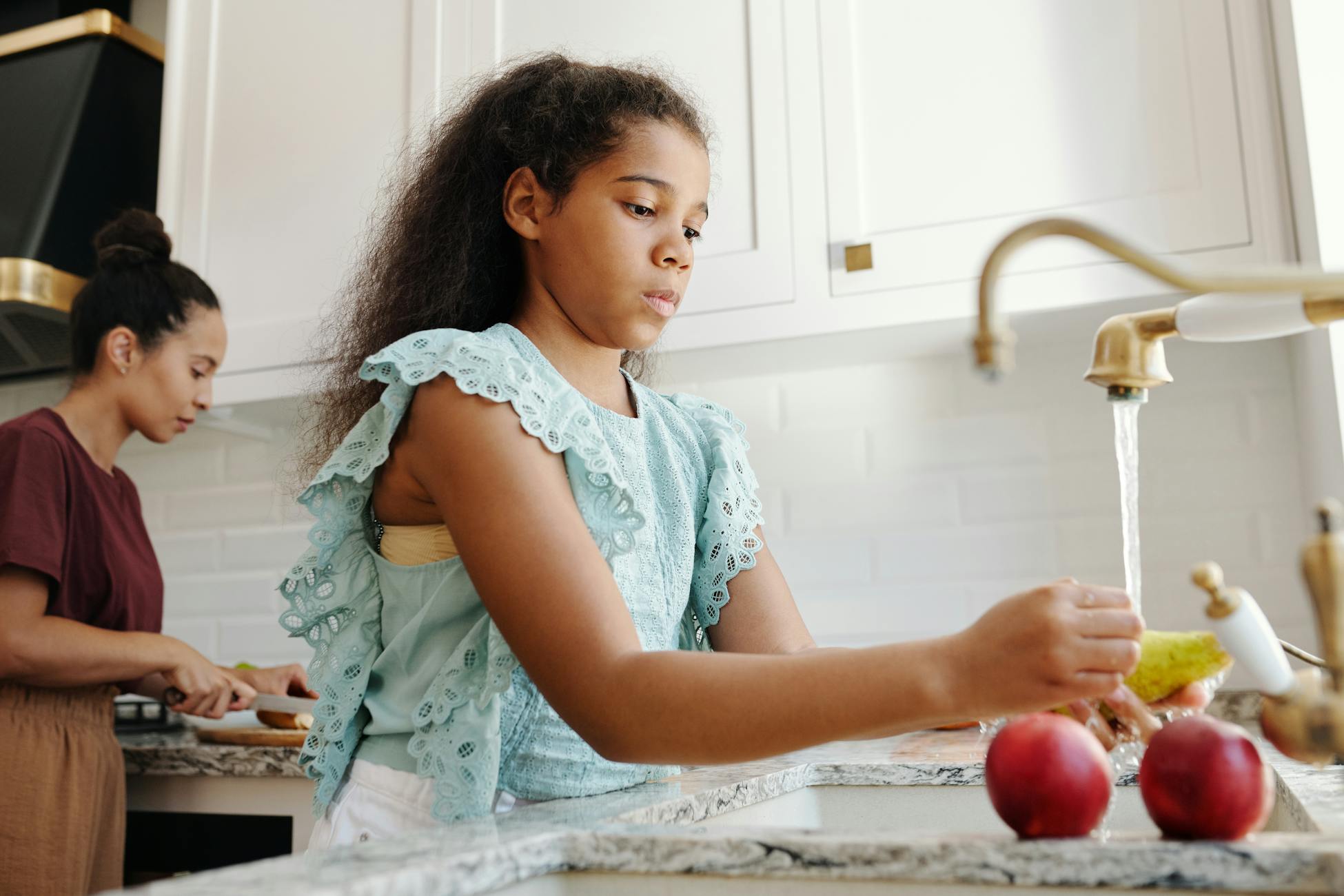
There’s a particular trap that catches eldest daughters more than almost anyone else: being rewarded for capability so early and so consistently that competence becomes confused with love. She learns that being needed is the closest available approximation of being valued. So she gets better. More organized. More anticipatory. She remembers the birthdays not because she loves birthdays but because she learned, at seven or eight, that forgetting meant the family’s emotional infrastructure would visibly sag, and that sagging felt like her fault.
This is where the “muscle memory” language becomes precise rather than metaphorical. Helping behaviors and caretaking patterns can become deeply ingrained when reinforced in early childhood. The behavior persists not because the original motivation persists but because the neural pathway is worn smooth. She sends the card because she’s always sent the card. She mediates the argument because the silence after arguments used to terrify her and her body still braces for it, even at thirty-five, even when the argument has nothing to do with her.
I know this pattern from the inside. I grew up in a house where my mother made everything from scratch — bread, soap, cleaning products — on a tight budget and with a quiet, fierce competence that I absorbed without questioning. My father worked long hours. He provided. He was present at the dinner table every night but emotionally somewhere else. And I became the person who read the room. Who could tell within seconds whether tonight would be easy or tight-jawed. Who adjusted my volume and my needs accordingly.
Nobody asked me to do that. Nobody sat me down and said, “Your job is to monitor the emotional weather.” But the system needed someone to do it, and I was available and observant, and every time I smoothed something over, I saw relief on my mother’s face. That relief was my payment. I collected it for years.
The Role That Follows Her Out the Door
The thing about family roles is they don’t stay inside the family. These childhood roles show up in adult life with remarkable persistence — in workplaces, friendships, romantic partnerships. The eldest daughter who organized Thanksgiving at twelve becomes the colleague who manages the group project nobody else will touch. She becomes the friend who plans every trip. The partner who handles the taxes, the appointments, the emotional check-ins, the remembering.
She does these things and people say, “She’s just like that.” As if personality were a fixed object rather than a series of rehearsals that calcified into habit.
I’ve written before about how adult children who avoid visiting their parents are often protecting themselves from exactly this kind of role reactivation. The eldest daughter visits home and within forty minutes she’s refilling drinks, managing the conversation, soothing a tension she didn’t cause. Her body remembers the choreography. She executes it before her conscious mind even registers what’s happening.
Then she drives home exhausted and can’t explain why.
The exhaustion is the tell. Genuine generosity — the kind that comes from choice and surplus — doesn’t leave you hollowed out. Compulsive role-performance does. If she were truly “naturally responsible,” the organizing and mediating would energize her at least some of the time. Instead, it drains her every time but she can’t stop, because stopping feels like a dereliction of duty she never formally accepted.

The Quiet Resentment She Can’t Name
Here’s where it gets complicated: she loves her family. Genuinely. The resentment she carries doesn’t cancel the love, and the love doesn’t cancel the resentment. Both exist simultaneously, and the inability to hold both without guilt is part of what keeps her trapped.
She resents that nobody else remembers. She resents that if she stopped sending cards, there would be no cards. She resents that her siblings call her “the organized one” as if it’s a compliment rather than a description of unpaid labor. And then she feels guilty for the resentment, because her family didn’t mean to assign her this role, and they genuinely appreciate her, and she knows they love her.
But appreciation and exploitation can coexist. That’s the part nobody wants to say out loud.
The family system benefits from her functioning. It has no incentive to examine how that functioning was produced. And she has no framework for stepping back, because every time she’s tried — skipping a holiday, not sending a reminder, letting someone else plan — the system wobbles, and the wobbling activates the same alarm bells that were installed when she was six. Something is wrong. Fix it. You’re the one who fixes things.
Eldest daughters who always took care of everyone often carry specific traits into adulthood — hypervigilance, difficulty receiving help, chronic self-sufficiency that looks like strength but functions as armor. These traits are adaptive. They made sense inside the original environment. But they persist long after that environment has changed, because the body doesn’t update its programming as quickly as the mind.
What Muscle Memory Actually Means
When I say she’s performing out of muscle memory, I mean something specific. I mean that her nervous system has encoded the caretaking role so deeply that it operates below conscious decision-making. She doesn’t decide to mediate the argument between her parents at Christmas dinner. Her body moves toward it the way a pianist’s fingers move toward a familiar chord progression. The motion is automatic. The skill is real. The choice is absent.
This is why telling her to “just stop” or “set boundaries” misses the point so completely. You can’t boundary your way out of a role that’s embedded in your musculature. She needs to recognize, first, that the role exists — that what she’s been calling her personality is actually a performance she learned so young that it fused with her sense of self. That recognition alone takes years for some women. Decades for others.
My mother, who grew up in a household that ran on frugality and emotional restraint — the kind of home where nothing was wasted and nobody talked about feelings — was herself an eldest daughter. She ran her family’s household logistics as a teenager. She ran ours as an adult. She ran her own mother’s care in later years. If you asked her, she’d say she was just responsible. Organized. Good at managing things.
She’d never use the word “assigned.” But she’d also never be able to point to the moment she chose it.
The Difference Between Heritage and Choice
I think a lot about what I want Ellie to inherit from me and what I want to interrupt. I want her to be kind. I want her to notice when people need help. I don’t want her to believe that noticing obligates her to act every single time, in every room, for the rest of her life.
That’s a razor-thin line, and I’m not sure I’m walking it well. There are mornings when I catch myself praising her for being helpful in ways that feel uncomfortably close to how I was praised. “You’re such a good big sister.” The words come out before I can evaluate them, and then I hear my mother’s voice underneath mine, and I feel the whole pattern humming like a low electrical current through the house.
I’ve written about how the best parents model what a life worth living looks like, even when that means disappointing their kids in small ways. For the eldest daughter, modeling that life means something radical: it means letting things fall apart occasionally. Letting the birthday go unremembered. Letting the argument resolve itself. Letting the system function without her hand on the wheel.
That feels, to her body, like abandonment. Like failure. Like the thing she was built to prevent.
But she wasn’t built. She was shaped. And shaping can be examined, questioned, and — slowly, imperfectly — revised.
The eldest daughter who organized every holiday didn’t do it because responsibility lives in her bones. She did it because a family needed someone to hold things together, and she was there, and she was small, and she said yes before she knew that no was an option. She’s still saying yes. The question — the one that might change everything for her — is whether she can learn to hear the question before she answers it.
That’s where the work is. Not in gratitude journals or boundary scripts or self-care weekends. In the pause between the family’s need and her automatic response. In learning to feel the impulse rise and choosing, for once, to let it sit there without acting on it. To see what happens when she doesn’t catch the thing that’s falling.
Sometimes the thing lands fine without her. Sometimes it breaks. Either way, she gets to find out who she is when she’s not holding everything up. And that discovery — messy, disorienting, necessary — might be the first genuinely free thing she’s done since she was old enough to reach the kitchen counter.