
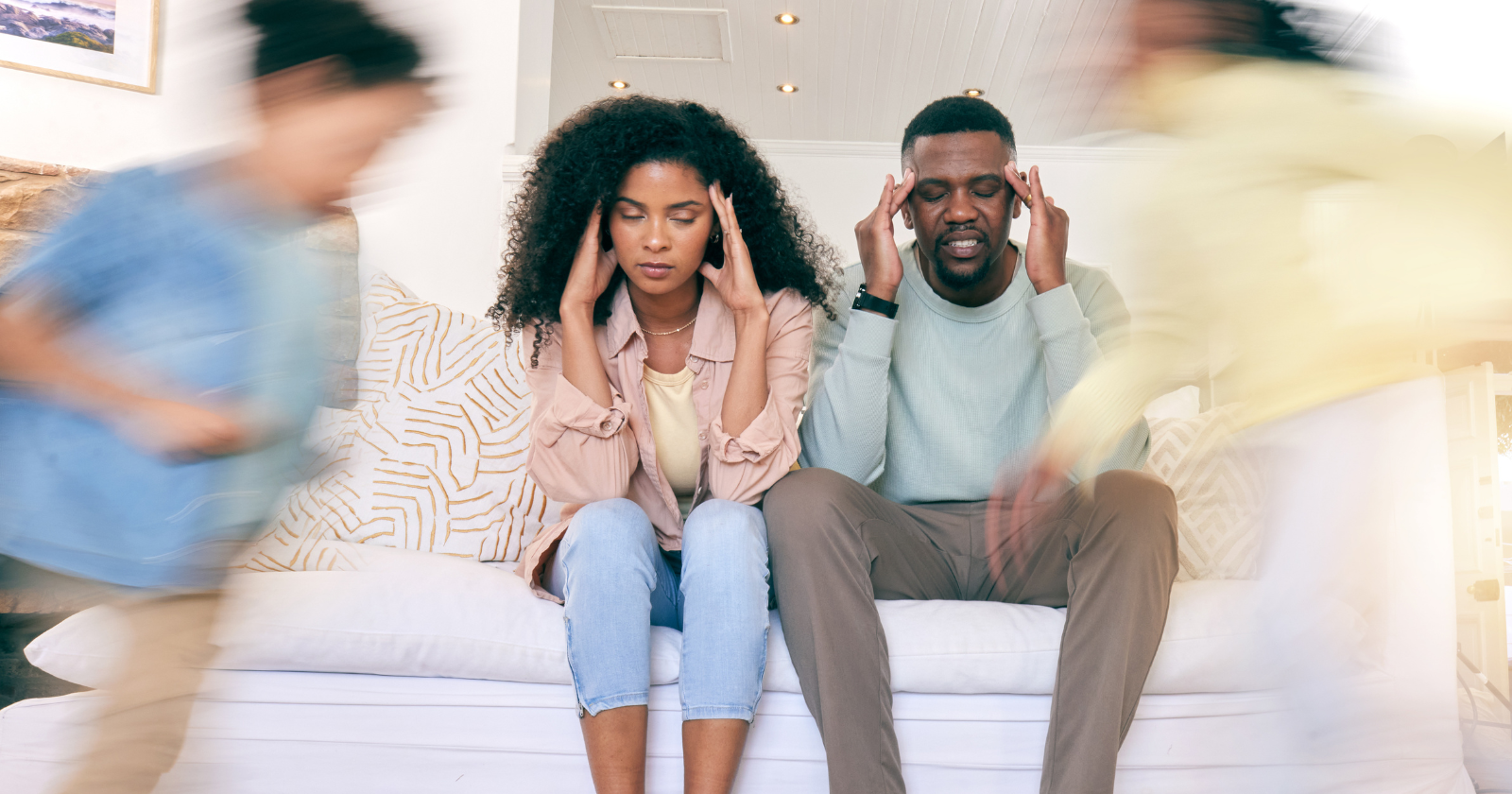

It’s 2:14 in the morning. Your baby has been crying for forty minutes. You’ve tried everything you can think of. Nothing is working. You are alone in the house, or at best with one other exhausted adult who has just fallen asleep. There isn’t anyone you can call at this hour without feeling terrible about it. Your mother lives four hundred miles away. Your friends have their own babies and their own 2am problems. The internet, when you check it in desperation, offers you a hundred contradictory theories about what might be wrong. You hold the baby. You try not to cry. You wait, alone in a quiet house, for the crying to stop.
If you’ve been a parent in the last twenty years, some version of that scene is probably already in your memory. And here’s the strange thing about it. On the scale of human history, this specific version of the parenting experience — alone, in the middle of the night, with no relatives in the next room and no wider community involved — is extremely new.
How humans actually evolved to raise children
The anthropologist Sarah Blaffer Hrdy has spent much of her career studying how children have actually been raised across cultures and across time. Her central argument, laid out in her book Mothers and Others: The Evolutionary Origins of Mutual Understanding, published by Harvard University Press in 2009, is that humans didn’t evolve as solitary parents. We evolved as what she calls cooperative breeders. Which is a technical term for a species where multiple adults, not just the biological parents, are involved in raising the young.
The Artful Parent
Family-life ideas and sharp reads, in your inbox.
Hrdy’s core finding is that the extraordinary human capacity for empathy, cooperation, and mutual understanding didn’t evolve in nuclear families. It evolved in groups where children were raised by many hands. Grandmothers. Aunts. Older siblings. Cousins. Neighbours. Trusted adults with no biological relation at all. All of them held the baby, at various times, in the first few years of the child’s life. The primary parent, almost always the mother, was doing the job, but she was doing it in company.
The technical term for all these additional caregivers is “alloparents.” Everyone in the child’s life who wasn’t the biological mother or father but who nonetheless contributed to the child’s raising. In most human societies, throughout most of human history, alloparents did a substantial share of the work. In modern Western societies, that share has, quite quickly, dropped close to zero.
If this resonates, our team made a short video going deeper into why, in an age of hyper-connection, modern parenting still feels like a solitary prison.
Click here to watch the video.
How quickly this happened
The nuclear family, two adults and their biological children, living in their own separate household, only became the dominant Western living arrangement in the twentieth century. Before that, extended families lived together, or very near each other. Communities were smaller. Children moved through the day with multiple adults involved. The mother was often watching several children at once, not just her own, and other adults were often watching hers.
Over the course of about a hundred years, this changed almost completely. Families got smaller. People moved further from their relatives. Communities got larger and more anonymous. The main caregiving unit shrunk to two adults, or, increasingly often, one adult. The old village model of childrearing didn’t just decline. In most modern Western contexts, it effectively disappeared.
What we’re actually asking modern parents to do
Two adults, sometimes one, are supposed to meet, largely unaided, all of the practical, emotional, developmental, educational, and social needs of a child from birth through to adulthood. Working full-time. In separate households from their own parents. With minimal community involvement.
In August 2024, the U.S. Surgeon General issued something unusual. A public health advisory specifically about the mental health of parents. Parents Under Pressure laid out just how bad things have gotten. Forty-one percent of American parents reported that most days they were so stressed they couldn’t function. Forty-eight percent said their stress on most days was completely overwhelming. About two-thirds of parents reported significant isolation and loneliness in the previous year. For single parents, that figure was seventy-seven percent. And listed alongside financial strain and time demands as major drivers of the crisis was one thing most public health advisories had never explicitly named before: parental isolation and loneliness.
A quick note before we go further
I’m not saying anyone reading this is doing anything wrong, or that feeling exhausted and isolated as a parent means you’ve chosen poorly. And I’m not romanticising the old village model, which had its own real problems, including patriarchal control and a lack of privacy that many people quite understandably don’t want back. What I’m describing is a genuine structural shift, not a personal failing.
I also want to be careful about where this piece does and doesn’t apply. If what you’re carrying is bigger than ordinary isolation, including postnatal depression, longer-standing mental health struggles, or a fear that you might not be able to keep your child safe, this article isn’t the right thing to lean on, and professional support is the right next step. If you’re ever worried you might hurt your child, the Childhelp National Child Abuse Hotline is confidential, non-judgemental, and reachable at 1-800-422-4453 at any hour. There’s no shame in using it. That’s what it’s there for.
What the isolation actually does
The research on what isolation does to parenting outcomes has been getting more specific. In a 2022 study of Japanese mothers of infants published in Environmental Health and Preventive Medicine, researchers Marina Minami, Aya Isumi and Takeo Fujiwara found that when mothers had no one they could consult about child-rearing concerns, they reported higher parenting stress and higher rates of depression than mothers with even minimal support. Isolation, when it stacks with other pressures, is also one of the factors the wider child protection literature has identified as raising the risk that things go badly. Most isolated parents never harm their children. But isolation removes the everyday buffers, the other adult eyes, the small offers of help, that a family in difficulty would otherwise have around them.
Similar findings show up in the cross-cultural research on parental burnout. In a 2021 study by Isabelle Roskam, Moïra Mikolajczak and colleagues published in Affective Science, researchers surveyed parents across 42 countries and found that individualistic Western societies, where nuclear-family isolation is the default, produced substantially higher parental burnout rates than more collectivist societies where extended family and community remained more involved. It isn’t that Western parents are less committed. They’re doing a harder job with less help.
What the “village” actually did
I want to be careful here, because “it takes a village” has become one of those phrases that gets used a lot but rarely gets unpacked. What the village actually did, in practical terms, wasn’t just extra hands. It was several specific things.
It absorbed the intensity of parenting so that no single adult carried it alone. The mother handed the baby to an aunt for an hour. The father took an older child to help a neighbour with something. The intensity was distributed.
It transmitted knowledge. New parents learned from older parents by watching, not by reading advice columns. The knowledge was transferred in real time, in real families.
It made parenting mistakes lower-stakes. When five other adults are involved in the child’s raising, a bad day is just a day. The responsibility was shared.
It gave the child multiple adult attachments. Rather than everything psychological running through one or two people, the child had a network of trusted adults. This was good for the child. It was also good for the parents, whose relationship with the child wasn’t required to bear the total weight.
Where this leaves us
I don’t want to end this piece by suggesting we can rebuild the village. In most modern Western contexts, we can’t, at least not in the form it used to take. The old model isn’t coming back.
But I do want to end with something small.
If you feel exhausted and isolated as a modern parent, the exhaustion isn’t your fault. You are trying to do a job that was, for most of human history, done by six or eight people, largely on your own. If that job is producing burnout, stress, and a specific kind of loneliness that no previous generation had to describe, that isn’t evidence you’re doing it wrong. That’s evidence you’re doing something almost impossible, and mostly getting away with it.
And maybe, in the same way we can start building small pieces of the village back through babysitting swaps, parent friends, or a slightly closer relationship with the neighbour down the street, we can start to notice this out loud. Not because it will fix everything. But because naming the problem accurately is often the first step to sorting out even a small piece of it.
You aren’t broken.
The job is broken.
That’s a very different thing.