

Every parent wants a child who can handle disappointment, keep going when something is hard and bounce back after a bad day. It’s tempting to think that kind of strength comes from big lessons or tough love. Research suggests it’s built somewhere much more ordinary: in the small, everyday moments when a child is frustrated, has made a mistake or is trying something new.
Several studies point to three habits that matter more than most parents realize. Stepping back so children can practice handling things themselves, helping them understand their feelings, and treating mistakes as part of learning.
Step back so they can practice
It’s natural to want to help. When a toddler is struggling with a puzzle or a tower is about to topple, many of us reach in to fix it. But children learn to manage their emotions and behavior by getting chances to try.
The Artful Parent
Family-life ideas and sharp reads, in your inbox.
A study published in 2018 in the journal Developmental Psychology followed 422 children over eight years, checking in when they were 2, 5 and 10. Researchers led by Nicole Perry, then at the University of Minnesota, watched parents and toddlers play together and tidy up afterward. Some parents were what the researchers called overcontrolling. They kept telling their child what to play with, how to play with it and how to clean up, or were too strict or demanding.
Children whose parents were more overcontrolling at age 2 had poorer emotional and behavioral control at age 5. By 10, children who had struggled with self-control at 5 were more likely to have emotional and school problems, fewer social skills and lower productivity in class, according to their teachers and their own reports.
The researchers’ point wasn’t that parents should leave children to cope alone. Children still need adults who notice when a situation has become too much and step in to guide them. The skill is in recognizing when a child can manage, and giving them room to do it.
In practice, that might mean letting a 3-year-old struggle with a zipper for another minute before helping, or asking “What could you try next?” before offering a solution. These small pauses give children the practice they need to build self-control.
Coach feelings instead of dismissing them
Mentally strong children aren’t children who never feel upset. They’re children who learn what to do with big feelings. Parents can help a great deal with that.
Psychologist Sophie Havighurst and her colleagues at the University of Melbourne developed a program called Tuning in to Kids, which teaches parents a style called emotion coaching. Rather than brushing off a child’s sadness or anger (“You’re fine, stop crying”), parents learn to notice the feeling, name it, show understanding and then help the child work out what to do.
In an early randomized trial, 218 parents of 4- and 5-year-olds were split into two groups. Those who attended the six-session program used more emotion coaching and less dismissing afterward, and they reported that their children’s behavior improved. Among children who had started with serious behavior difficulties, more than half were no longer at that level after the program. Later trials have tested versions for fathers and an online version for parents of children aged 4 to 10, with encouraging results.
Emotion coaching can be as simple as saying, “You’re really disappointed that your friend couldn’t come over. That’s hard. What would help right now?” The child learns that feelings are normal, that they can be talked about, and that there are ways to cope.
Treat mistakes as lessons
How we react when a child fails may shape how they see their own abilities. Psychologists Kyla Haimovitz and Carol Dweck of Stanford University wanted to know why parents’ beliefs about intelligence don’t seem to pass to their children. Many parents believe ability can grow, yet their children don’t necessarily share that belief.
In research published in 2016 in Psychological Science, they surveyed parents and their children in fourth and fifth grade. Parents’ views on whether intelligence can change were not linked to their children’s views. But parents’ views about failure were. Parents who saw failure as harmful tended to have children who believed intelligence is fixed.
The reason seems to be that children can’t see what’s in our heads, but they can see how we react. In further studies, parents who viewed failure negatively were more likely to respond to a child’s poor grade with worry about the child’s ability, and less likely to focus on how the child could learn and improve. Children picked up on that.
So when a spelling test goes badly, the response that helps most isn’t panic or false reassurance. It’s curiosity: “What do you think made it tricky? What could we try differently next time?”
Praise the effort, not just the outcome
The way we praise children adds to the same message. A study published in 2013 in Child Development videotaped 53 families at home when their children were 1, 2 and 3 years old. Researchers led by Elizabeth Gunderson counted how often parents praised their child’s effort, strategies or actions, compared with praise for fixed qualities such as “You’re so smart.”
Five years later, when the children were 7 or 8, those whose parents had used a higher share of effort-focused praise were more likely to enjoy challenges, could think of more ways to overcome setbacks and believed that abilities can grow. The total amount of praise didn’t matter. It was the kind of praise that counted.
This was a small study, so it’s best seen as a pointer rather than proof. But it fits with the other research. Children learn from our everyday words what success depends on.
Small moments, repeated
None of these habits requires special equipment or hours of extra time. They happen in the minutes spent waiting while a child tries again, in the words chosen after a meltdown, and in the reaction to a bad report card. Repeated over years, those small moments help children learn that they can handle hard things.
A few practical ideas to start with:
- Count to ten in your head before stepping in to fix a problem your child is working on.
- Name feelings out loud: “You seem frustrated.” It helps children recognize and talk about what’s going on inside.
- After a setback, ask what they learned or what they might try next time.
- Praise specific effort and strategies: “You kept trying different pieces until it fit.”
- Show your own coping. Saying “I’m feeling stressed, so I’m going to take a few deep breaths” models the skills you hope they’ll learn.
No parent gets this right every time, and children don’t need perfection. What seems to matter is the overall pattern. A home where children are trusted to try, supported when feelings run high and encouraged to learn from mistakes gives them a strong foundation for the challenges ahead.
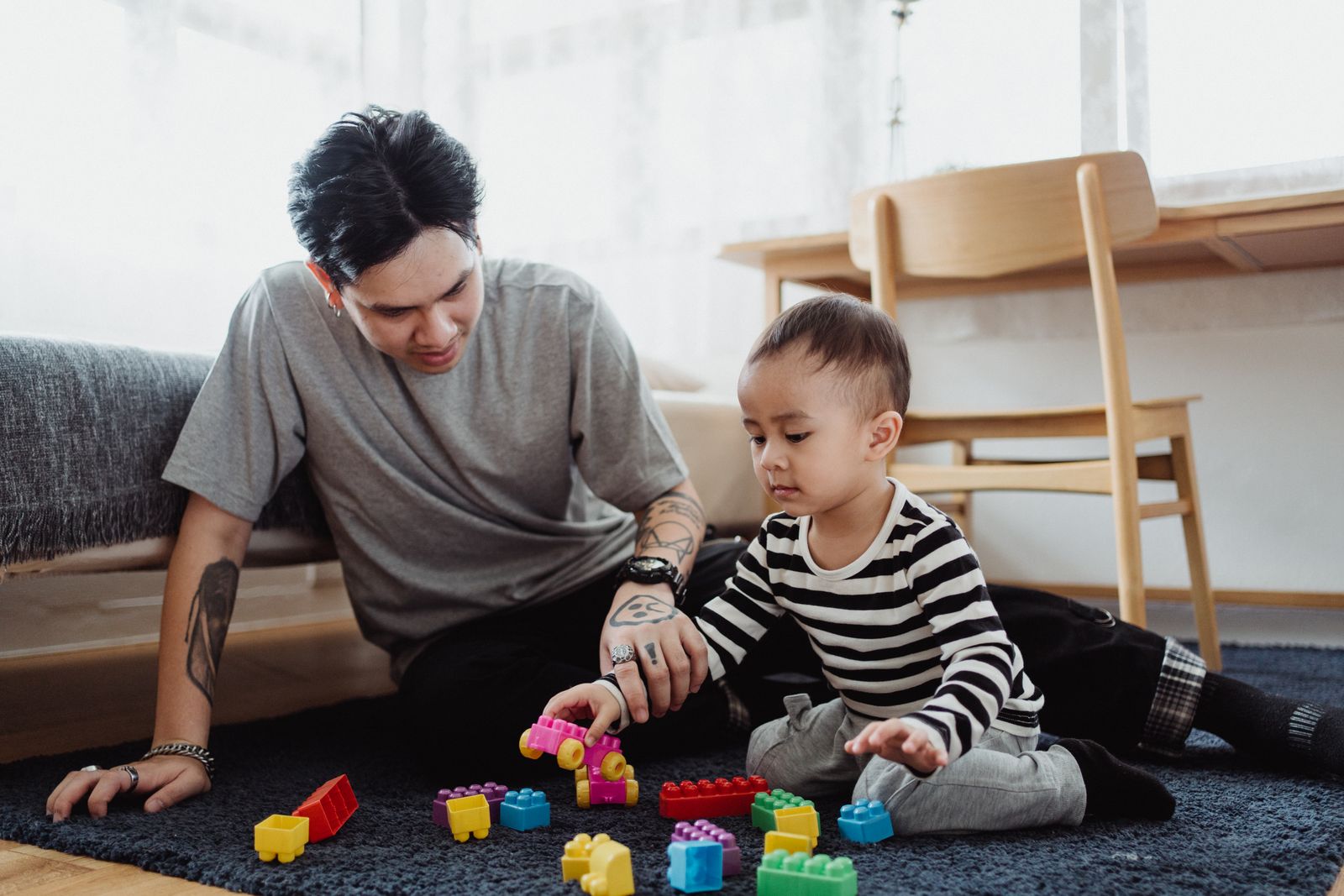
Representative image. Photo: Ketut Subiyanto / Pexels.