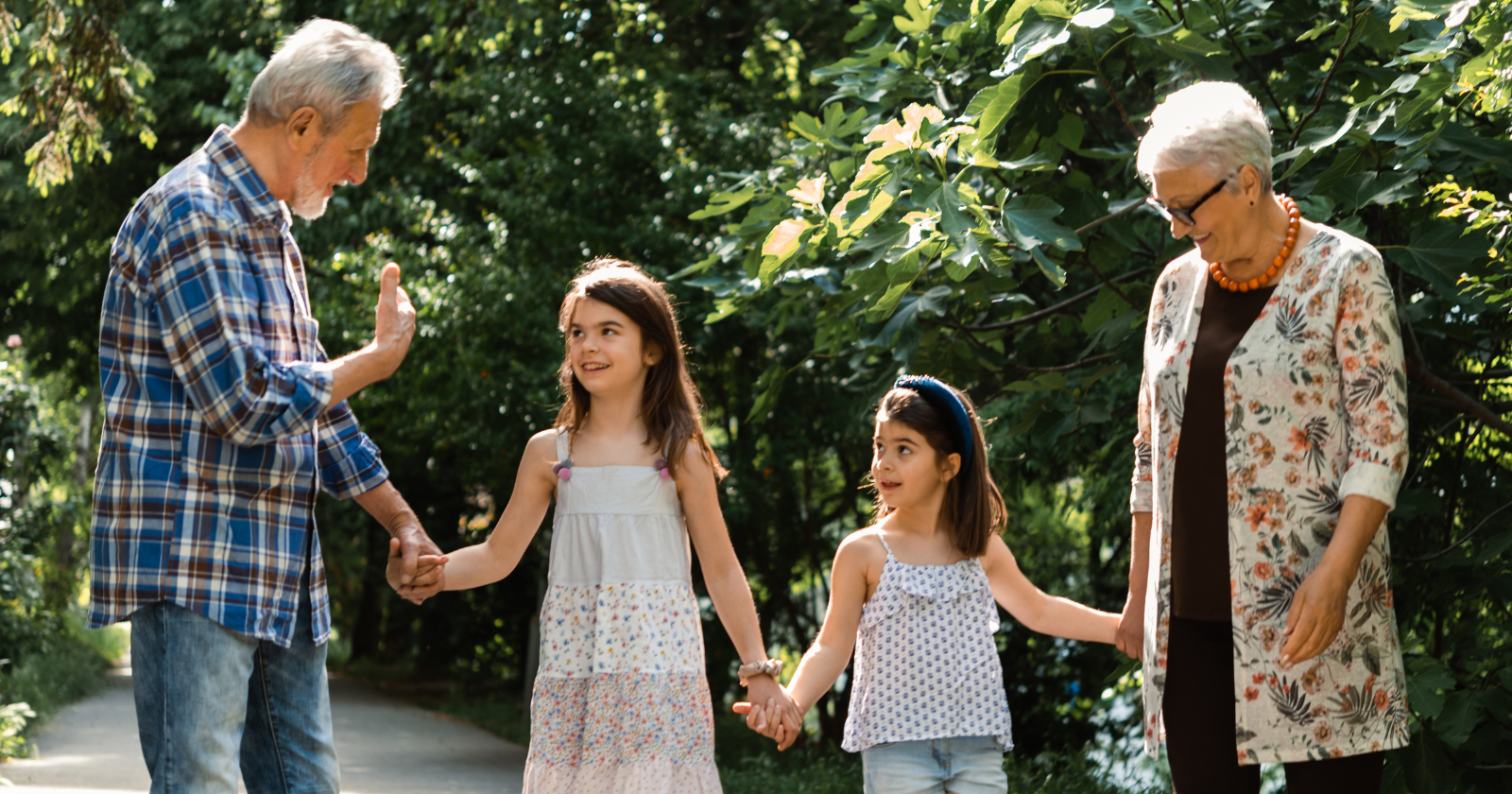
I’m 63 and I’ve learned that grandchildren will tell you things they’ll never tell their parents — but only if you master the one skill most grandparents get completely wrong
After decades of wondering why my grandchildren would tell their parents “everything’s fine” but confess their deepest worries to me on park benches and car rides, I finally discovered the counterintuitive skill that makes all the difference — and it goes against every instinct we have as caring adults.

A clinical psychologist explains that the adult children who call their parents the least aren’t always the ungrateful ones. Sometimes they’re the ones who were given so much responsibility as children that distance is the only rest they’ve ever known
The adult children who never call aren’t always ungrateful — sometimes they’re exhausted from a childhood that never let them be children at all.

I’m 35 and I love my parents but I also resent them — and I spent years believing those two things couldn’t both be true before I understood that love and resentment are not opposites, they are the specific combination that forms when you were raised by people who did their best and whose best had limits and whose limits became your wounds
Growing up, I believed that loving my parents meant I couldn’t acknowledge how their limitations shaped my deepest insecurities — until I became a parent myself and realized that healing begins when you stop pretending these feelings can’t coexist.

Psychology says when adult children avoid their parents, it’s rarely about one dramatic event — it’s about a thousand small moments where the child learned that being authentic around the parent felt more dangerous than being distant
Matt asked me something the other day that I haven’t been able to shake. We were doing our nightly check-in—the one we do after the

Most people don’t realize that children who grow up without praise don’t struggle with confidence as adults. They struggle with believing any compliment is genuine, because their nervous system learned that approval always preceded a request.
The child who never heard “I’m proud of you” doesn’t grow up doubting herself — she grows up doubting you when you finally say it.

I finally understand why my father always backed the car into the driveway — it wasn’t about convenience, it was a man who spent his whole life making sure everyone else could leave first
Every evening for thirty years, he spent an extra 30 seconds reversing into our driveway, and it took me decades to realize this simple ritual was actually a masterclass in love disguised as a parking habit.

There are three stages to your mother’s handwriting on birthday cards — first it’s perfect cursive, then it gets a little shaky, then one year someone else signs her name and you keep that card in a drawer forever
The handwriting on your mother’s birthday cards tells a story you never wanted to read—from perfect cursive loops to trembling letters to the day someone else holds the pen—and each card becomes an artifact of love adapting to time’s cruelest mathematics.

Research says people who had complicated relationships with their fathers grieve harder, not easier, than the ones who had healthy ones — because uncomplicated love produces uncomplicated grief, and the grief that carries unfinished business has nowhere to deliver it and no one left to receive it
When my father passed away a few years back, I expected a kind of clean sadness. The man worked double shifts at a factory for

I finally understand why my father never talked about his accomplishments — it wasn’t because he lacked pride, it was because his generation understood that character doesn’t need an audience
Silence about your own accomplishments is now treated as a psychological deficiency, a sign of low self-esteem or imposter syndrome or some unresolved trauma that

I’ve been married for thirty-six years and if you asked me whether I’m happy I’d say yes — but if you asked me when I last felt anything other than responsible, I couldn’t tell you
Last week my daughter asked what I wanted for my birthday and I sat there holding the phone, completely blank. Not because I don’t want

Psychology says the eldest daughter who organized every family holiday, mediated every argument, and remembered every birthday isn’t naturally responsible — she was assigned a role before she was old enough to decline it, and she’s still performing it out of muscle memory
She wasn’t born organized — she was trained by a household that needed someone to hold it together, and she happened to be standing closest to the door.

I’m 63 and my marriage wasn’t unhappy, it was just ok — and now that my husband is gone I realize I spent thirty-six years wondering what it would feel like to be with someone who actually asked me what I was thinking instead of assuming silence meant contentment
The silence in my house sounds different now. Not the heavy, waiting silence of thirty-six years of marriage, but something lighter. Like the house itself