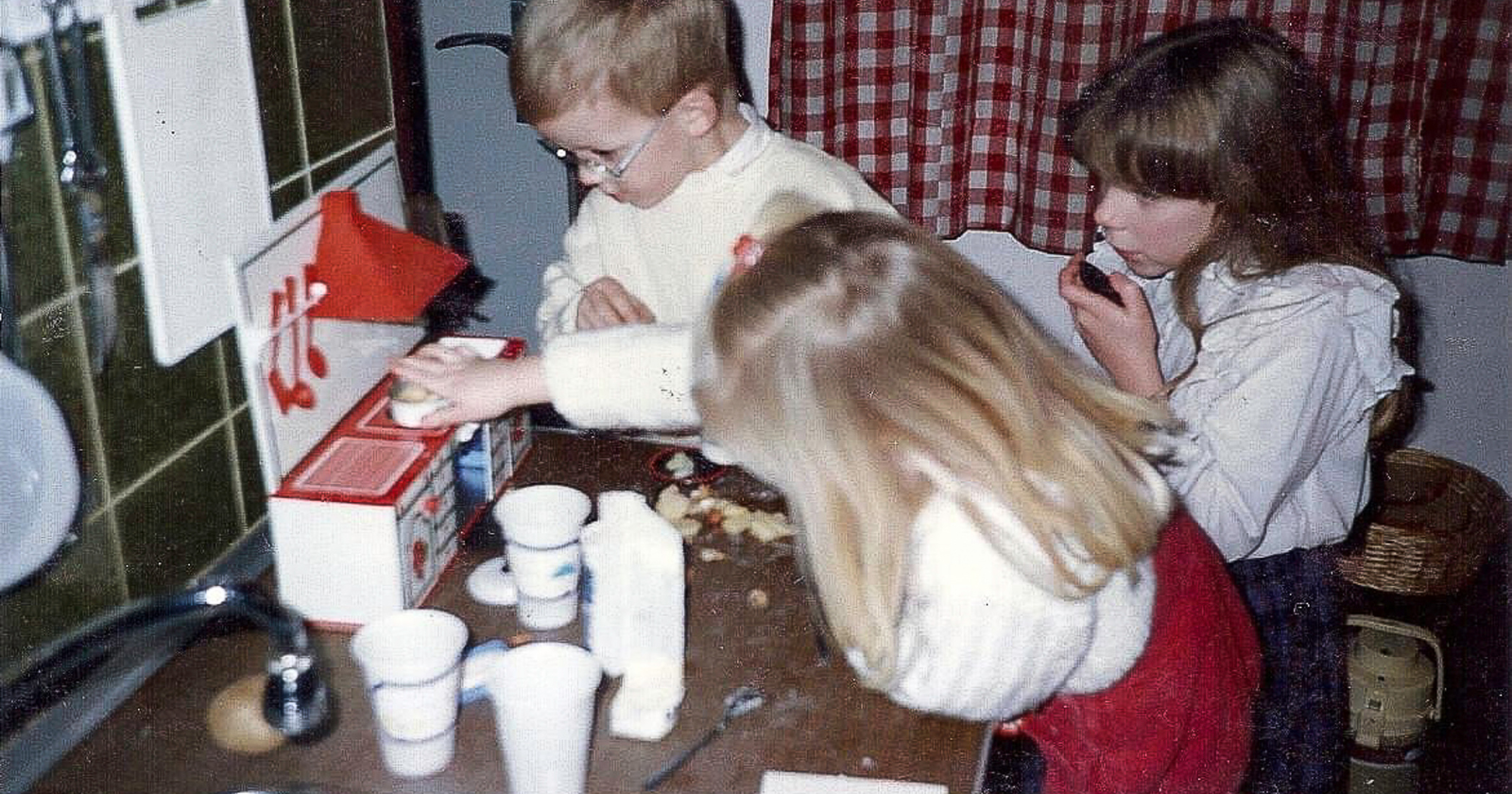
The parents who controlled everything and the parents who controlled nothing both believed they were doing the opposite of their own parents. The difference is that the children of strict homes had something to push against, and the children of permissive homes had nothing to push against at all — and a muscle that never meets resistance never develops strength.
Every generation of parents believes they’ve corrected the mistakes of the last one, but over thirty years in HR I watched both the over-controlled and the under-controlled adults arrive at the same place — confused about who they were, just for entirely different reasons.

Psychology says the reason your aging parents don’t tell you when they’re struggling isn’t pride — it’s that their generation learned that needing help was a burden you placed on others, not a connection you built with them
My mom called last week and I asked how she was doing. “Oh, fine. Everything’s fine.” It wasn’t fine. I found out two days later

I’m 63 and I just realized that every creative thing I do now — painting, gardening, baking bread — is something I told myself I didn’t have time for during the thirty years I was raising children and proving my worth at a job
The things I dismissed as hobbies for thirty years turned out to be the parts of myself I’d been starving.

Behavioral scientists found that the parents who say ‘I’m not like my parents’ the most often are actually repeating the exact same emotional patterns with their own children, just with different words and better explanations
New research reveals that even the most well-intentioned parents who use gentle parenting scripts and modern psychology are unconsciously transmitting the same emotional patterns they experienced as children—just wrapped in fancier vocabulary and longer explanations.

The toughest people in any family are almost never the ones who talk about what they’ve been through
Every family has one. The person everyone describes as strong. The one who handled the crisis, absorbed the shock, kept working when things fell apart.

Psychology says people who are genuinely magnetic in conversation aren’t the ones asking clever questions – they’re the ones who make other people feel like the most interesting person in the room by doing these 10 things
The most magnetic people in conversation are rarely the wittiest or the most articulate. They’re the people who make you feel like what you’re saying
I’m 35 and I’ve started caring less about being liked and more about being honest — and the social life that has resulted is smaller and more specific and the best one I have ever had
I have a confession. For most of my life, I was a people-pleaser. Not the casual, easygoing kind—the deep-rooted, say-yes-to-everything, quietly-rearrange-your-personality-to-fit-the-room kind. I grew up

Most people don’t realize the adult child who moved the farthest away isn’t running from the family — they’re the one who needed the most distance to become someone other than the role they were assigned
In most families, there’s one who left. Not just left town for college or moved a few hours away for a job. Really left. Put

I’m 63 and nobody talks about the fact that the hardest part of retirement isn’t boredom — it’s realizing your entire identity was built on being needed and now you’re just a person with nowhere to be at 9am on a Tuesday
The alarm didn’t go off this morning because there was no alarm to set. I lay there for a while, staring at the ceiling, and

Adult children who rarely visit their parents aren’t necessarily selfish or ungrateful — they’re often recreating the exact relationship dynamic their parents modeled, where love meant providing things instead of sharing presence
There’s a particular kind of guilt that belongs to adult children who don’t visit their parents very often. It sits quietly in the background, surfacing

I grew up in the 1960s, and I’m tired of pretending that everything about today’s world is better – some things we lost along the way actually mattered
I grew up in the 1960s, and I’m tired of pretending that everything about today’s world is better — some things we lost along the

Psychology says the happiest people after 60 aren’t the ones who found purpose — they’re the ones who stopped demanding that every day justify itself and gave themselves permission to exist without producing
Psychology says the happiest people after 60 aren’t the ones who found purpose — they’re the ones who stopped demanding that every day justify itself