
It’s 4 p.m. on a Tuesday. A phone rings in the kitchen, and a nine-year-old races her brother to get it. “Hello, this is Maya.” It’s her friend from down the street, asking if she can come over. Her mom, stirring something on the stove, hears half the conversation and smiles.
That scene could be from 1986. It could just as easily be from this year.
Some habits that many parents grew up with, and that looked a little dated not long ago, are turning up again in some homes. They aren’t everywhere, and they won’t suit every family. But often they come from parents looking for a bit less screen time, a bit more independence for their kids, or a slower evening. Here are eight that seem to be coming back, with simple ways to try them if they fit your family.
The Artful Parent
Family-life ideas and sharp reads, in your inbox.
1. A home phone the kids can answer
Back to Maya’s kitchen. The phone isn’t an old copper landline. It’s a Wi-Fi handset built to look like one, with a cord and real buttons.
Several companies now sell home phones designed for kids, where parents choose who can call and when. Tin Can, one of the best known, says it has sold hundreds of thousands of them, KTLA reported.
A home phone can give younger kids a way to reach friends and grandparents without a smartphone. It also brings back a skill some kids rarely practice: talking to someone using only their voice.
Try this: whatever phone your family has, let your child make one call a week themselves, to set up a playdate or thank Grandma for a card. The first few times, help them plan what to say.
2. Waiting a little longer on the first smartphone
At school pickup, a few parents compare notes on when the phones are coming. Some have agreed to hold off together, so no child is the only one without.
Schools are moving in a similar direction. Ballotpedia, which tracks these rules, counted 46 states with laws or policies on student phone use in public schools as of late October 2026. They vary a lot, from phones away during class to phones stored all day.
Try this: if you’re weighing it up, talk with a couple of other families in your child’s class. Waiting is much easier for a child when their friends are waiting, too.
There’s no single right age, though. Some families have good reasons to get one sooner, like a long commute or time split between two homes.
3. Cursive handwriting
Your daughter comes home and writes her name across the back of an envelope in careful loops. Then she asks to see your signature, and notices the letters join up.
Cursive faded from many classrooms over the past couple of decades. Now some states are bringing it back. California, for example, passed a law in 2023 requiring handwriting lessons in grades 1 through 6 to include cursive or joined italics.
Try this: write birthday cards and lunchbox notes in cursive. For many kids, reading a parent’s or grandparent’s handwriting is half the reason to learn it.
4. Letting kids walk a little farther on their own
A ten-year-old walks the four blocks to school with a friend. Her dad watches from the porch until they turn the corner, then goes back inside.
For years, some parents worried that letting kids do things like this could bring trouble from neighbors or authorities. A growing number of states have passed “reasonable childhood independence” laws, which make clear that letting a child do age-appropriate things alone isn’t neglect in itself. Utah passed the first in 2018. The nonprofit Let Grow says it has helped pass these laws in 13 states, according to a May 2026 congressional press release. The details vary by state.
Try this: pick one short, familiar route and walk it together a few times. Then let them go, and ask them to tell you about it when they get back.
The right age depends on the child, the traffic, and the neighborhood. Starting small is fine.
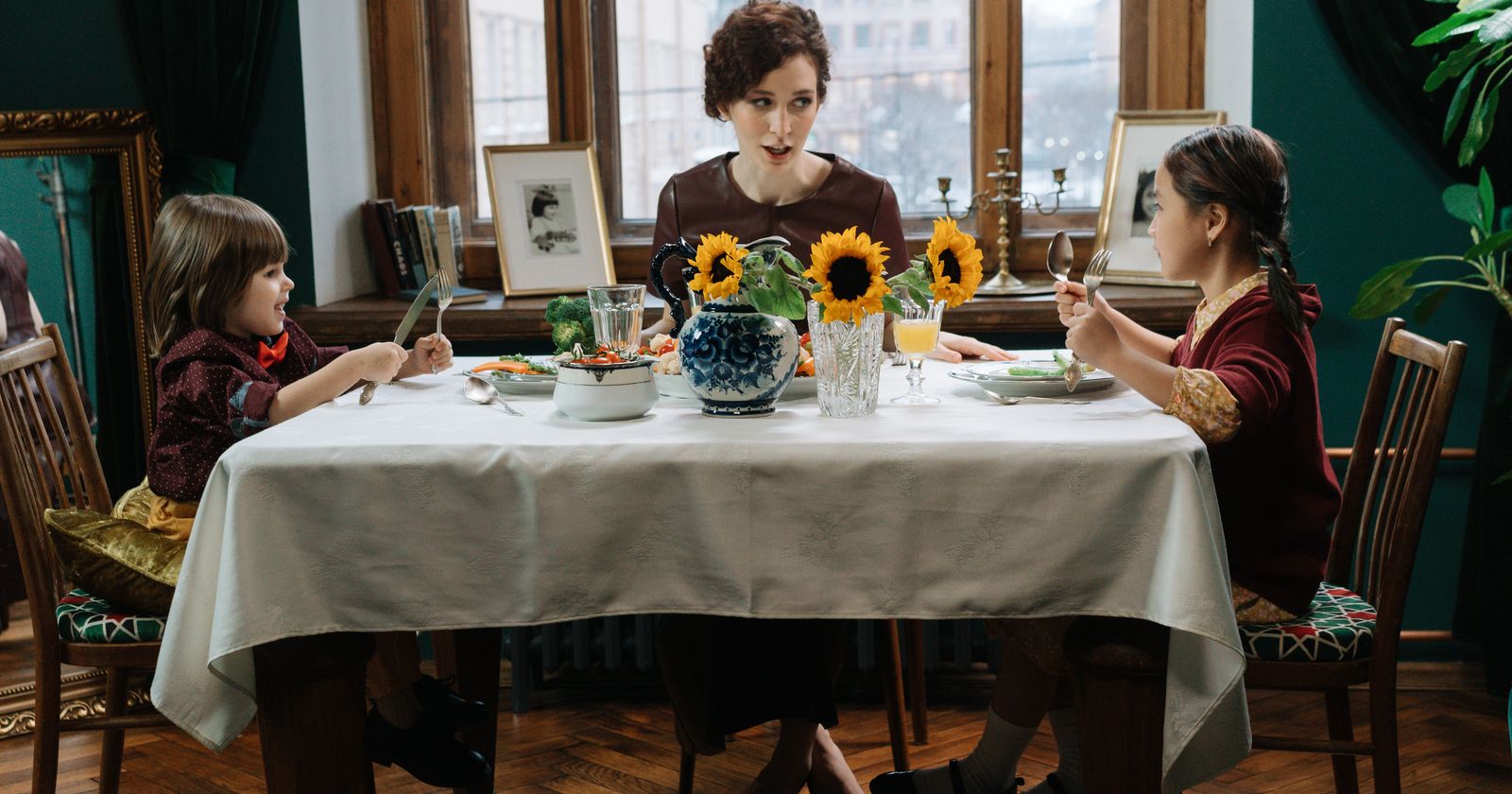
5. Dinner at the table, most nights
Plates out, TV off, phones in a basket on the counter. Someone is telling a very long story about recess.
For a lot of families, dinner together slipped as schedules filled up. Some parents are reclaiming it, even if it’s only a few nights a week.
Try this: give everyone one question to answer, like “What was the best part of today?” Keep it light, and let the youngest go first.
If work shifts or practices make dinner impossible, a Saturday pancake breakfast counts. The point is sitting down together, not the time on the clock.
6. Real chores, not just “tidy your room”
A seven-year-old sets the table every night. A twelve-year-old is in charge of Thursday’s dinner, which is usually spaghetti.
Many parents remember a chore chart on the fridge. Some are bringing it back, partly because chores can give kids a sense that they’re needed at home, and partly because kids eventually need to know how to cook and clean.
It’s often faster to just do it yourself. That’s fair. But try handing over one job completely and resisting the urge to redo it. A lopsided folded towel is still a folded towel.
7. Handwritten thank-you notes
After the birthday party, the kids sit at the kitchen table with a stack of cards and a cup of markers. The four-year-old draws a horse. Everyone agrees it’s a horse.
A quick text to say thanks is perfectly fine. But a card in the mail still tends to land differently, especially with grandparents, who may keep it on the fridge for months.
Try this: for little ones, let them tell you what to write and add a drawing. For older kids, three sentences is plenty. Keep stamps in a drawer so the note actually gets mailed.
8. The weekly library trip
Saturday morning, a canvas tote, and a stack of picture books at the checkout desk. By the third visit, the librarian knows your son by name.
Many families drifted away from the library once everything could be streamed or delivered. Some are finding their way back, and discovering that many libraries now offer story times, craft sessions, and sometimes games or even museum passes to borrow.
Try this: help your child get their own card and carry it themselves. Then let them pick at least one book entirely on their own, even if it’s the fifth book about sharks.
Where to start
You don’t need to bring back every old habit, and some were dropped for good reasons. But the ones returning seem to have something in common: they slow things down, and they give kids a little more trust.
Pick one to try this month. And if you grew up with a phone on the kitchen wall, tell your kids about it. They may not believe you had to stretch the cord around the corner for some privacy.