
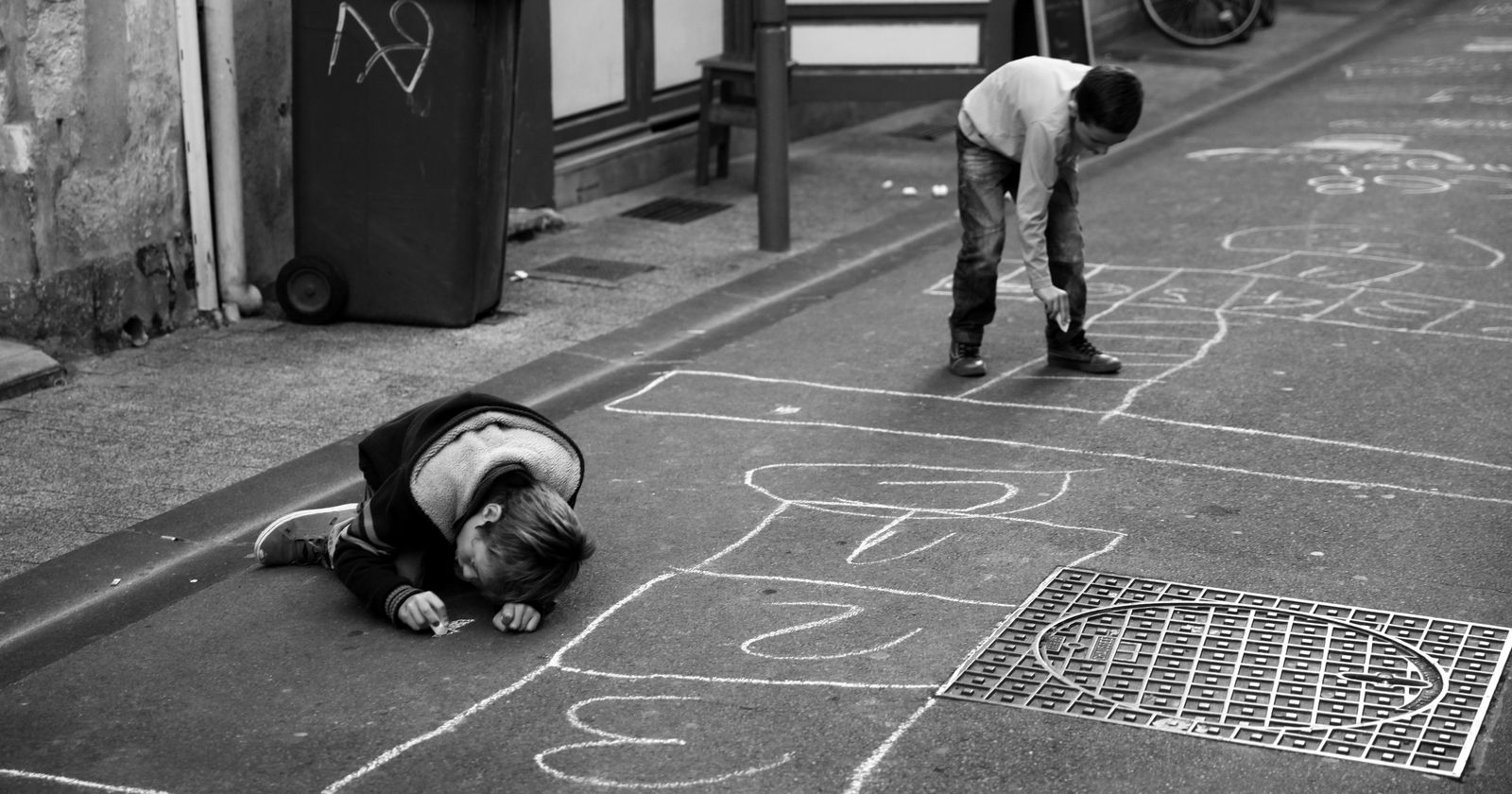
It’s 1975, a Saturday morning. You finish your cereal, grab your jacket, and walk three houses down to knock on the Hendersons’ door. “Can Debbie come out?” Nobody texted first. Nobody arranged it. Debbie’s mom just yells up the stairs.
If you grew up in the 1960s or 70s, small freedoms like that were often part of an ordinary week. Many kids today have fewer of them, for a mix of reasons: busier schedules, longer distances, different worries, and phones that make constant contact easy.
Not every child back then had these freedoms, either. A lot depended on where you lived, your family, and whether your neighborhood felt safe for kids like you. And some things changed for good reasons. Still, here are eight freedoms many people remember, and a few small ways to bring a little of each back.
The Artful Parent
Family-life ideas and sharp reads, in your inbox.
1. Knocking on a friend’s door to see if they could play
Back to the Hendersons’. There was no planned playdate and no group chat between parents. You just showed up, and if Debbie was busy, you tried the next house.
Being able to go looking for company on your own gave kids a say in their own social lives. Some days it worked out, some days nobody was home, and both were part of it.
Bringing a little back: if your kids have friends on the same street, talk with the other parents about an “open door” afternoon, where kids can knock and ask without anything being scheduled.
2. Running errands with a list and a few coins
“Go to the corner store and get a loaf of bread and a quart of milk. You can keep the change.” At eight or nine, that felt like a real job.
Handing over the money, counting the change, and remembering what you were sent for were small responsibilities that came with trust attached.
Bringing a little back: at the supermarket, give your child a short list of their own and a budget, and let them find the items and pay at the register while you wait nearby.
3. Taking the bus on your own
In some places, older kids rode the city bus to the library, the dentist, or a friend’s house across town.
This one has changed a lot in some countries. In surveys of 7- to 11-year-olds in England, 48% said in 1971 that they were allowed to use buses on their own. By 2010, it was 12%, according to a Policy Studies Institute report. That measures permission, not how often children actually rode.
Bringing a little back: if public transit suits your area and your child’s age, ride a simple route together a few times. Then let them lead while you sit a few rows back.
4. Claiming a vacant lot, a creek, or the woods
The best play spaces often weren’t playgrounds. They were the empty lot where someone had dumped old tires, the creek behind the houses, or the patch of trees everyone called “the forest.”
Unofficial places invited kids to make up their own uses for them: a fort, a racetrack, a pirate ship. Some of those spots had real hazards, too, and not every family had one nearby.
Bringing a little back: look for a wilder corner of a local park, check it over yourself first, and let kids decide what it’s for. Some towns also have nature play areas built for exactly this.
5. A whole day at the public pool with friends
Towel over your shoulder, a few coins for the snack bar, and hours of cannonballs. A lifeguard was on duty, but parents often weren’t there at all.
Spending a full day somewhere with only your friends meant managing your own time, money, and sunburn, more or less.
Bringing a little back: for strong swimmers of the right age, look into whether your local pool allows older kids to attend without a parent, and what its rules are. Younger kids can still make some of the choices themselves, like picking which friend to invite or packing the snack bag, while an adult actively watches them in the water. For young children and weak swimmers, the American Academy of Pediatrics recommends staying within arm’s reach, without distractions like reading or phones, even when lifeguards are on duty.
6. Summers with almost nothing on the calendar
School let out, and the next ten weeks were mostly yours. Maybe a week at a grandparent’s or a church camp, but much of it was open space.
Long, empty stretches can be dull. They can also be where kids discover what they actually like to do when nobody’s directing them.
Bringing a little back: if you can, leave a few weeks of summer, or a couple of afternoons a week, with nothing planned. Keep art supplies, books, and outdoor gear easy to reach.
7. Bringing home your own report card
You carried it home in your backpack, and sometimes you thought hard about the right moment to hand it over. Your parents found out how you were doing when you told them, or when the card arrived.
Today, many families can see grades and missing assignments online as soon as teachers post them. That can be useful, especially when a child is struggling. It also means kids have fewer chances to deliver their own news, good or bad.
Bringing a little back: if your school has an online portal, consider checking it less often and letting your child go first: “How’s math going from your point of view? Want to look at the grades together?”
8. Embarrassing moments that nobody recorded
The time you wiped out on your bike in front of the whole street. The terrible school play. The haircut you gave yourself. They happened, people laughed, and then they were mostly forgotten.
With cameras everywhere now, kids’ awkward moments can be filmed and shared in seconds, sometimes by the adults who love them most.
Bringing a little back: before you post or forward a video of your child’s funny mishap, ask yourself whether they’d want it seen by others in a few years. Some moments can just be stories you tell at the dinner table.
Where to start
You can’t rebuild 1975, and you wouldn’t want every part of it back. But a few of those freedoms can still fit into a modern childhood, at whatever level suits your child’s age and your neighborhood.
Pick one to try this month. And next time the grandkids are over, tell them about the corner store, the bus, or the forest behind your house. They may ask to try it.