
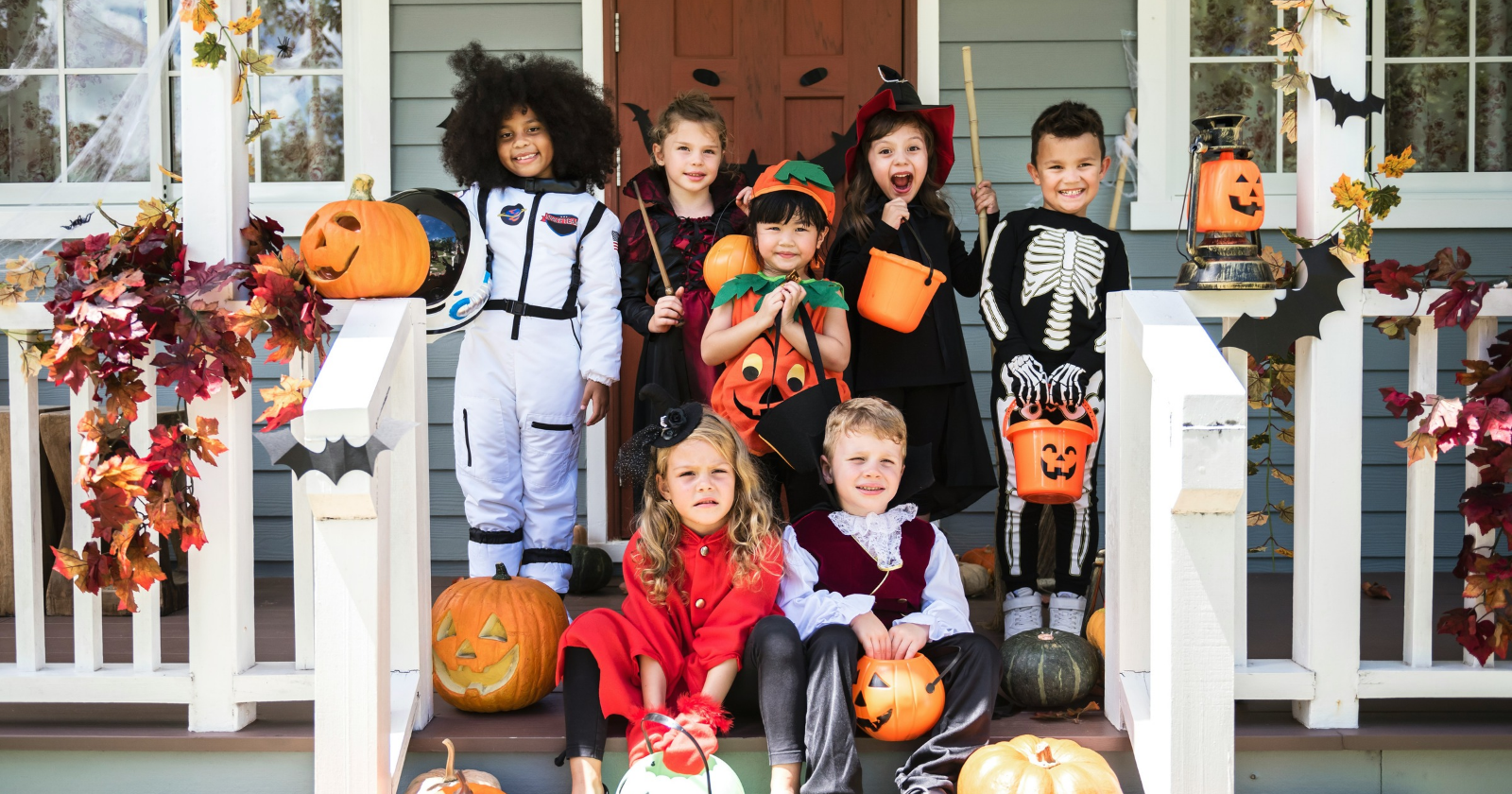

Fun fact: I used to go crazy for Halloween every year, and hardly missed an opportunity to dress up and go somewhere fun.
I love Halloween because I love DIY projects, and pre-motherhood Ainura had quite a bit of free time on her hands to craft something fun. Naturally, I’ve slowed down significantly over the last couple of years. My own costume efforts have been reduced to a last-minute bunny outfit using some makeup and a pair of ears recovered from our Easter decorations box.
When Emilia started daycare, the costume parties started coming, too. One of them was for their winter festival, which, rather randomly, included dressing up. I felt the calling (read: pressure) to create something nice, because I didn’t want her to feel left out among her classmates.
The Artful Parent
Family-life ideas and sharp reads, in your inbox.
So, while I was on maternity leave, I crafted a little strawberry onesie for her (pictured below), and it turned out pretty cute.
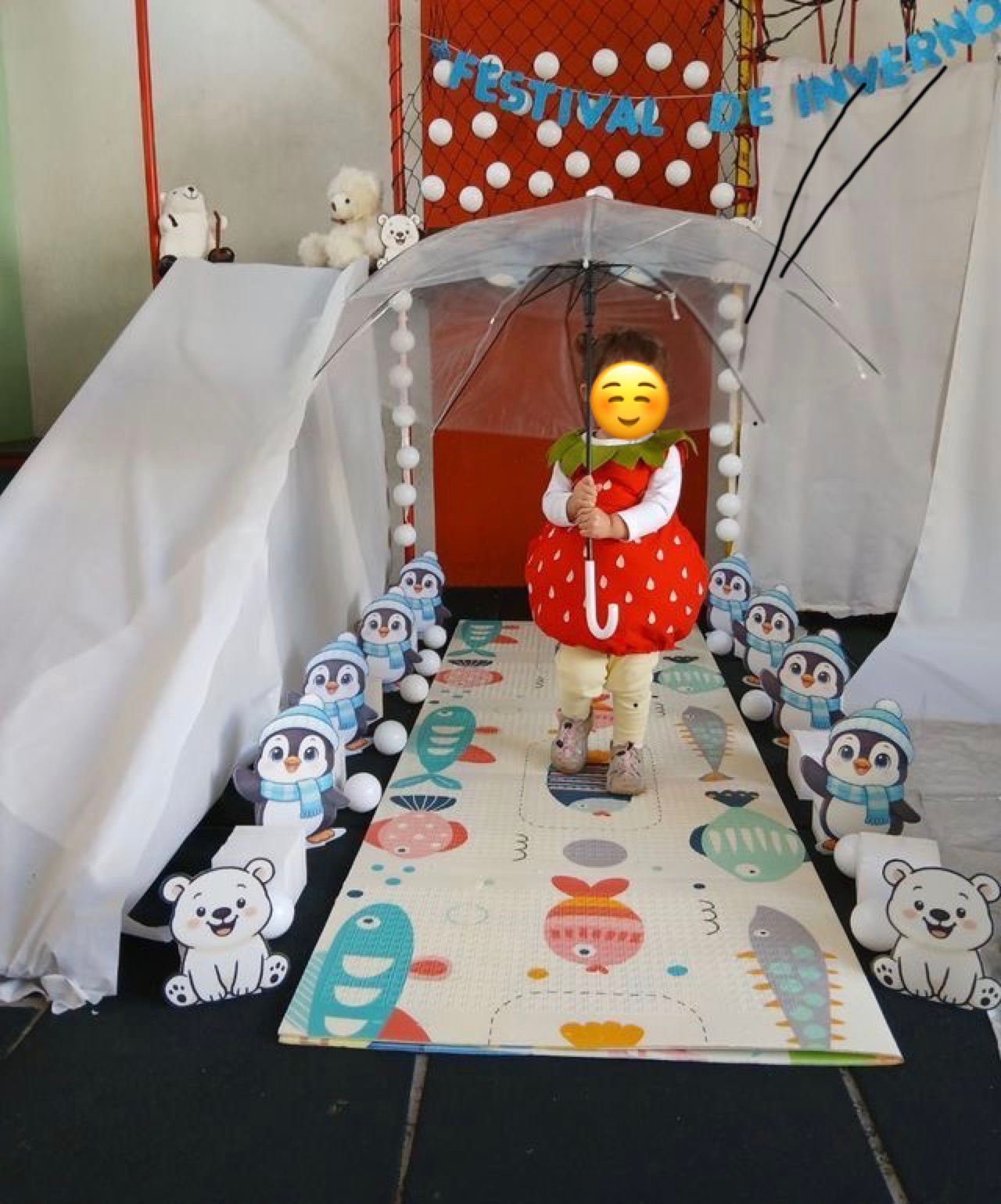
I didn’t want to buy something generic just for her to wear once and then throw away. Store-bought costumes can be expensive and surprisingly low-quality. Making something myself was cheaper in this case, and a lot more fun. And now, with Halloween just a couple of days away, I’m definitely reusing the strawberry costume. I have no intention of making another one for Emilia.
Yet walk into almost any party store in São Paulo and you’ll see just how massive the costume industry is. Rows and rows of princess dresses, Spider-Man suits, vampire capes and ghost costumes.
According to the National Retail Federation, Americans are expected to spend $1.5 billion on children’s Halloween costumes in 2026. Around 2.2 million children are expected to dress as princesses, and another 1.6 million as ghosts. Spider-Man is even more popular, with 4.6 million children planning to wear his costume.
Emilia hadn’t asked to be a strawberry. That was entirely my idea.
How Halloween became such a big costume business
I’d always imagined early Halloween costumes as mostly homemade ghosts and monsters. But when I asked Halloween historian Lisa Morton when children began trading scary disguises for superheroes, she corrected me.
“If anything, costuming went in the opposite direction!” she told me.
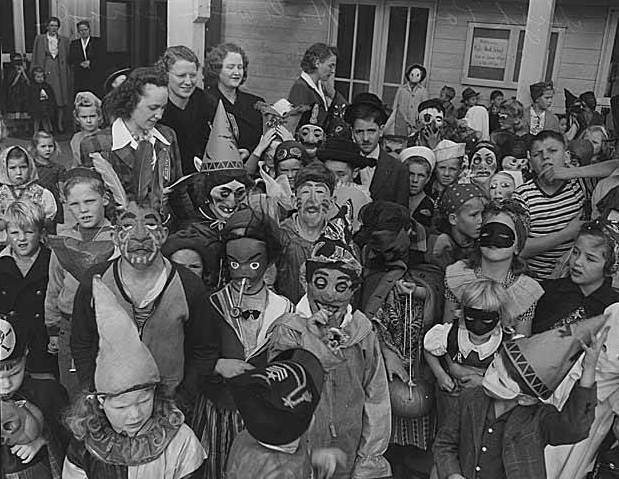
Before ready-made costumes became popular in the 1950s, American children often dressed as pirates, cowboys, fortune-tellers and thieves, using old clothes they had at home. Ghosts were popular too, partly because all you needed was an old bedsheet.
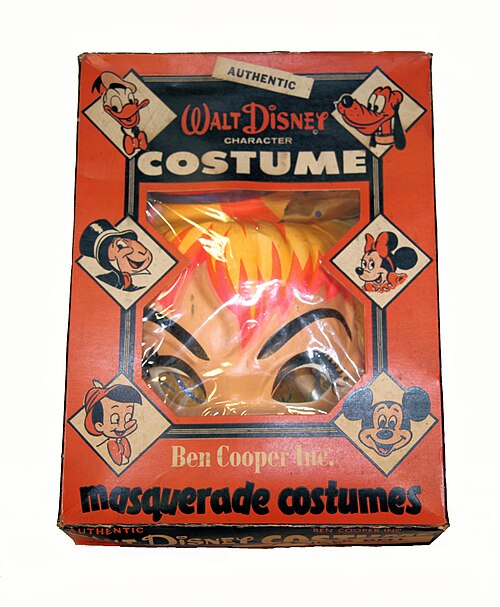
Companies soon realized there was money to be made. Ben Cooper Inc., founded in 1937, became one of America’s best-known costume manufacturers, selling recognizable characters in boxes containing plastic masks and printed outfits.
Morton told me that Superman was already enormously popular in the 1950s, thanks to comic books, movie serials and the television show Adventures of Superman, which began airing in 1952.
Horror characters had their own comeback. According to Morton, Universal monster movies arriving on television in 1957 helped bring monsters back into fashion. The following decades introduced rock stars, Star Wars characters and eventually the villains of 1980s slasher films.
“Characters like ghosts and witches are iconic and yet malleable (they’re also easy to put together),” Morton explained.
A ghost can be frightening, funny or adorable, depending on who’s wearing the bedsheet.
Nearly a century of commercial costume-making later, ghosts still compete with superheroes on the popularity charts.
The costumes children keep choosing
In 2024, around 1.8 million children were expected to dress as ghosts and 1.7 million as princesses. A year later, those figures were 1.6 million and 1.9 million, respectively. Not exactly a dramatic change.
Spider-Man, on the other hand, had quite a year. According to the NRF’s 2026 survey, an estimated 4.6 million children plan to dress as him, compared with 2.3 million in 2025. The number had doubled in just one year, although the survey doesn’t really explain why.
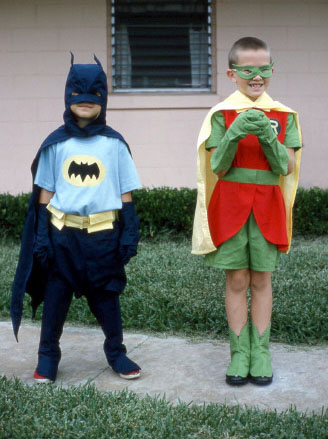
I was curious how the NRF came up with these figures. I don’t imagine anyone was surveying little babies about their Halloween plans.
Turns out, the 2026 NRF survey asked 7,889 adults about their Halloween plans between September 1 and 9. Will Granados from its media relations team explained: “Children are not surveyed directly, and the children’s costume figures are derived from responses by the adults surveyed.”
This means a baby dressed as a princess because her parents thought she’d look adorable and a five-year-old who has been begging for a princess dress for weeks both end up in the same statistic. Yet the story behind those two costumes is completely different.
Hold on… Who really chooses children’s Halloween costumes?
At two, Emilia mostly repeats my costume questions back to me while jumping around. Her four-month-old sister has even less say. I’m planning to let the baby skip dressing up this year, although I’m still contemplating a little DIY sushi costume if I find time on Friday night.
I spoke with Lisa Dinella, a professor of psychology at Monmouth University in New Jersey. Back in 2015, Dinella’s seven-year-old daughter knew exactly what she wanted to be for Halloween: a mummy.
So Professor Dinella took her mummy costume shopping, and the salesperson asked: “A girl mummy or a boy mummy?”
Both Lisa and her daughter were taken aback by the question. Why did mummies need to be gendered in the first place?
In her essay for The Washington Post, Dinella described how the salesperson directed them toward the girls’ section. While he searched for a mummy costume, her daughter found a Roman goddess outfit with a pink sash and gold jewelry and decided she wanted that instead. When I asked Dinella about it eleven years later, she didn’t dismiss the decision as entirely the shop’s doing.
“I think it’s a little bit of both,” she told me. Her daughter had plenty of her own ideas, but the store had made some choices easier than others. Dinella described a desire for congruence, or choosing what fits other people’s expectations of you. “It’s much easier to be congruent than it is to not be congruent,” she explained.
Dinella had explored children’s costume choices in a 2017 study involving 110 young children. Costumes picked with children’s involvement tended to be more traditionally gendered than those chosen entirely by parents. And during our conversation, she recalled that almost all parents were still choosing for their two-year-olds, but by age three, only about a quarter, perhaps fewer, were making the decision without their child’s input. Apparently my days of choosing Emilia’s costumes are numbered.
Dinella explained that between roughly three and seven, children are busy learning to sort the world into categories, and gender is one of them. So when a child is finally old enough to choose, they may already have absorbed plenty of ideas about which costumes are meant for girls and which are meant for boys. Those ideas don’t come from nowhere. Dinella pointed to adults, toy companies, advertising and the media. Her study shows an association, not proof that any one influence caused a particular costume choice.
I asked Dinella what she’d recommend if Emilia wanted to dress as a princess for the third Halloween in a row. Should I encourage something different, or just let her enjoy it? Dinella saw value in supporting a child’s enthusiasm, even for princesses. But she also suggested offering plenty of other dress-up possibilities at home, where children can pretend to be whoever they like without worrying what other people will think.
“It’s all about options. It’s all about supporting options for kids,” she told me. She reminded me that pretend play is one of the ways children learn, whether they’re trying out different roles or making up stories. I like that idea. I can offer my daughters different characters to try as they begin choosing for themselves.
What parents are really spending money on
Granados also shared numbers on families who reuse costume pieces rather than buying everything new:
“Compared with Halloween celebrants overall, those with children under 18 at home are more likely to repurpose at least some costume items from year to year (84% vs. 71%),” Granados explained.
The economy also seems to be influencing this year’s plans. Among the 43% of Halloween celebrants who told the NRF that economic conditions would affect their celebrations, 19% planned to make a costume instead of buying one, while another 20% intended to reuse last year’s outfit.
Handmade isn’t necessarily cheaper for everyone. Materials cost money, and finding the time can be difficult, especially when you’re working and raising young children.
I was lucky that I could work on Emilia’s costume while I was on maternity leave. These days, with two little ones at home, finding a few uninterrupted hours for a DIY project is considerably more complicated.
At least I know what Emilia will wear this Halloween: her strawberry onesie from the daycare winter festival. As for the baby sushi costume, I haven’t given up on the idea just yet.
I’ve been dropping hints to my husband about a good sewing machine for my birthday next week. If he takes the hint, I might be back to my old Halloween habits sooner than I thought, and you will hear all about it in 2027.
Sources and reporting
National Retail Federation, 2025 Halloween consumer survey
National Retail Federation, 2024 Halloween consumer survey
Smithsonian National Museum of American History, history of commercial Halloween costumes
Lisa Morton, email interview with the author (October 26, 2026)
Will Granados, National Retail Federation, email correspondence with the author (October 26, 2026)
Allison Zeller, National Retail Federation, survey sample-size clarification by email (October 27, 2026)
Lisa M. Dinella, interview with the author (October 27, 2026)
Lisa M. Dinella, “Wishing to be a mommy to a (girl) mummy this Halloween” (2015)