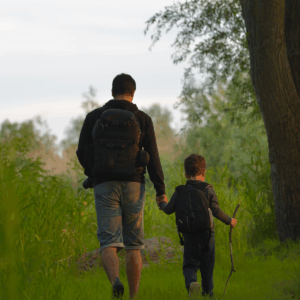

There’s something magical about Saturday mornings at the park with my grandkids. Last week, my eight-year-old granddaughter taught me a complicated handshake she’d invented, complete with sound effects and a little dance at the end.
As we practiced it over and over, both of us giggling like kids, I realized this silly moment would probably stick with both of us far longer than any expensive toy I could buy her.
After decades of watching families interact, first as a parent and now as a grandfather to four wonderful kids, I’ve noticed that the strongest grandparent-grandchild bonds aren’t built on grand gestures. They’re built on consistent, intentional actions that psychology research backs up time and again.
If you’re wondering how to strengthen that special connection with your grandchildren, here are eight things that make all the difference.
1. Show up consistently, not perfectly
You know what my grandkids remember most? Not the times I took them somewhere special, but the fact that every Saturday morning, rain or shine, Grandpa’s at the park.
Research shows that consistent presence from grandparents provides children with a sense of stability and security that extends well into adulthood. It’s not about being the “fun grandparent” every single time. Sometimes I’m tired, sometimes they’re grumpy, but we show up anyway.
My local grandkids know that Saturday mornings are our time. It’s become so routine that my granddaughter once told her teacher, “Saturdays are for Grandpa.” That consistency has built a trust that no amount of sporadic grand gestures could match.
2. Listen without immediately fixing
This one took me years to learn. When my grandson tells me about a problem with a friend at school, my first instinct is to solve it. But I’ve discovered that what he really wants is someone to hear him out.
Kids today face pressures we couldn’t have imagined at their age. Social media, academic competition, complex social dynamics. When they share these struggles with us, they’re not always looking for solutions. They’re looking for understanding.
Try this next time: when your grandchild shares a problem, ask “Do you want my advice, or do you just need someone to listen?” You’ll be amazed how often they choose the latter, and how much closer you’ll feel afterward.
3. Share your stories, but keep them relevant
My grandkids love hearing about “the olden days” when I was young, but timing is everything.
Related Stories from The Artful Parent
- Adults who grew up in homes where the television was always on but no one was talking often develop a lifelong discomfort with true silence and a paradoxical inability to feel heard in a room full of noise
- Research suggests the songs a family plays in the car become emotionally encoded in every child present — and 30 years later those songs don’t trigger nostalgia, they trigger a full nervous system response that puts the listener back in the exact seat they were sitting in
- Research suggests the most psychologically significant difference between children of the 70s and children of today isn’t screens or safety — it’s the number of uninterrupted hours a child spends without an adult directing their attention, and that number has dropped by 50 percent in two generations
When my eleven-year-old was nervous about a school presentation, I told him about the time I completely froze during a work presentation and had to start over. His eyes lit up. “You messed up too, Grandpa?”
Psychology Today notes that intergenerational storytelling helps children develop a stronger sense of identity and resilience.
But here’s the key: make your stories serve their needs, not your nostalgia. Save the lengthy tales for when they specifically ask, and keep them short and relevant to what they’re experiencing.
4. Create special traditions just between you
With my grandkids who live a few hours away, we have “Breakfast for Dinner” night whenever they visit. It started by accident when I once burned the roast and had to improvise with pancakes.
Now it’s our thing, and they ask for it every visit.
These unique traditions don’t need to be elaborate. Maybe it’s a secret handshake, a special snack only you make, or a silly game you play together. What matters is that it’s yours alone. It becomes part of their childhood narrative: “At Grandpa’s house, we always…”
- Research suggests the reason some people can live the same day on repeat for years without distress while others feel like they’re suffocating isn’t personality. It’s whether the routine was chosen deliberately or inherited by default, because the brain processes voluntary repetition as ritual and involuntary repetition as captivity. - Global English Editing
- Life isn’t a series of random events but a chess game where every move matters - Global English Editing
- Nobody tells you that the real threat to a long relationship isn’t the dramatic betrayal. It’s the Wednesday afternoon coffee where someone at work asks how you’re really doing and you actually answer honestly for the first time in months. - Global English Editing
5. Respect their parents’ rules while being yourself
This is a delicate balance, but it’s crucial. I might let the kids stay up a bit later or have an extra cookie, but I never undermine their parents’ major rules or values.
When my daughter-in-law implemented a “no screens during meals” rule, I followed it at my house too, even though I personally didn’t mind.
The result? My grandkids see me as someone who’s on their team AND their parents’ team. That trust from their parents means more quality time with the grandkids.
6. Meet them where they are, literally and figuratively
Last month, my three-year-old grandson spent twenty minutes showing me every single rock in the park. Was I fascinated by rocks? Not particularly. Was I fascinated by his excitement about rocks? Absolutely.
As the team at Psychology Today puts it, “Children respond to our animated expressions of interest in their interests with evident pleasure. They enjoy this interaction and want more of it.”
So yes, this means I’ve learned more about dinosaurs, Minecraft, and Taylor Swift than I ever thought I would at my age. But seeing their faces light up when I remember their favorite dinosaur or ask about their Minecraft world is absolutely priceless.
7. Give them your full attention
When I’m with my grandkids, my phone goes in my pocket. Period. In our hyper-connected world, giving someone your complete attention has become a rare gift.
According to experts, positive attention makes children feel valued and secure. It helps them build an image of themselves as capable and important human beings.
True enough, I’ve noticed that when I’m fully present, really listening and engaging, my grandkids open up in ways they don’t when adults are distracted.
My granddaughter once said, “Grandpa, you’re the only grown-up who doesn’t look at their phone when I’m talking.” That hit me right in the heart.
8. Show them unconditional love while maintaining boundaries
Being a grandparent is like being a parent with the volume turned down. Same love, way less anxiety about whether they’ll turn out okay.
This perspective allows us to love unconditionally while still maintaining healthy boundaries.
When my grandson acts out, I don’t panic about what it means for his future. I address the behavior calmly, set the boundary, and move on. Five minutes later, we’re back to building Legos together.
This combination of unconditional love with consistent boundaries creates a safe space where kids feel secure enough to be themselves.
Closing thoughts
Building strong bonds with grandchildren isn’t about being perfect or having endless energy. It’s about showing up, paying attention, and creating a relationship where they feel seen, heard, and valued.
Some days you’ll nail it. Other days, you’ll be tired, they’ll be cranky, and nothing will go as planned. That’s okay. The beauty of being a grandparent is that you get multiple chances to get it right.
What traditions are you creating with your grandchildren that they’ll remember long after they’re grown?