

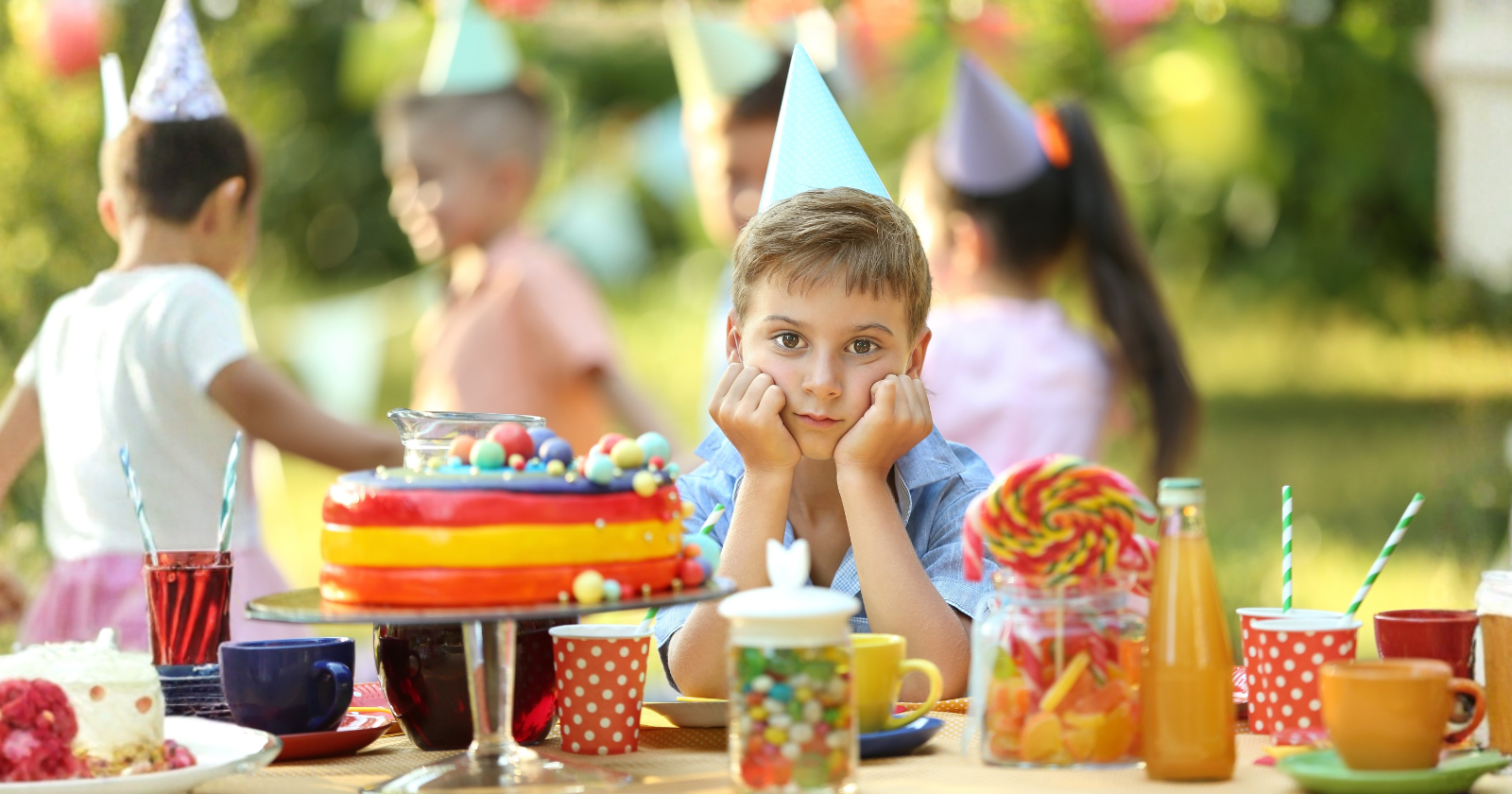
Birthday parties. They’re supposed to be pure joy and cake-fueled chaos, right? But last month at a bounce house party, I watched my friend’s face fall as another parent pulled their child away from hers.
The reason? Her daughter had just grabbed three cupcakes at once while shouting “MINE!” at the top of her lungs.
That moment stuck with me. As parents, we’ve all been there, watching our kids do something that makes us want to disappear into the gift wrap. But some behaviors at parties really do make other parents raise their eyebrows and wonder what’s happening at home.
After years of teaching kindergarten and now navigating the party circuit with my own two little ones, I’ve noticed patterns. These aren’t just “kids being kids” moments. They’re behaviors that genuinely concern other parents and, honestly, might be worth reflecting on if they’re happening regularly.
1. The grabby gift opener
You know the scene. The birthday child is opening presents, and suddenly there’s that one kid lunging for every toy, trying to rip open packages that aren’t theirs, maybe even crying when told to wait their turn.
I get it. Watching someone else open cool stuff is torture when you’re little. But when a child consistently can’t handle this basic party ritual without multiple meltdowns, other parents notice. They’re thinking about impulse control and whether this child has ever had to wait for anything.
What helps? Practice at home. When my younger one turned two, we actually rehearsed watching his sister open pretend presents. Sounds silly? Maybe. But it worked. We talked about how watching someone else be happy can make us happy too.
Natural consequences work here as well. If a child can’t watch respectfully, they might need to take a break in another room until present time is over.
2. The food hoarder
Picture this: the pizza arrives, and one child immediately grabs four slices, stuffing their plate while other kids are still washing their hands. Or they’re the one who takes all the strawberries from the fruit tray, leaving none for anyone else.
Other parents see this and wonder if boundaries exist at home. Do they eat family-style? Have they learned about sharing and considering others?
This isn’t about food scarcity or genuine hunger. It’s about awareness of others. When I spot this happening, I gently ask, “Let’s make sure everyone gets some first, then we can come back for seconds.”
Related Stories from The Artful Parent
- I’m 34 and I caught my mother talking to her plants, reorganizing drawers at midnight, and eating dinner at 4pm — and behavioral scientists say these aren’t quirks, they’re what freedom looks like after decades of performing parenthood
- Behavioral scientists found that the rituals adult children discover their parents doing alone aren’t eccentric — they’re the personalities that were quietly suppressed for twenty years of raising you
- 9 signs you were raised by a parent who loved you but didn’t know how to show it
Simple, but it sends a message that we think about the group, not just ourselves.
3. The birthday thunder-stealer
Every party has its star for the day. But there’s always that one child who cannot handle not being the center of attention.
They interrupt the birthday song to announce it’s almost their birthday. They cry during present opening because they want gifts too. They insist on being first for everything, even blowing out the candles.
Having taught kindergarten for seven years, I’ve seen how hard this is for some kids. But parents watching this wonder if anyone has ever told this child that other people get special days too.
Before parties now, I remind my kids whose special day it is. We talk about how we can help make the birthday child feel celebrated. It’s amazing how giving kids a job like “official present helper” or “candle guard” can redirect that need for attention into something positive.
4. The destructor
Some kids explore. Others destroy. There’s a difference, and parents can spot it immediately.
- Psychology says people who are a mass of contradictions aren’t confused about who they are — they’ve simply refused to flatten themselves into a single coherent story that makes other people comfortable - Global English Editing
- Psychology says the deepest loneliness widowed retirees face isn’t about missing a spouse. It’s the sudden loss of what researchers call ambient companionship, the passive presence of another human that gave every room a reason to be occupied. - Global English Editing
- I’m 65 and nobody warned me that the hardest part of retirement wouldn’t be the boredom, it would be the silence at 9am on a Monday when every cell in my body is still wired to be needed somewhere and the realization that I’m not hits with the same force every single week even though I’ve technically known it for months - Global English Editing
The child who intentionally pops balloons, breaks decorations, or knocks down other kids’ block towers isn’t just playing rough. They’re showing they haven’t learned respect for others’ belongings or celebrations.
When my daughter was three, she went through a phase of knocking things over at playdates. Again, natural consequences became our teacher in this situation. If she knocked down a tower, she helped rebuild it, even if it took forever. If she broke something, we left the party early. No anger, no big scene, just matter-of-fact consequences.
5. The unsupervised chaos agent
This is the kid running wild while their parent chats obliviously in the corner, sipping coffee. They’re jumping on furniture, going into off-limit rooms, maybe even opening the family’s fridge or cabinets without asking.
What really gets other parents isn’t the child’s behavior alone. It’s watching the parent completely checked out, expecting others to manage their kid or the host to handle it.
Look, I get it, we’re all tired. We all need adult conversation. But your kid, your responsibility, even at parties.
I host monthly craft playdates with several families, and the unspoken rule is clear: we can chat, but eyes stay on our own kids. When someone needs a bathroom break, we explicitly ask another parent to watch ours. It’s basic respect.
6. The violent reactor
No matter how fun a party is, disappointment still does happen in many way. Someone else wins the game. The piñata candy runs out. The cake flavor isn’t their favorite.
Most kids feel the disappointment and move on. But some kids hit, throw things, or scream at levels that stop the whole party.
Other parents aren’t judging the meltdown itself. Kids have big feelings and they don’t know how to manage those yet. But they’re noticing whether the parent addresses it, removes the child to calm down, or just ignores it hoping it’ll pass.
Physical aggression especially raises flags. If a five-year-old is hitting others over party games, parents wonder what discipline looks like at home. Are there boundaries? Consequences? Any teaching about handling frustration?
7. The mean excluder
“You can’t play with us.” “This game is only for pretty girls.” “Your present was boring.”
When kids say cruel things at parties, excluding others or making mean comments, parents absolutely notice. They’re wondering if kindness is valued at home, if anyone corrects this behavior, or if it’s brushed off as “kids will be kids.”
My daughter is naturally tender-hearted, but even she has moments. When I hear exclusionary language, we leave the activity immediately for a quiet chat. Not a lecture, but a simple question: “How do you think that made them feel?”
Kids are capable of empathy when we help them access it.
Final thoughts
Here’s the thing: every child has rough moments at parties. Mine certainly have. The difference is whether these behaviors are patterns and whether we, as parents, address them.
Other parents aren’t expecting perfection. They’re looking for awareness, effort, and basic consideration for others. They want to know their kids will be safe and included when playing with yours.
Fortunately, kids are incredibly adaptable. With gentle guidance and consistent boundaries, these behaviors can shift. It doesn’t require harsh discipline or public shame. Often, it just needs us to pause our adult conversation, get on their level, and guide them through the moment.
Next time you’re at a party and see your child struggling, remember: how you respond matters more than the behavior itself. Show other parents you’re aware, you care, and you’re working on it.
That’s all any of us can do, really. Guide our kids through these social situations one birthday party at a time, with patience and probably a little too much cake.
