

There’s something both thrilling and nerve-wracking about watching your baby grow. One week they’re staring at the ceiling fan like it holds the secrets of the universe, and the next they’re reaching for your face with those tiny, determined fingers. It’s magical.
It’s also the kind of thing that can send you down a 2 a.m. internet rabbit hole wondering if your little one is “on track.”
Here’s what I’ve learned after two babies and countless conversations with our pediatrician: milestones are guideposts, not deadlines. They help doctors spot when a child might benefit from extra support, but they’re not meant to fuel comparison or worry.
Every baby unfolds at their own pace. Still, it helps to know what healthcare providers are actually looking for during those well-child visits. So let’s walk through the key milestones that signal healthy development, month by month, with the understanding that your baby is writing their own story.
1) The first two months: adjusting to the world
Those early weeks are a blur of feeding, diaper changes, and learning each other. Your newborn is doing important work, even when it looks like they’re just sleeping and eating. Doctors watch for a few key signs during this stage that show your baby’s nervous system is developing well.
By around two months, most babies start to focus on faces and follow objects with their eyes. They may turn toward sounds and startle at loud noises. You might notice their movements becoming slightly less jerky as they gain more control. And then there’s the moment that makes all those sleepless nights worth it: the first real social smile.
As noted by the CDC’s developmental milestone guidelines, that responsive smile is one of the earliest signs of healthy social and emotional development.
During tummy time, your baby might briefly lift their head. They’re building the neck and core strength that will eventually lead to rolling, sitting, and beyond. If your baby seems unusually stiff or floppy, or isn’t responding to sounds or faces, it’s worth mentioning to your pediatrician.
But remember, many babies are still figuring things out at this stage.
2) Three to four months: discovering hands and voices
This is when things start to get interactive. Your baby is waking up to the world and realizing they can actually do things. Their hands become endlessly fascinating, and they may spend long stretches just staring at their fingers or batting at a dangling toy.
By four months, most babies are cooing and making vowel sounds. They’re experimenting with their voice, and you might find yourself in “conversations” of coos and gurgles. They’re also getting better at tracking moving objects and recognizing familiar faces. When you walk into the room, they might light up in a way that melts your heart.
Physically, babies at this age can usually hold their head steady without support and push up on their elbows during tummy time. Some start to roll from tummy to back. They’re reaching for toys and bringing things to their mouth, which is their primary way of exploring.
If your baby isn’t showing interest in people or objects, or seems to have lost skills they previously had, that’s something to discuss with your doctor. But most babies are happily grabbing at everything in sight by now.
3) Six months: sitting, babbling, and big emotions
Half a year already. By six months, your baby is likely sitting with some support and maybe even briefly on their own. They’re reaching for things with purpose, transferring objects from hand to hand, and everything still goes straight into the mouth.
This is also when many babies start solid foods, which opens up a whole new world of textures and tastes.
Babbling really takes off around this time. You’ll hear consonant sounds like “ba,” “da,” and “ma” strung together. They’re not saying words yet, but they’re practicing the building blocks of language. The American Academy of Pediatrics emphasizes that responsive back-and-forth interactions during this stage help wire the brain for communication.
Emotionally, six-month-olds are becoming more expressive. They laugh, squeal, and may start showing stranger anxiety. They know their people and prefer them. This is also when sleep patterns often shift, for better or worse. If your baby isn’t babbling, doesn’t respond to sounds, or shows no interest in reaching for things, it’s worth a conversation with your pediatrician. But most babies at this age are busy, curious, and increasingly opinionated.
4) Nine months: on the move and full of personality
By nine months, many babies are crawling, scooting, or finding their own creative ways to get around.
Some pull to stand, cruising along furniture with a look of pure determination. They’re also developing the pincer grasp, using their thumb and forefinger to pick up small objects. This is when you really need to baby-proof, because nothing is safe anymore.
Language comprehension is growing rapidly. Your baby may understand “no” (even if they choose to ignore it) and respond to their name. They might wave bye-bye or play simple games like peekaboo. Their babbling sounds more like real conversation, with rising and falling tones that mimic speech patterns.
Separation anxiety often peaks around this age. Your baby knows you’re their person, and they’re not thrilled when you leave the room.
This is actually a healthy sign of secure attachment. If your baby isn’t bearing weight on their legs when supported, doesn’t respond to their name, or doesn’t seem to recognize familiar people, bring it up at your next visit. But most nine-month-olds are busy exploring every corner of their world.
5) Twelve months: first words and first steps
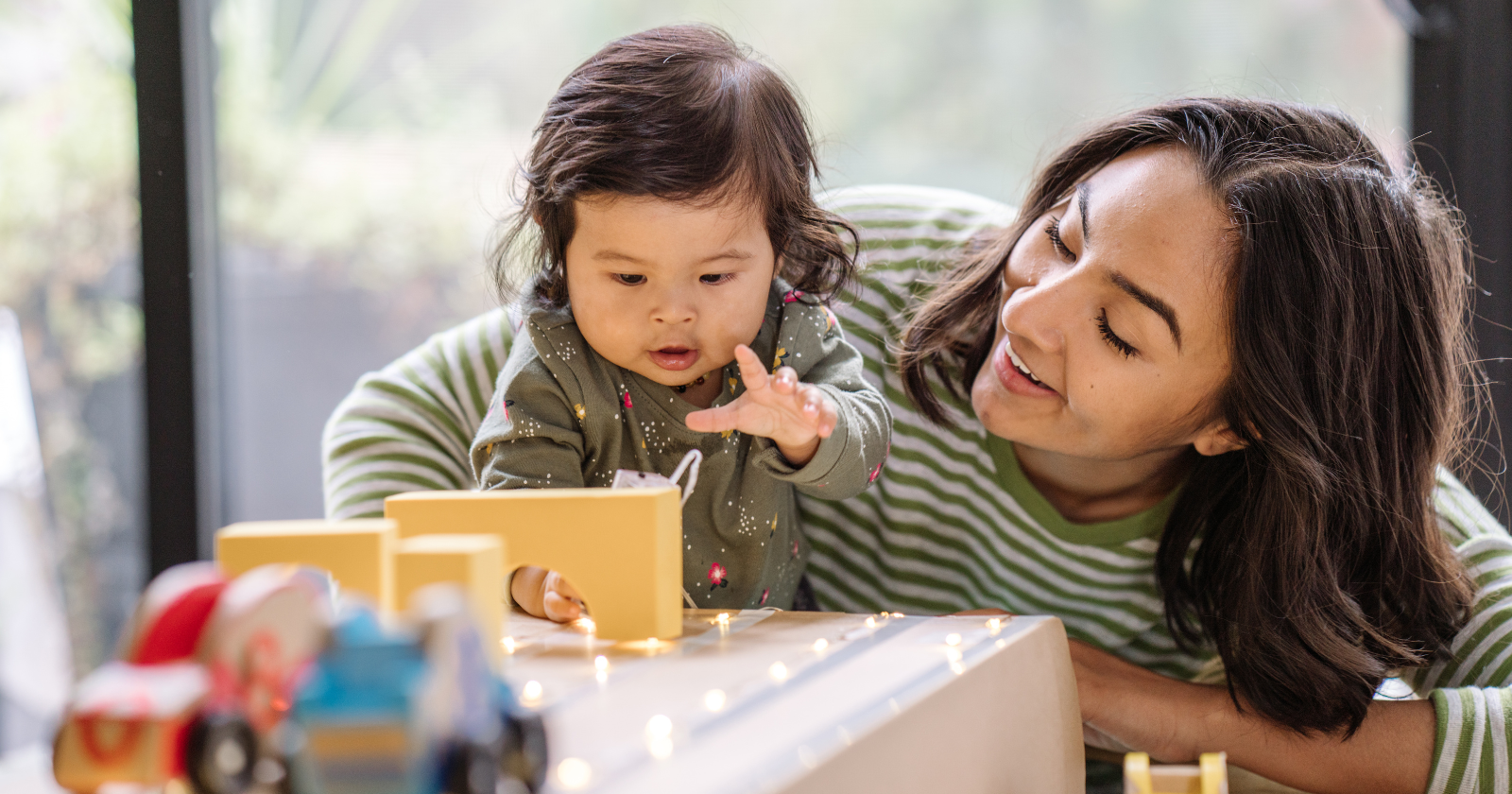
The first birthday is such a milestone in itself. By now, many babies are saying one or two words with meaning, like “mama,” “dada,” or “uh-oh.” They understand far more than they can say and can follow simple instructions like “give me the ball.”
They’re pointing at things they want and using gestures to communicate.
Physically, some one-year-olds are walking independently, while others are still cruising or crawling. Both are completely normal. Walking typically happens anywhere between 9 and 18 months, so try not to compare your baby to the early walker down the street.
They’re also getting better at feeding themselves, drinking from a cup with help, and using objects correctly, like putting a phone to their ear or brushing their hair with a brush.
Socially, your baby is engaging in simple pretend play and showing preferences for certain people and toys. They might hand you a book when they want to be read to or cry when another child takes their toy.
These are all signs of healthy cognitive and emotional development. If your baby isn’t using any gestures, doesn’t point at things, or has lost words or skills they previously had, it’s important to talk to your doctor.
6) Fifteen to eighteen months: language explosion and growing independence
The second year brings rapid changes. By 15 months, most toddlers are walking, though some are still a bit wobbly. They’re climbing on everything, which is terrifying but developmentally appropriate. Their vocabulary is expanding, and they may have anywhere from a handful of words to a dozen or more by 18 months.
This is when toddlers start to assert their independence. They want to do things themselves, even when they can’t quite manage it. They might throw impressive tantrums when frustrated, which is exhausting but normal.
As developmental psychologist Dr. Alison Gopnik has noted, toddlers are essentially little scientists running experiments on the world around them, testing limits and learning cause and effect.
By 18 months, most toddlers can point to body parts when asked, follow simple directions, and engage in pretend play like feeding a doll or talking on a toy phone. They’re also becoming more social, showing interest in other children even if they don’t quite know how to play together yet.
If your toddler isn’t walking, has fewer than six words, or doesn’t seem to understand simple requests, it’s worth discussing with your pediatrician.
7) Two years: sentences, imagination, and big feelings
By age two, most children are putting two words together, like “more milk” or “daddy go.” Their vocabulary is growing rapidly, and they’re starting to be understood by people outside the family. They can follow two-step instructions and are beginning to sort shapes and colors.
Physically, two-year-olds are running, kicking balls, and climbing stairs with support. They’re also developing fine motor skills, scribbling with crayons and stacking blocks. Pretend play becomes more elaborate. My son went through a phase where every cardboard box was a rocket ship, and I learned to never throw anything away without checking first.
Emotionally, two-year-olds are intense.
They feel everything deeply and don’t yet have the skills to regulate those big emotions. Meltdowns are common and don’t mean you’re doing anything wrong. They’re also becoming more aware of other children and may start to engage in parallel play, doing the same activity alongside a peer.
If your two-year-old isn’t using two-word phrases, doesn’t follow simple instructions, or has lost skills they previously had, talk to your doctor about a developmental screening.
What to do if you have concerns
First, trust your instincts. You know your baby better than anyone. If something feels off, it’s always okay to ask questions. Pediatricians expect parents to have concerns, and they’d rather address something early than have you worry in silence.
Developmental screenings are a normal part of well-child visits, typically at 9, 18, and 30 months.
These aren’t tests your baby can pass or fail. They’re tools to help identify children who might benefit from early intervention services. And early intervention works. The brain is incredibly plastic in the first few years, and support during this window can make a significant difference.
If your baby does need extra help, it doesn’t mean you did anything wrong. Some children just need more support in certain areas, and getting that support is one of the best things you can do for them.
Early intervention services are often free or low-cost and can include speech therapy, physical therapy, or developmental support tailored to your child’s needs.
Closing thoughts
Milestones are helpful markers, but they’re not the whole story. Your baby is more than a checklist. They’re a whole person with their own timeline, temperament, and way of engaging with the world. Some babies walk early and talk late. Some do everything by the book. Some take their sweet time and then suddenly leap ahead.
What matters most is connection. Talking to your baby, reading together, playing on the floor, responding to their coos and cries. These everyday moments are building their brain and their sense of security in the world.
So yes, keep an eye on the milestones. Bring up concerns when you have them. But also trust the process and enjoy watching your little one become exactly who they’re meant to be. They’re doing great. And so are you.
