
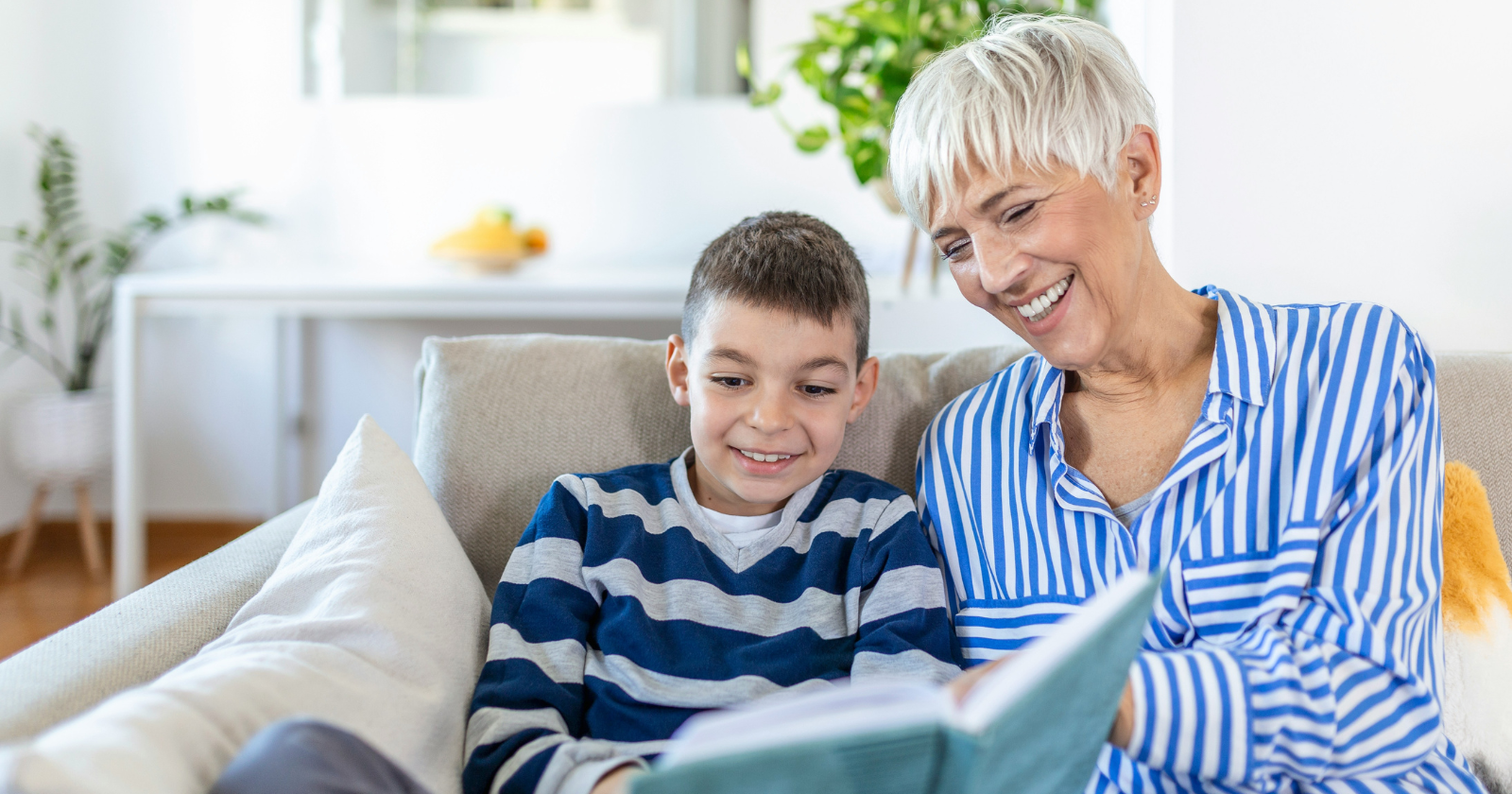
Last weekend, my mom came over with a mason jar full of buttons she’d been collecting “for something special.” Within minutes, my kids had abandoned their toys and were sorting them by color on the living room floor, completely absorbed. Later that evening, as we tucked them into bed, my daughter asked when Grandma was coming back with more “treasure hunts.”
It got me thinking about what makes some grandparents absolutely magnetic to their grandkids while others struggle to connect. After watching my own parents and in-laws navigate this role, plus hearing countless stories from friends, I’ve noticed certain behaviors that practically guarantee excited little faces pressed against the window, waiting for grandparents to arrive.
1. They get down on the floor
Remember being a kid and having that one adult who’d actually sit cross-legged on the carpet with you? That’s pure gold right there. The grandparents who win hearts are the ones willing to abandon the couch and meet kids where they literally are.
My father-in-law will spend an entire afternoon helping build elaborate block towers, knowing full well they’ll get knocked down seventeen times. He doesn’t hover above directing traffic; he’s right there in the construction zone, suggesting we add a drawbridge or wondering aloud if dinosaurs might live on the third floor.
This physical proximity changes everything. When you’re eye-level with a child, you become a playmate rather than an authority figure looming overhead.
2. They bring simple, open-ended activities
You know what never fails? A bag of craft supplies, some cookie dough, or even just an empty cardboard box. The grandparents who show up with tablets loaded with games might get initial excitement, but it’s the ones who arrive with possibilities rather than predetermined entertainment who build lasting memories.
One grandmother I know brings a different “mystery bag” each visit: sometimes it’s yarn and popsicle sticks, other times it’s ingredients for homemade playdough. She doesn’t arrive with a Pinterest-perfect craft tutorial. Instead, she spreads everything out and asks, “What should we make today?”
These open-ended materials invite collaboration. They create stories. They become traditions that grandkids request again and again.
3. They share real skills and hobbies
Does Grandpa know how to whistle? Can Grandma knit? Whatever the skill, kids are fascinated by adults who can do “real things” and are willing to teach them.
My mother spent years as a seamstress before I was born, and now she’s teaching my daughter basic stitches using felt squares and oversized needles. Is it messy? Absolutely. Does my five-year-old now proudly show everyone her “sewing projects”? You bet.
Kids crave feeling capable and connected to something bigger than themselves. When grandparents share their genuine interests and expertise, they’re not just passing time; they’re passing down pieces of themselves.
Related Stories from The Artful Parent
- Social psychologists found that the most emotionally resilient children share one trait — they can name at least 3 adults outside their immediate family who they believe would help them in a crisis — and grandparents are the most commonly named
- My father fixed everything in the house but never fixed anything between us — and psychology explains that’s not a contradiction, it’s a pattern common in men who were raised to express love through utility because no one ever modeled what it looks like to express it through words
- Psychology claims people who grew up in the 1960s and 1970s learned these 9 life lessons that are rarely taught today
4. They embrace mess without flinching
Here’s something I’ve noticed: the grandparents who remain calm when pasta sauce hits the wall or when glitter somehow migrates to every surface are the ones kids gravitate toward.
This doesn’t mean having no boundaries, but there’s something magical about an adult who responds to spills with “Oops, let’s grab a towel!” instead of stressed sighs. Kids already know they’re messy. They don’t need reminders. What they need are adults who see beyond the chaos to the exploration happening underneath.
When my kids help my mom in her garden, they come back covered in dirt with vegetables that look like they’ve been through a tornado. She just laughs and says the plants don’t mind. That acceptance? That’s what makes them beg to go back.
5. They tell stories about mom and dad as kids
Want to blow a child’s mind? Tell them about the time their parent got in trouble for trying to give the cat a bath. Or when they refused to eat anything but peanut butter sandwiches for three months straight.
These stories serve multiple purposes. They humanize parents (who knew Dad was ever five years old?), they create family lore, and they give kids permission to be imperfect. My kids absolutely light up when their grandparents share these glimpses into our childhoods. Suddenly, family history becomes real and relatable rather than abstract old photos in albums.
6. They have special traditions that only happen at their house
Pancakes for dinner. Staying up late to watch shooting stars. Building blanket forts that take over the entire living room. The grandparents who create unique traditions become destinations rather than obligations.
- Research suggests the reason some people can live the same day on repeat for years without distress while others feel like they’re suffocating isn’t personality. It’s whether the routine was chosen deliberately or inherited by default, because the brain processes voluntary repetition as ritual and involuntary repetition as captivity. - Global English Editing
- Life isn’t a series of random events but a chess game where every move matters - Global English Editing
- Nobody tells you that the real threat to a long relationship isn’t the dramatic betrayal. It’s the Wednesday afternoon coffee where someone at work asks how you’re really doing and you actually answer honestly for the first time in months. - Global English Editing
My in-laws have “backward day” once a summer where everything’s flipped: dessert first, pajamas all day, breakfast for dinner. Is it silly? Completely. Do my kids start asking about it in March? Without fail.
These don’t have to be elaborate productions. Even something as simple as always having a specific cereal that’s “only at Grandma’s” or a special chair that’s just for story time can become cherished rituals.
7. They really listen without immediately fixing
When my daughter tells my mom about a friend problem at school, my mom doesn’t jump straight to solutions. She asks questions. She validates feelings. She shares similar experiences from her own childhood. Sometimes she just sits and listens while my daughter works through her thoughts out loud.
This kind of presence is increasingly rare. Kids (like adults) don’t always need answers; sometimes they just need someone to witness their experiences. Grandparents who master this art of listening without rushing to judgment or advice become trusted confidants.
8. They slow down to kid pace
In our house, we’re often rushing: to school, to activities, through bedtime routine. But the grandparents who connect best are those who operate on kid time, where examining every rock on a walk is perfectly reasonable and watching clouds change shape constitutes a full afternoon activity.
Last month, my dad spent forty-five minutes with my son watching ants carry crumbs across the sidewalk. No agenda, no timeline, just pure observation and wonder. Later, my two-year-old brought me an ant he’d drawn (okay, it was a scribble, but he assured me it was an ant) to show Grandpa next time.
This willingness to slow down sends a powerful message: you’re worth my time, and your interests matter.
Final thoughts
Creating grandparent magic isn’t about expensive toys or elaborate outings. It’s about presence, patience, and the willingness to enter a child’s world on their terms. The grandparents who become cherished figures in their grandchildren’s lives are those who understand that connection happens in small moments: sorting buttons on the floor, getting dirty in the garden, or simply sitting still long enough to really see the world through younger eyes.
What memories do you have of grandparents or older relatives who made you feel truly seen? Those behaviors, those moments of connection, they’re the blueprint for the next generation of grandparent relationships.