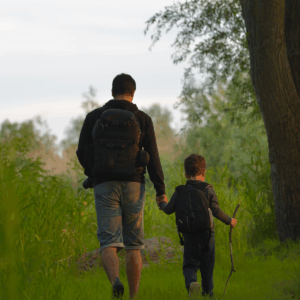

I watched my grandson navigate a tricky situation at the playground last summer. A bigger kid kept cutting in front of him on the slide. Instead of shoving back or running to me in tears, he simply said, “Hey, I was waiting. You can go after me.” The other boy looked surprised, then nodded and stepped aside.
That moment didn’t happen by accident. His parents had been laying groundwork for years, teaching him skills that most of us never think about until a crisis hits.
The truth is, bullying prevention doesn’t start when your child comes home crying. It starts in the ordinary moments of daily life, in the small lessons we weave into breakfast conversations and bedtime routines. Here are nine behaviors that parents who raise bully-resistant kids tend to teach early.
1) They name emotions out loud
Children who can identify what they’re feeling are far less likely to lash out or crumble when faced with aggression. This skill, often called emotional literacy, gives kids a vocabulary for their inner world.
When a child can say “I feel frustrated” instead of throwing a toy, they’ve taken the first step toward self-regulation.
Parents who do this well make it a habit. They narrate their own emotions casually. “I’m feeling a bit overwhelmed with all this traffic” or “That made me really happy.” Kids absorb this language like sponges.
Research from the Yale Center for Emotional Intelligence has shown that children with strong emotional vocabulary perform better socially and academically. They’re also better equipped to recognize when someone else is trying to manipulate or intimidate them.
A child who understands their own emotions can spot when something feels wrong in a social situation, and that awareness is powerful protection.
2) They practice assertive communication
There’s a wide gap between aggressive and passive, and most kids default to one extreme or the other. Assertiveness sits right in the middle, and it takes practice to get there.
Assertive kids can say “I don’t like that” without screaming or whispering. They can disagree without being disagreeable. This skill serves them in countless situations, from turning down peer pressure to standing up to a bully without escalating the conflict.
You can practice this at home in low-stakes moments. Let your child order their own food at a restaurant. Encourage them to tell a sibling directly when something bothers them instead of tattling.
Related Stories from The Artful Parent
- 8 signs you’re raising an emotionally secure child even when it doesn’t feel like you know what you’re doing
- 9 things creative kids do that look like misbehavior but are actually signs their mind is working overtime
- The 8 messiest childhood activities are actually the ones building your child’s brain in ways screens never will
Role-play scenarios where they have to speak up for themselves. The dinner table is a surprisingly good training ground for the playground.
3) They build comfort with saying no
“No” is one of the most important words a child can learn to use confidently. Yet many kids are taught, often unintentionally, that saying no to adults or peers is rude or defiant.
Parents who raise resilient kids give them permission to set boundaries. They respect when their child says they don’t want a hug from a relative. They don’t force them to share every single toy with every single friend. These small moments teach children that their boundaries matter.
When a child is comfortable saying no at home, they’re far more likely to say it when a bully pressures them or when a situation feels unsafe.
As I covered in a previous post, the ability to set boundaries is one of the most underrated life skills we can give our children. It protects them not just from bullies, but from all sorts of unhealthy dynamics they’ll encounter throughout life.
4) They encourage friendships across different groups
Isolation is a bully’s best friend. Children who have connections across multiple social circles are harder to target and quicker to recover if they are targeted.
- Most people don’t realize that adults who insist on arriving fifteen minutes early to everything aren’t punctual by personality. They were raised by someone whose anger was unpredictable, and being early became the only form of control available to a child who couldn’t control anything else - Global English Editing
- Psychology says people who can’t look at old photos aren’t stuck in the past — they’re protecting themselves from the evidence that they spent decades performing a version of joy they didn’t actually feel, and the camera captured what they were too busy to notice - Global English Editing
- 8 quiet things frequent travelers do at airports that reveal more about their inner life than any personality test ever could - Global English Editing
This doesn’t mean your child needs to be the most popular kid in class. It means helping them build a few genuine friendships in different contexts. Maybe one friend from soccer, another from the neighborhood, a third from art class. If trouble arises in one group, they have other sources of support and belonging.
Parents can facilitate this by exposing kids to varied activities and encouraging playdates outside their usual circle. It also helps to model this yourself.
Do you have friends from different parts of your life? Kids notice these things. They learn that relationships can be diverse and that putting all your social eggs in one basket is risky.
5) They teach the difference between reporting and tattling
This distinction trips up a lot of parents, and honestly, a lot of teachers too. Kids need to understand that telling an adult about something dangerous or harmful is completely different from running to report every minor grievance.
A simple way to explain it: reporting is when someone might get hurt or is being treated very unfairly. Tattling is when you’re just trying to get someone in trouble. One protects people. The other stirs up drama.
When children understand this difference, they’re more likely to speak up about genuine bullying. They won’t stay silent out of fear of being labeled a snitch.
According to StopBullying.gov, many children don’t report bullying because they worry about adult reactions or being seen as weak. Teaching this distinction early removes that barrier and keeps communication lines open.
6) They model healthy conflict resolution
How do you and your partner handle disagreements? How do you respond when a neighbor does something annoying or a coworker frustrates you? Your children are watching more closely than you might think.
Kids who see adults resolve conflicts calmly, with respect and without name-calling or stonewalling, internalize those patterns. They learn that disagreement doesn’t have to mean destruction. They see that you can be upset with someone and still treat them with dignity.
On the flip side, children who grow up watching adults yell, belittle, or give the silent treatment often struggle to navigate their own conflicts. They either mimic the aggression or become so conflict-averse that they can’t stand up for themselves at all. Neither extreme serves them well when facing a bully.
7) They cultivate empathy through everyday moments
Empathy is the antidote to bullying, both for potential victims and potential bullies. A child who can imagine how someone else feels is less likely to hurt others and more likely to recognize when they’re being mistreated.
You don’t need elaborate lessons to build empathy. It happens in small moments. Wondering aloud why the cashier seemed tired. Asking how a character in a book might be feeling. Noticing when a friend seems sad and talking about what might help.
Dr. Michele Borba, an educational psychologist and author, has noted that empathy can be taught and strengthened like a muscle.
Her research suggests that empathetic children are more likely to stand up for others and less likely to engage in bullying behavior themselves. The playground becomes a safer place when more kids can put themselves in someone else’s shoes.
8) They help kids develop a strong sense of identity
Bullies often target children who seem unsure of themselves. A child with a clear sense of who they are, what they like, and what they value is harder to shake. They don’t crumble as easily under criticism because their self-worth isn’t dependent on the bully’s opinion.
This doesn’t mean raising arrogant kids. It means helping them discover their interests, celebrate their quirks, and understand that being different isn’t a weakness. The child who proudly loves dinosaurs or poetry or building elaborate card towers has an anchor. They know who they are.
Parents build this by showing genuine interest in their child’s passions, even the ones that seem odd or inconvenient. By avoiding comparisons to siblings or peers. By praising effort and character rather than just achievement. A child who feels known and valued at home carries that security with them into the wider world.
9) They prepare kids for bystander moments
Most bullying happens in front of other children. The response of those bystanders can make all the difference. A single kid who speaks up or refuses to laugh along can defuse a situation entirely.
Parents who raise bully-resistant kids talk about this openly. What would you do if you saw someone being picked on? What could you say? Who could you tell? These conversations prepare children for moments when they might freeze otherwise.
It helps to give them specific phrases. “That’s not cool” or “Leave them alone” or even just “Hey, come sit with us” to the targeted child. Simple scripts reduce the mental load in a tense moment. Kids who have rehearsed these responses, even just in conversation, are far more likely to use them when it counts.
The goal isn’t to turn every child into a hero. It’s to help them understand that doing nothing is a choice too, and that small acts of courage can change the whole dynamic of a group.
Raising a child who can handle bullying, whether as a target, a bystander, or even a kid who might be tempted to bully, comes down to daily habits. The lessons aren’t dramatic. They’re woven into car rides and dinner conversations and bedtime chats. They’re in the way you handle your own frustrations and the respect you show for your child’s boundaries.
None of us can bubble-wrap our kids against every hard thing they’ll face. But we can give them tools. We can build their confidence, their empathy, their voice. And when trouble does come, they’ll be ready.
What’s one small conversation you could have with your child this week?