There’s a moment every parent knows. The one where your kid melts down over something absurdly small, like the wrong color cup or a sock seam that feels “weird.” You’re standing there wondering what just happened, and whether you somehow caused this tiny human to short-circuit.
Here’s what I’ve learned after four years of parenting and countless conversations with other exhausted moms and dads: most of those meltdowns aren’t really about the cup or the sock. They’re about a kid who feels unmoored.
When children don’t know what’s coming next, their nervous systems go on high alert. But when they can predict their day, even loosely, something shifts. They feel safer.
And safer kids behave dramatically better. Not perfectly, but better. The kind of better that makes your evenings feel manageable instead of like a hostage negotiation.
Why predictability is a superpower for young brains
Kids aren’t mini adults. Their brains are still under construction, especially the prefrontal cortex, which handles impulse control, emotional regulation, and decision-making.
When the world feels chaotic or unpredictable, their stress response kicks in. They can’t logic their way through it. They just react.
Routines act like scaffolding for that developing brain. As noted by the Center on the Developing Child at Harvard University, predictable environments help buffer children from toxic stress and support healthy brain architecture.
When a child knows that after dinner comes bath time, then books, then bed, they’re not spending mental energy wondering what’s next. That frees them up to actually cooperate.
Think of it this way: routines are like a map for your kid’s day. Without one, they’re wandering through unfamiliar territory, anxious and reactive. With one, they can relax into the journey.
The formula isn’t complicated, but it does require intention
When I say “formula,” I don’t mean a rigid schedule that falls apart the second something unexpected happens. I mean a flexible framework that gives your day shape. The bones of predictability, with room to breathe.
Here’s what works for us: anchor points. These are the non-negotiables that happen at roughly the same time and in the same order every day. Wake up, breakfast, get dressed. After school, snack, play, dinner. Bath, books, bed. The stuff in between can flex, but those anchors stay put.
The magic is in the consistency of sequence, not the clock. Your kid doesn’t need to eat lunch at exactly 12:15. They need to know that lunch comes after morning play and before rest time.
That sequence becomes internalized. And once it’s internalized, transitions get easier. Power struggles shrink. You stop having to explain and negotiate every single step.
Morning routines set the tone for everything
I used to underestimate mornings. I’d roll out of bed, react to whatever chaos was already unfolding, and spend the next hour putting out fires. Now I know better. Mornings are the foundation. If they go smoothly, the rest of the day has a fighting chance.
Our morning routine is simple. Elise knows that when she wakes up, she uses the bathroom, comes downstairs, and sits at the table for breakfast. While she eats, I get Julien up and settled.
After breakfast, she gets dressed, brushes teeth, and grabs her backpack, which I’ve already packed and left by the door the night before. That last part is key. Anything I can do the night before, I do. It removes decision fatigue from the morning rush.
The American Academy of Pediatrics has emphasized that consistent routines support children’s sense of security and help them develop self-regulation skills. When kids know what’s expected, they rise to meet it more often than you’d think.
Transitions are where routines earn their keep
If you’ve ever tried to get a four-year-old to stop playing and come to dinner, you know that transitions are where things fall apart. Kids don’t switch gears easily. Their brains get locked into whatever they’re doing, and being yanked out of it feels jarring.
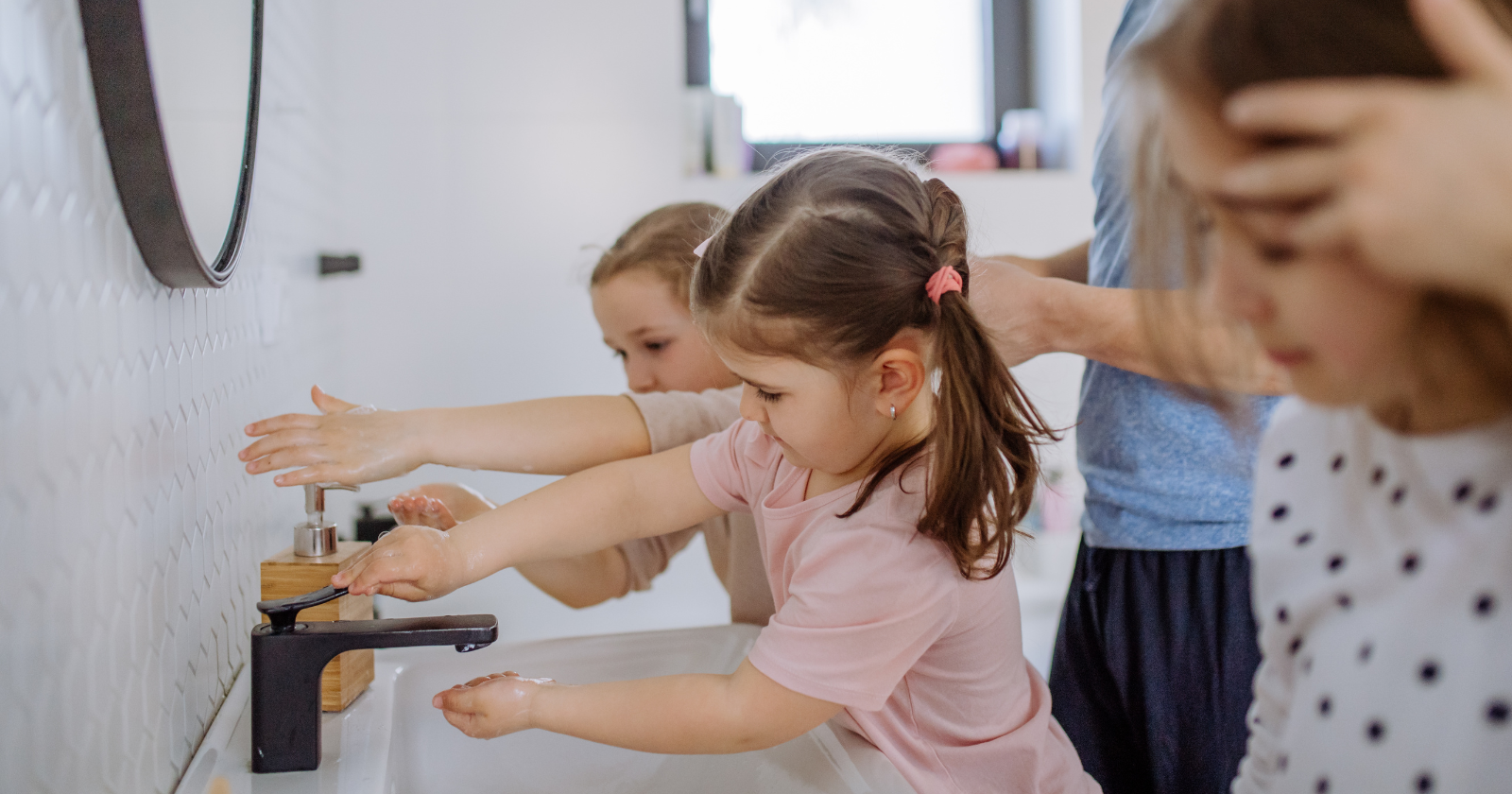
Routines help because they make transitions predictable. When Elise knows that after her show ends, we wash hands and sit down to eat, she’s not blindsided. She’s been mentally preparing, even if she doesn’t realize it.
We also use warnings. “Five more minutes, then we’re cleaning up.” “Two more minutes.” “Okay, time to finish up.” It sounds repetitive, but it works.
Another thing that helps: transition rituals. A song we sing while cleaning up toys. A specific phrase I say before bath time. These little cues signal to her brain that a shift is coming. They’re like a gentle tap on the shoulder instead of a sudden shove.
Bedtime is where the real magic happens
I’ll be honest. Bedtime used to be a battlefield. Stalling, negotiating, tears, the whole thing. Then we got serious about the routine, and everything changed. Not overnight, but gradually. Now bedtime is actually pleasant. Sometimes even my favorite part of the day.
Our sequence: bath, pajamas, brush teeth, two books, one song, lights out. Every single night. Elise knows exactly what’s coming, so she doesn’t fight it. She even reminds me if I accidentally skip a step. “Daddy, you forgot the song.” That’s how internalized it’s become.
The key is keeping it short enough to be sustainable but long enough to feel like a real wind-down. We’re not rushing through it, but we’re also not dragging it out.
Twenty to thirty minutes, start to finish. And here’s the thing: once the routine is solid, you can occasionally bend it without everything collapsing. A late night here and there won’t undo months of consistency.
What about weekends and disruptions?
This is where people get tripped up. They think routines mean rigidity, and they worry about what happens when life throws a curveball. A vacation. A sick day. A holiday that blows up the whole schedule.
Here’s what I’ve found: kids are more resilient than we give them credit for, as long as the baseline is strong. If you’ve built a solid routine during normal weeks, the occasional disruption won’t derail everything. Your kid’s nervous system has a home base to return to.
On weekends, we keep the anchor points but loosen the timing. Wake up is later. Meals are more relaxed. But the sequence stays similar. Breakfast, then get dressed, then play. Dinner, then bath, then bed. That consistency carries them through, even when the details shift.
When we travel or have a big disruption, I try to maintain at least one or two anchors. Bedtime routine stays the same, even in a hotel room. Morning sequence stays similar, even at Grandma’s house. It’s not perfect, but it’s enough to keep things from going completely off the rails.
Routines reduce the mental load for parents too
Let’s talk about you for a second. Because routines aren’t just good for kids. They’re a lifeline for exhausted parents.
When you have a routine, you’re not making a hundred micro-decisions every day. You’re not constantly negotiating or explaining. You’re not reinventing the wheel every morning and every night. The routine carries you. It becomes automatic, which frees up mental space for the stuff that actually matters.
Camille and I sync our calendars every Sunday night. We look at the week ahead, figure out who’s handling what, and make sure we’re on the same page. That’s a routine too. It takes fifteen minutes, and it saves us hours of confusion and frustration throughout the week. Routines aren’t just for kids. They’re for the whole family system.
Start small and build from there
If you’re reading this and thinking, “We have no routines and everything is chaos,” don’t panic. You don’t have to overhaul your entire life by tomorrow. Start with one anchor point. Maybe it’s bedtime. Maybe it’s morning. Pick the transition that causes the most friction and build a simple, repeatable sequence around it.
Give it two weeks. Kids need time to internalize a new pattern. There will be resistance at first, especially if they’re used to things being unpredictable. That’s normal. Stay consistent. Keep the sequence the same. Use the same words, the same cues, the same order. Eventually, it clicks.
Once that first routine is solid, add another. Then another. Before you know it, your day has shape. Your kid knows what to expect. And those meltdowns over the wrong color cup? They won’t disappear entirely, but they’ll happen less often. And when they do happen, you’ll both recover faster.
Closing thoughts
Parenting is unpredictable by nature. Kids are wild, wonderful, confusing little humans who will always find new ways to surprise you. But within that unpredictability, you can create pockets of calm. Routines are how you do it.
They’re not about control or rigidity. They’re about giving your child a sense of safety in a world that often feels overwhelming to them. And when kids feel safe, they cooperate more. They regulate better. They trust you to guide them through the day.
The formula isn’t complicated: anchor points, consistent sequences, transition cues, and enough flexibility to bend without breaking. That’s it. It takes intention and consistency, but the payoff is real. Calmer kids. Smoother days. And a little more peace for everyone in the house.