

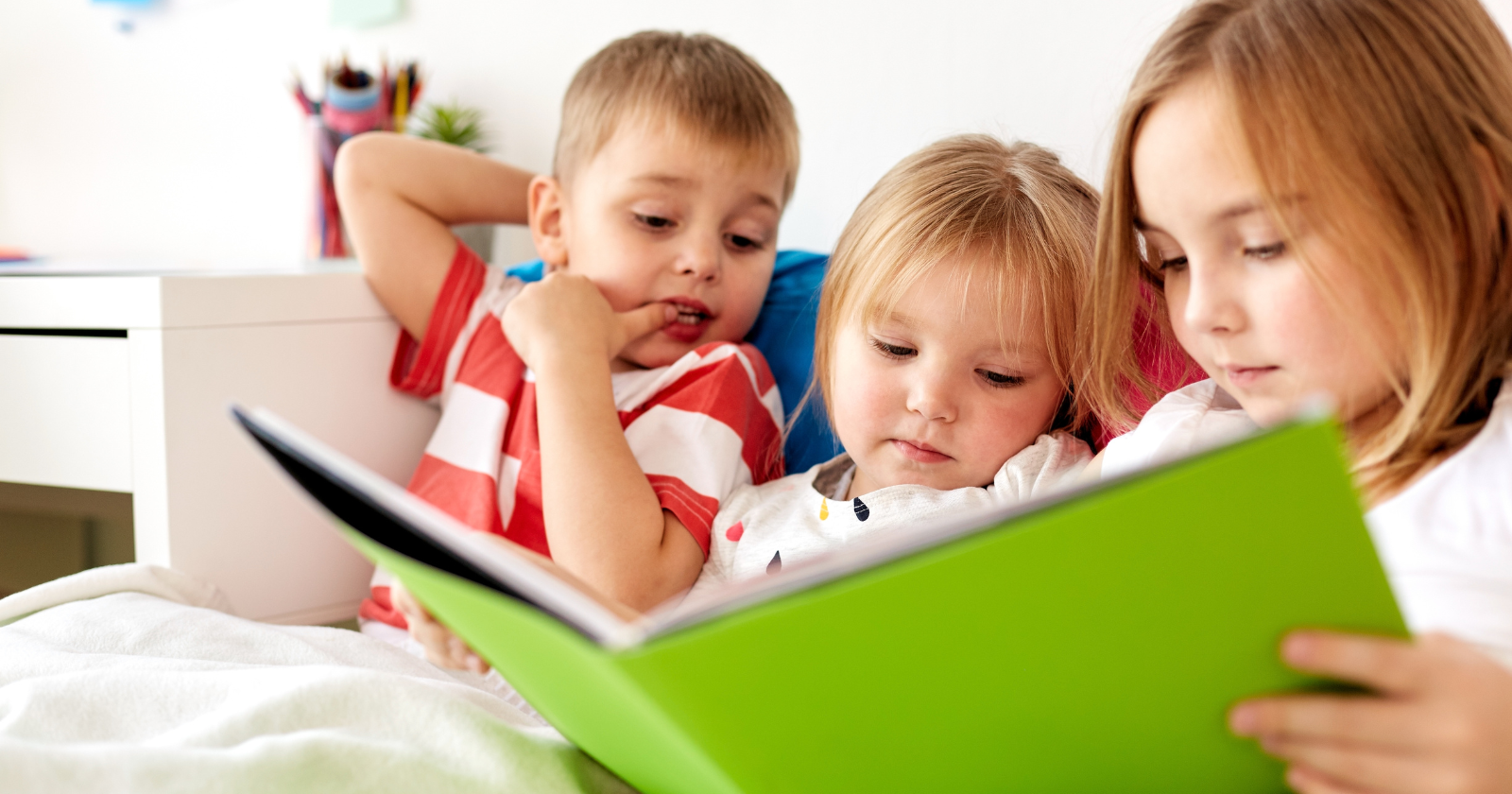
When I watch Ellie curl up with a stack of picture books, completely absorbed in the pages, I sometimes wonder what sparked that love. Was it the countless bedtime stories? The library trips that became our weekly ritual? Or something less obvious, like the way we talk about the world around us?
The truth is, raising a child who loves reading has very little to do with pushing early literacy skills. Research consistently shows that the experiences children have before they can even decode words shape their relationship with books for years to come. These aren’t complicated interventions or expensive programs.
They’re the quiet, everyday moments that weave reading into the fabric of family life. Here are seven experiences that kids who grow into passionate readers tend to share.
1) They see the adults in their life reading for pleasure
Children are always watching. They notice what we reach for in our downtime, what we prioritize, what brings us joy. When they see us lost in a novel on the couch or flipping through a magazine at breakfast, they absorb a powerful message: reading is something grown-ups choose to do.
This doesn’t mean you need to be a voracious reader yourself. Even small moments count. Keeping a book on your nightstand, reading a recipe out loud while cooking, or mentioning something interesting you read creates an environment where books are part of daily life.
Matt isn’t a big fiction reader, but Milo sees him poring over woodworking guides and gardening books regularly. That visibility matters. As literacy researcher Scholastic’s Kids & Family Reading Report has noted, children who are frequent readers are more likely to have parents who read themselves.
The modeling doesn’t need to be perfect. It just needs to be present.
2) They experience books as connection, not curriculum
Think about your favorite childhood book. Chances are, the memory isn’t just about the story. It’s tangled up with a person, a feeling, a sense of warmth and safety. Maybe it was a grandparent’s voice or the weight of a parent beside you on the bed.
Kids who love reading often associate books with closeness. Storytime becomes a ritual of connection, a predictable pocket of togetherness in an otherwise busy day. The book itself almost becomes secondary to the relationship it nurtures.
This is why I try not to rush through bedtime stories, even when I’m exhausted. Those extra few minutes of snuggling over a favorite picture book are building something deeper than literacy skills. They’re creating an emotional anchor. When books feel like love, children return to them again and again.
3) They have access to books everywhere
Availability shapes behavior. When books are within arm’s reach, in the car, by the bed, scattered through the living room, in a basket by the back door, children pick them up. It becomes as natural as grabbing a toy.
Related Stories from The Artful Parent
- 8 signs you’re raising an emotionally secure child even when it doesn’t feel like you know what you’re doing
- 9 things creative kids do that look like misbehavior but are actually signs their mind is working overtime
- The 8 messiest childhood activities are actually the ones building your child’s brain in ways screens never will
This doesn’t require a huge home library or expensive collections. Library cards are free. Little Free Libraries dot many neighborhoods. Thrift stores and yard sales overflow with children’s books. What matters is that books are accessible, visible, and treated as ordinary household objects rather than precious items stored out of reach.
We keep a rotating basket of books in almost every room. Some get chewed on (thanks, Milo). Some get loved to tatters. But they’re there, always available, always inviting. The American Academy of Pediatrics recommends promoting literacy from infancy by ensuring books are part of a child’s environment from the very beginning.
4) They get to choose what they read
Have you ever been forced to read something you had zero interest in? It’s a slog. Children feel the same way. When kids have agency over their reading choices, they develop ownership over their reading lives.
This means letting them pick books that might not be your first choice. Maybe it’s the same dinosaur book for the fortieth time. Maybe it’s something with more pictures than words. Maybe it’s a comic book or a silly joke collection. All of it counts. All of it builds the habit of reaching for a book.
Ellie went through a phase where she only wanted books about bugs. I’ll be honest, I got tired of reading about beetle life cycles. But her enthusiasm was real, and that enthusiasm is the whole point. When children feel like reading is their choice rather than an assignment, they’re far more likely to stick with it as they grow.
5) They hear rich, varied language from birth
Long before children can read a single word, they’re building the foundation for literacy through listening. The conversations they overhear, the songs sung to them, the stories told aloud, all of it shapes their vocabulary, their sense of narrative, their ear for language.
- Psychologists explain why people who maintain anonymous blogs for decades are often emotionally healthier than influencers — the privacy creates a space for truth-telling that public identity performance actively destroys - The Blog Herald
- When police raided a blogger’s home, they forced a question journalism still hasn’t fully answered - The Blog Herald
- WordPress plugin auto-updates: the convenience trap bloggers keep falling into - The Blog Herald
Researchers have found that the quantity and quality of words children hear in early childhood significantly impacts their later reading success. But this isn’t about drilling vocabulary or speaking in an artificially formal way. It’s about talking to your child like a person. Narrating your day. Asking open-ended questions. Reading aloud with expression.
I talk to Milo constantly, even though his responses are mostly babbles and the occasional emphatic “no.” I describe what I’m doing, ask what he thinks, point out interesting things we pass on walks. It feels natural now, but I remember feeling a little silly at first, chattering away to an infant. That chatter matters more than we realize.
6) They experience stories beyond the page
Reading doesn’t exist in isolation. Kids who love books often have rich experiences with storytelling in many forms. They hear family stories passed down at dinner. They make up tales during pretend play. They act out scenes from favorite books with stuffed animals or siblings.
These experiences reinforce the magic of narrative. They help children understand that stories are everywhere, not just trapped between two covers. When a child connects a book about planting seeds to the garden in the backyard, or recognizes a character’s feelings because they’ve felt something similar, reading becomes dimensional and alive.
We extend books into play all the time. After reading about a bear going on a picnic, we might pack our own snacks and head outside. A story about building becomes an invitation to stack blocks. This isn’t about creating elaborate activities. It’s about letting books spill over into life, showing children that stories and reality are beautifully intertwined.
7) They’re allowed to abandon books they don’t like
This one might seem counterintuitive, but hear me out. Forcing a child to finish every book they start can turn reading into a chore. Giving them permission to set aside something that isn’t working teaches them to trust their own taste and seek out what genuinely engages them.
As children’s literature expert Donalyn Miller has observed, avid readers know how to abandon books. It’s a skill, not a failure. When we model this ourselves and extend the same grace to our kids, we communicate that reading should be enjoyable, not obligatory.
There have been plenty of library books that came home with us and never got finished. That’s okay. We return them and try something else. The goal is a lifelong relationship with reading, and that relationship needs to be built on pleasure, not pressure.
Closing thoughts
Raising a reader isn’t about starting early with phonics drills or limiting screen time to exact minutes (though less screen time certainly helps). It’s about creating a home where books are loved, accessible, and woven into the rhythm of everyday life.
The children who grow into passionate readers usually share these quiet, consistent experiences. They see reading modeled. They feel connected through stories. They have choices and access and freedom to explore.
None of this requires perfection or a particular parenting style. It just requires presence and a willingness to make books part of how your family lives.
If you’re reading this, you’re probably already doing more than you realize. Keep going. Keep reading aloud, even when you’re tired. Keep visiting the library, even when it feels like herding cats. Keep letting your child see you with a book in your hands. These small, repeated moments are building something beautiful.
