

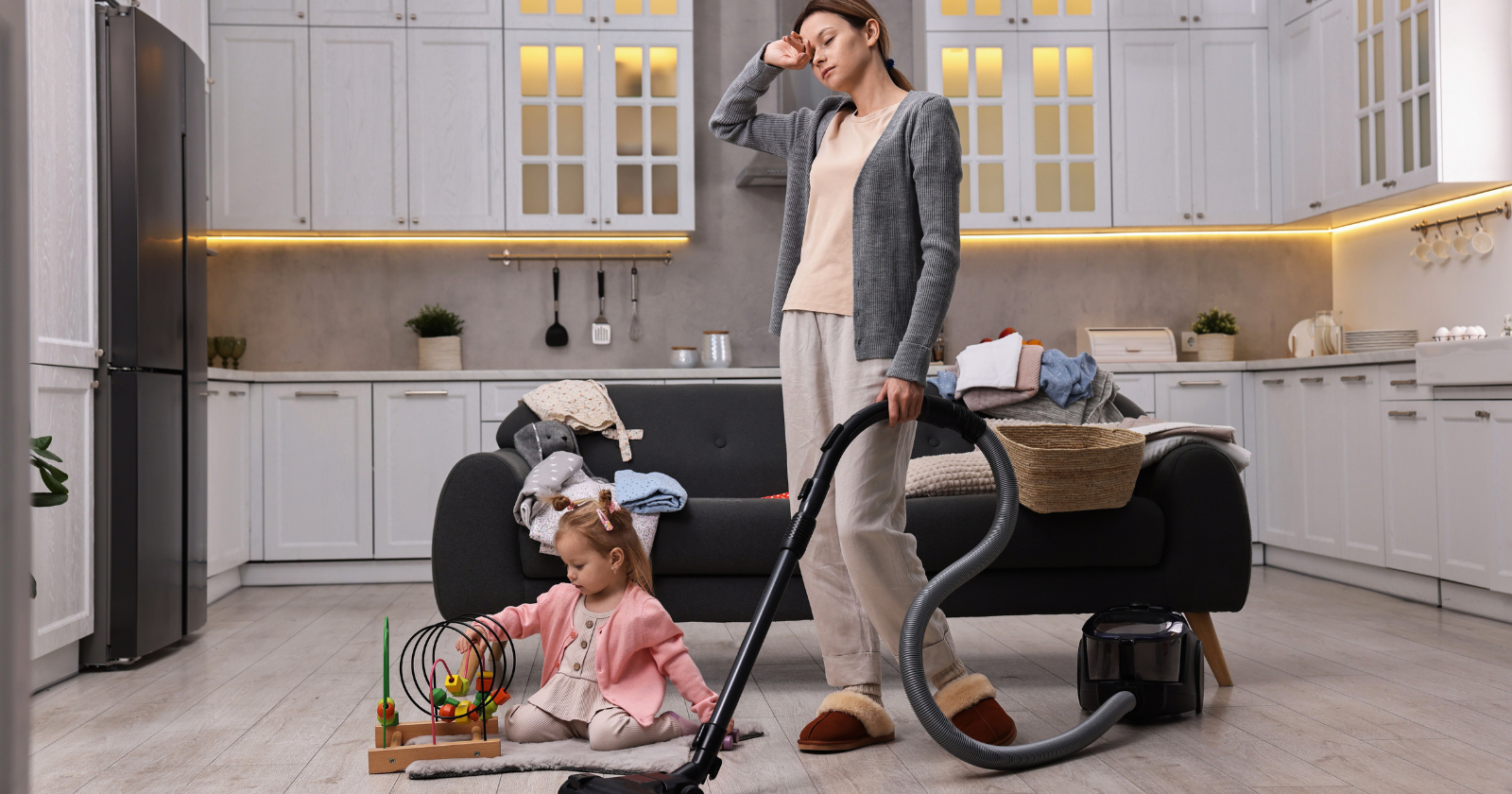
Last week, I found myself meal-prepping at 10 PM while simultaneously folding laundry and helping my daughter with a craft project.
My husband Matt gently pointed out that I was doing three things at once again, and I had to laugh.
Or maybe cry a little.
Because the truth is, I’ve been operating in overdrive since I was about eight years old, and I’m only now starting to understand why.
If you grew up being the responsible one, the peacekeeper, or the little adult in your family, you might recognize this feeling.
That bone-deep exhaustion that no amount of sleep seems to cure.
That constant sense of being “on” even when you’re supposed to be relaxing.
Growing up as the middle child between an older brother who could do no wrong and a younger sister who needed constant attention, I became the family’s emotional manager without anyone ever asking me to.
My mother, bless her heart, made everything from scratch but battled anxiety that filled our home like invisible smoke.
My father worked such long hours that dinnertime felt more like a performance review than a family gathering.
Sound familiar?
Related Stories from The Artful Parent
- A family dinner in 1975 had no phones, no screens, no background entertainment — just people and food and silence that nobody tried to fill — and that boredom produced more genuine conversation in 30 minutes than most modern families have in a week
- I was raised in the 60s by a woman who cooked every meal from scratch, never read a parenting book, and solved every childhood crisis with “you’ll be fine” — and the terrifying part is that she was right almost every time
- Psychology suggests people who always clean up after themselves at restaurants don’t do it to be seen doing it — and that distinction, between the behavior performed for an audience and the behavior that happens when no one is watching, is the only one that actually tells you anything true about a person
Here are nine subtle signs you might have been parentified as a child, and why you’re still carrying that invisible weight today.
1) You apologize for things that aren’t remotely your fault
Ever catch yourself saying sorry when someone else bumps into you at the farmers market?
Or apologizing when your kids act like, well, kids?
This constant over-apologizing often stems from childhood experiences where you felt responsible for keeping everyone happy.
I used to apologize when my mother seemed stressed, even if I’d been quietly reading in my room all day.
Now I watch myself doing the same thing when Matt has a rough day at work.
- Research suggests the reason some people can live the same day on repeat for years without distress while others feel like they’re suffocating isn’t personality. It’s whether the routine was chosen deliberately or inherited by default, because the brain processes voluntary repetition as ritual and involuntary repetition as captivity. - Global English Editing
- Life isn’t a series of random events but a chess game where every move matters - Global English Editing
- Nobody tells you that the real threat to a long relationship isn’t the dramatic betrayal. It’s the Wednesday afternoon coffee where someone at work asks how you’re really doing and you actually answer honestly for the first time in months. - Global English Editing
It’s like I’m still that ten-year-old trying to smooth over tensions that have nothing to do with me.
The exhausting part? You’re constantly scanning for problems to preemptively fix, even when there aren’t any.
2) You struggle to ask for help (even when you’re drowning)
Remember being the kid who never wanted to burden anyone?
The one who figured everything out alone because asking meant admitting you couldn’t handle it all?
That programming runs deep.
These days, I’ll be juggling a toddler meltdown, dinner prep, and a work deadline before it even occurs to me to ask Matt to take something off my plate.
It’s not that he wouldn’t help.
It’s that somewhere in my brain, asking for help still feels like failure.
3) Your anxiety spikes when people around you have big emotions
When my five-year-old has a meltdown about her socks feeling weird, my nervous system reacts like we’re facing an actual emergency.
Heart racing, muscles tense, brain scrambling for the fastest solution.
Why? Because as kids, we learned that other people’s emotions were problems we needed to solve.
My mother’s anxiety became my responsibility to manage.
My siblings’ conflicts became my fires to put out.
Now, decades later, my body still treats every emotional expression like a five-alarm fire.
4) You feel guilty when you’re not being productive
Sitting still feels wrong, doesn’t it?
Even when I’m playing with my kids, part of my brain is making mental lists.
What needs cleaning? What needs organizing? What could I be doing to make tomorrow easier?
Childhood me earned love through being helpful.
Through anticipating needs.
Through never being a burden.
Adult me still struggles to believe I deserve to take up space without earning it through constant productivity.
5) You’re everyone’s unofficial therapist
Friends call you first with their problems.
Family members dump their drama in your lap.
Even strangers seem to sense you’re safe to unload on.
Being the family mediator trained us well for this role.
We learned to listen without judgment, to validate feelings, to offer solutions.
But here’s what we didn’t learn: how to protect our own emotional energy.
How to say “I love you, but I don’t have the bandwidth for this right now.”
6) You anticipate needs before anyone asks
I can tell you what each family member needs before they know they need it.
Low on milk? Already bought it.
Kids getting cranky? Snacks prepared.
Matt looking tired? Coffee brewing.
This might seem like a superpower, but it comes from hypervigilance.
From years of needing to read the room to keep peace.
From learning that preventing problems was safer than dealing with aftermath.
The exhausting truth? You’re living several steps ahead of the present moment, managing futures that haven’t happened yet.
7) You minimize your own struggles
“Oh, it’s not that bad.”
“Other people have it worse.”
“I shouldn’t complain.”
Ring any bells?
When you spent your childhood managing adult problems, your own kid-sized troubles seemed insignificant.
That pattern continues into adulthood.
Your stress, your pain, your struggles all get minimized because you learned early that your needs came last.
8) Rest feels selfish
Taking a bath while the kids are awake?
Reading a book in the middle of the day?
Going for a walk alone?
These simple acts of self-care can trigger waves of guilt.
Because rest wasn’t modeled for us.
Rest was something that happened after everything was perfect, everyone was happy, and all problems were solved.
Which meant rest never really happened.
9) You struggle to identify what you actually want
Ask yourself right now: What do you want for dinner?
Not what would make everyone else happy.
What do YOU want?
If that question feels surprisingly hard, you’re not alone.
We became so skilled at reading and meeting others’ needs that we never developed the muscle for identifying our own desires.
Our preferences got buried under years of “whatever makes things easier for everyone else.”
The path forward starts with recognition
Recognizing these patterns isn’t about blame.
My parents did their best with their own unhealed wounds and limited resources.
But understanding where this exhaustion comes from is the first step toward setting it down.
These days, I’m learning to embrace “good enough” instead of perfect.
To let my kids see me rest without guilt.
To ask Matt for help before I’m at my breaking point.
To sit with other people’s emotions without making them my responsibility.
Some days I nail it.
Other days I find myself folding laundry at 10 PM while making tomorrow’s lunch.
But each small step toward breaking these patterns is a gift to both myself and my children.
Because they deserve a mother who isn’t running on empty.
And that little girl who carried too much for too long?
She deserves to finally rest.
