
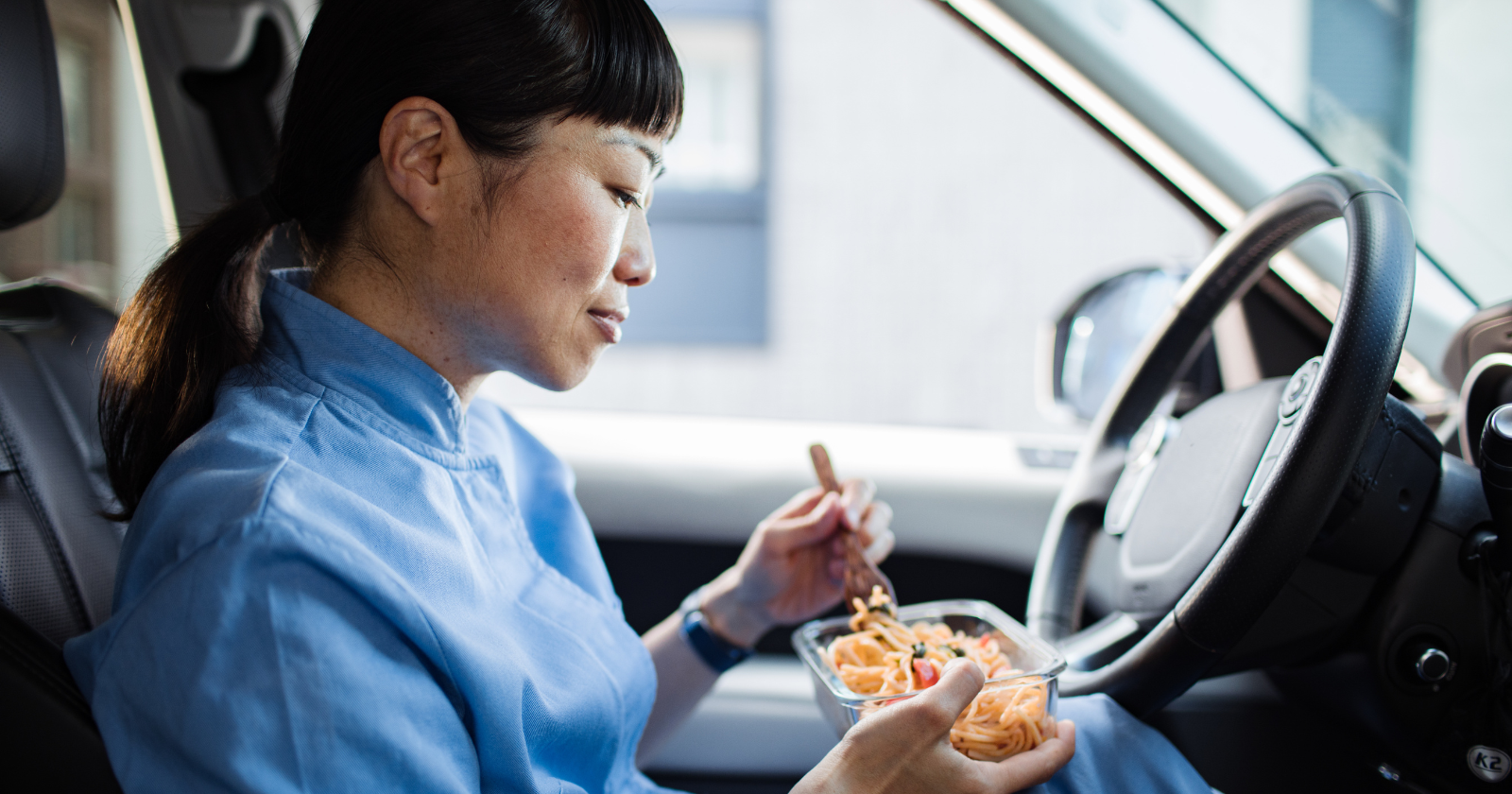
Last week, I was loading groceries into my car when I noticed the mom parked next to me had an entire snack drawer built into her center console.
Not just a few granola bars thrown in the glove box, but an actual organized system with labeled containers. It got me thinking about my own car snack stash and how differently we all approach this simple thing.
Have you ever really looked at what someone keeps in their car for snacks? I’m convinced it tells a whole story about how they grew up. The other day, my friend opened her glove compartment and out tumbled three different types of protein bars, a bag of almonds, and some organic fruit pouches.
Meanwhile, another mom I know has nothing but candy and chips stashed away.
After years of observing other parents at pickup lines and parking lots, I’ve started to see patterns that trace straight back to childhood. The snacks we reflexively grab, how we organize them, whether we have them at all—these choices reveal deeper truths about our earliest experiences with food and care.
1) The over-preparer versus the scrambler
You know that parent who has snacks for every possible scenario? Different options for different moods, allergies covered, sweet and savory balanced? That was probably the kid whose parents forgot to pack lunch more than once. Or whose family ran on chaos, with meals happening whenever, wherever.
I grew up in a house where dinner happened at 6 PM sharp, all five of us around the table. But those surface-level conversations meant I never learned to really connect over food.
Now I find myself overcompensating, making sure my car is stocked with conversation starters disguised as snacks. Homemade muffins from the freezer, crackers that remind me of quiet afternoons in my childhood kitchen.
On the flip side, the parent with zero snacks in their car? They might have grown up in a house where food was always available, always predictable. Why prep when you’ve never known scarcity?
2) The health consciousness spectrum
My older brother used to hide candy bars in his room like they were contraband. Our kitchen had its reliable lineup of bananas, apples, and plain crackers. Nothing too exciting, nothing too indulgent. Just fuel.
Now look at his car: it’s a rolling health food store. Organic everything, sugar-free this, gluten-free that. He’s still rebelling against those bland childhood snacks, just in the opposite direction.
Related Stories from The Artful Parent
- Parents who don’t have a close bond with their adult children weren’t necessarily bad parents — many of them were adequate, present, and genuinely well-intentioned, and adequacy, it turns out, is not the same as intimacy, and presence is not the same as being truly seen, and their children grew up fed and housed and quietly lonely in ways nobody named until much later
- I’m 35 and I’ve come to realize my parents weren’t actually bad people — they were just two 22-year-olds who had no idea what they were doing and spent the next forty years pretending they did
- 9 quiet things the best grandparents do that parents rarely notice — but their grandchildren never forget
Then there’s my younger sister, whose car looks like a convenience store exploded in it. Growing up as the baby, she got away with more. By the time she came along, our parents had loosened up about sugar and processed foods. Her car snacks reflect that freedom, or maybe she’s still trying to claim it.
What about the parent who keeps exactly three types of snacks, no more, no less? That’s often someone who grew up with food rules. Clean your plate. No eating between meals. Sweets only on special occasions. They’ve learned to allow snacks but within strict boundaries.
3) The organization style tells its own story
Remember that mom with the labeled containers? I’d bet money she grew up in chaos. When your childhood home lacks structure, you either embrace the chaos or become militant about organization. There’s rarely a middle ground.
I keep my snacks in a reusable grocery bag, everything jumbled together. It drives my husband crazy, but it feels right to me. Growing up middle child meant learning to be flexible, to take what you could get when you could get it. My car snack situation reflects that perfectly: organized enough to be functional, messy enough to feel comfortable.
The parent whose snacks are scattered everywhere—dashboard, door pockets, under seats? They might have grown up in a home where boundaries were fluid. Food in bedrooms, eating in front of the TV, no real rules about where or when food belonged.
4) The emotional weight of certain snacks
Ever notice how some parents always have the same specific snack? Not just the type, but the exact brand, the exact flavor?
- Blog bullies are real — here’s how to handle them - The Blog Herald
- Blogging your convictions: why the best posts aren’t written to please anyone - The Blog Herald
- Psychologists explain why people who maintain anonymous blogs for decades are often emotionally healthier than influencers — the privacy creates a space for truth-telling that public identity performance actively destroys - The Blog Herald
There’s a dad at school pickup who always has those orange peanut butter crackers. The exact ones from vending machines. Mentioned once that his mom worked nights and those crackers were what he’d eat after school, alone, waiting for her to wake up. Now they’re his comfort food, his connection to being cared for even when care looked different than expected.
I keep homemade muffins in my freezer specifically to grab for car snacks. My grandmother used to do the same thing, always had something homemade ready to go. It wasn’t about the food itself but about being prepared to nurture at a moment’s notice.
The absence of comfort foods in someone’s car can be telling too. Maybe food wasn’t comfort in their house. Maybe comfort came from other places, or maybe it didn’t come at all.
5) The sharing versus hoarding dynamic
Watch what happens when another kid asks for a snack at the playground. Some parents immediately offer options, almost eager to share. Others hesitate, calculating if they have enough. A few pretend they don’t have anything.
Growing up with siblings taught me to protect my portion while also knowing when to share strategically. My car snack supply reflects this, enough to share, but with clear favorites tucked away just for my kids.
The only child who’s now a parent might go either way. Either they hoard because they never had to share, or they overshare because they’re still trying to buy friendship and connection.
Parents from big families often have the most interesting approaches. Some keep massive quantities, recreating the abundance needed to feed a crowd. Others keep very little, finally free from the competition for resources.
6) The quality versus quantity divide
My father worked long hours, came home tired, provided everything we needed but not much more. Food was fuel, not experience. Quality mattered in terms of nutrition, not enjoyment.
I see his influence when I stock my car. There’s always something homemade, something that took effort. Those freezer muffins aren’t just snacks; they’re proof that I have time and energy for my kids in ways my father didn’t.
But I also see parents who go the opposite direction. Grew up with homemade everything and now rebel with packaged convenience. Or grew up with scarcity and now ensure abundance, regardless of quality.
The parent who has one perfect snack option versus the one who has dozens of mediocre choices, both are responding to something from their past.
Finding your own balance
Looking at my own car snack situation now, I see my whole childhood laid out in granola bars and fruit pouches. The middle child’s flexibility, the family dinners that fed body but not soul, the kitchen with its predictable offerings.
But I also see who I’m becoming as a parent. Someone who prepares but doesn’t panic. Someone who values nourishment in all its forms. Someone who keeps homemade muffins in the freezer because love sometimes looks like being ready for hungry moments.
What story do your car snacks tell? Next time you reach for that emergency goldfish crackers or that carefully curated selection of organic options, think about why. You might discover you’re still feeding the child you once were, or maybe you’re finally feeding them differently.
Either way, there’s no wrong answer. We’re all just trying to nourish our kids while navigating our own histories. Sometimes that looks like labeled containers. Sometimes it looks like candy bars hidden under the seat. Most of the time, it looks like doing our best with what we know, one snack at a time.