

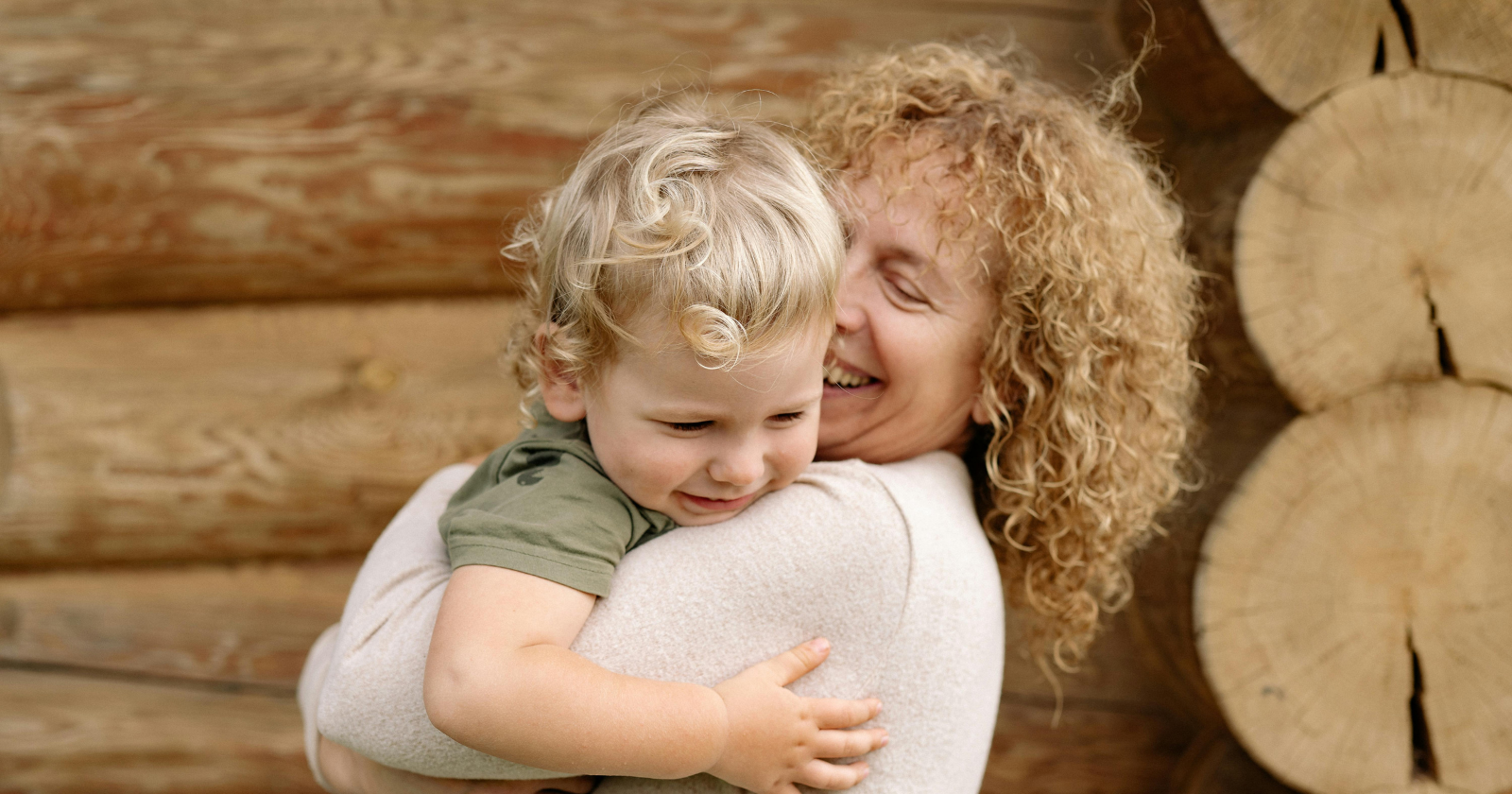
Watching my mother-in-law swoop in with candy and late bedtimes used to drive me crazy. Now I see her as one of the most connected grandparents I know.
The difference? She figured out that the strongest grandparent bonds aren’t built on treats and rule-breaking, but on something much simpler: showing up consistently in small, meaningful ways.
After five years of watching various grandparents interact with my kids (and remembering my own grandparents), I’ve noticed patterns: The ones who really connect with their grandkids aren’t necessarily the ones with the biggest toy budgets or the most exciting outings planned.
They’re the ones who master these tiny, consistent gestures that add up to something huge.
1) They remember the little things that matter
My mom still calls my daughter “too sensitive” sometimes, but you know what she never forgets? That Ellie collects acorns and sorts them by size.
Every visit, she asks about the acorn collection. Every. Single. Time.
Kids notice when you remember their current dinosaur obsession, their favorite sandwich filling, or that story they told you about their friend’s new hamster.
These details might seem trivial to us adults rushing through our days, but to kids? It’s everything. It tells them they’re worth remembering.
One grandmother I know keeps a little notebook where she jots down what each grandkid mentions loving. Not for gift ideas, but for conversation starters.
“How’s that book series going?” or “Did you ever figure out that Lego build?”
Simple questions that say: I was listening. I care.
Related Stories from The Artful Parent
- There are three stages to calling your aging parent. First you call because you want to. Then you call because you should. Then you call because you’re running out of calls and you’ve started counting without meaning to. Most people are in the second stage and pretending they’re still in the first.
- Psychology says adult children who love their parents but avoid visiting them aren’t selfish — they’re protecting themselves from a role reversal their nervous system registers as existential threat
- Psychology says the best kind of parents aren’t the ones who sacrifice everything for their children — they’re the ones who model what a life worth living actually looks like, even when that means disappointing their kids in small ways
2) They get down on their level (literally)
Remember being small and having every adult tower over you? The best grandparents understand this as they sit on the floor for tea parties, they crouch down for conversations, and they lie on their bellies to examine bugs.
My mother never did this. She’d sit in her chair while we played at her feet, occasionally commenting from above. But I remember my grandmother spreading out newspapers on her kitchen floor so we could paint together, both of us getting messy.
Guess which memory feels warmer?
Physical proximity matters more than we realize. When grandparents lower themselves to kid height, magic happens.
Whispered secrets get shared. Real eye contact happens. Trust builds.
3) They create predictable traditions
Every Sunday morning, rain or shine, one grandfather I know makes pancakes with his granddaughter.
Just regular pancakes, same recipe every time. She’s twelve now and still shows up.
Do you need elaborate traditions? Nope.
Maybe it’s reading one chapter of a book together during each visit, maybe it’s a walk around the block after dinner, or maybe it’s sorting buttons from grandma’s button jar (something I did with my own grandmother and now desperately wish I could do again).
The predictability is what matters. Kids thrive on knowing what to expect, and these little rituals become anchors in their relationship with their grandparents.
4) They share stories without lecturing
“When I was your age, we didn’t have iPads, and we turned out fine!”
Sound familiar? Yeah, kids tune that out immediately.
But you know what works? Stories that don’t have obvious morals attached, stories about getting lost at the county fair, stories about the time grandpa tried to build a treehouse and it collapsed, and stories about failed attempts at baking bread.
My kids beg for stories about when Matt and I were dating, especially the awkward parts. They want to know that adults were once confused kids too.
The grandparents who share these vulnerable, human moments (without turning them into lessons) are the ones kids open up to later.
5) They respect the small boundaries
This one’s tough for grandparents who come from the “children should be seen and not heard” generation.
But respecting when a child says “I don’t want a hug right now” or “I’m not hungry” builds incredible trust.
My mother fought us on this initially. “But I’m her grandmother!” she’d say when Ellie didn’t want kisses.
Now she offers choices: “Hug, high-five, or wave?”
The shift was small but powerful. Ellie now runs to her for hugs most of the time, because she knows she has control.
When grandparents respect these tiny boundaries, they’re teaching kids that their feelings matter. Paradoxically, kids who feel respected often become more affectionate, not less.
6) They find their special thing
Not every grandparent needs to do everything. The strongest bonds often form around one shared interest that becomes “their thing.”
Maybe grandma is the one who teaches knitting, maybe grandpa is the one for nature walks, or maybe it’s baking, or bird watching, or building model airplanes.
The activity itself doesn’t matter nearly as much as the consistency and the one-on-one attention.
One grandfather I know can’t really play actively with his grandkids anymore, but he’s become the “fix-it grandpa.”
Broken toys, loose buttons, and wobbly chairs all go to him. The kids sit and watch him work, learning patience and problem-solving without even realizing it.
7) They stay curious about their world
Instead of dismissing what kids love as silly or incomprehensible, engaged grandparents lean in with genuine curiosity.
“Show me how this game works.”
“What do you like about this character?”
“Teach me that dance.”
Will they fully understand Minecraft or whatever the latest obsession is? Probably not, but the effort matters more than the understanding.
When kids become the teachers, beautiful things happen.
They feel competent, they practice explaining things, and they see their grandparents as people still willing to learn.
8) They make space for feelings
Growing up, emotions in my family stayed surface-level. We ate dinner together every night, but nobody talked about feeling scared or sad or even really excited. Just facts about our days, plans for tomorrow, practical stuff.
The grandparents who connect deeply are the ones who make space for the whole range of feelings. They don’t rush to fix or minimize.
When a grandkid says “I’m sad,” they sit with it with “That sounds hard. Want to tell me about it?”
This just means being a safe harbor where all feelings are acceptable, even the messy ones.
9) They show up imperfectly but consistently
Perfect grandparents don’t exist.
The ones who try to be perfect often create distance without meaning to, but the ones who show up regularly, even when they’re tired, even when they don’t know what to say, even when they mess up?
Those are the ones who build unbreakable bonds.
Consistency beats perfection every time.
The grandmother who calls every Wednesday, even if just for two minutes, the grandfather who sends postcards from every trip, and the grandparent who always asks about the science project, remembers the big game, knows when report cards come out.
These are tiny threads that, woven together over time, create an unbreakable cord.
Final thoughts
Building strong bonds with grandkids isn’t about being the “fun” grandparent or the one with the most resources.
It’s about these small, consistent acts of love and attention that say: You matter to me, your thoughts matter, your feelings matter, and your world matters.
My own kids are lucky to have grandparents who are slowly learning these things, even if they still think our parenting style is a bit “out there.”
Watching these relationships develop has taught me something important: It’s never too late to start. Whether your grandkids are babies or teenagers, these small gestures can begin today.
The beautiful thing? None of these require special skills, lots of money, or perfect health.
They just require showing up, paying attention, and caring consistently about the small humans in your life. From what I’ve seen, that investment pays off in relationships that last a lifetime.
