
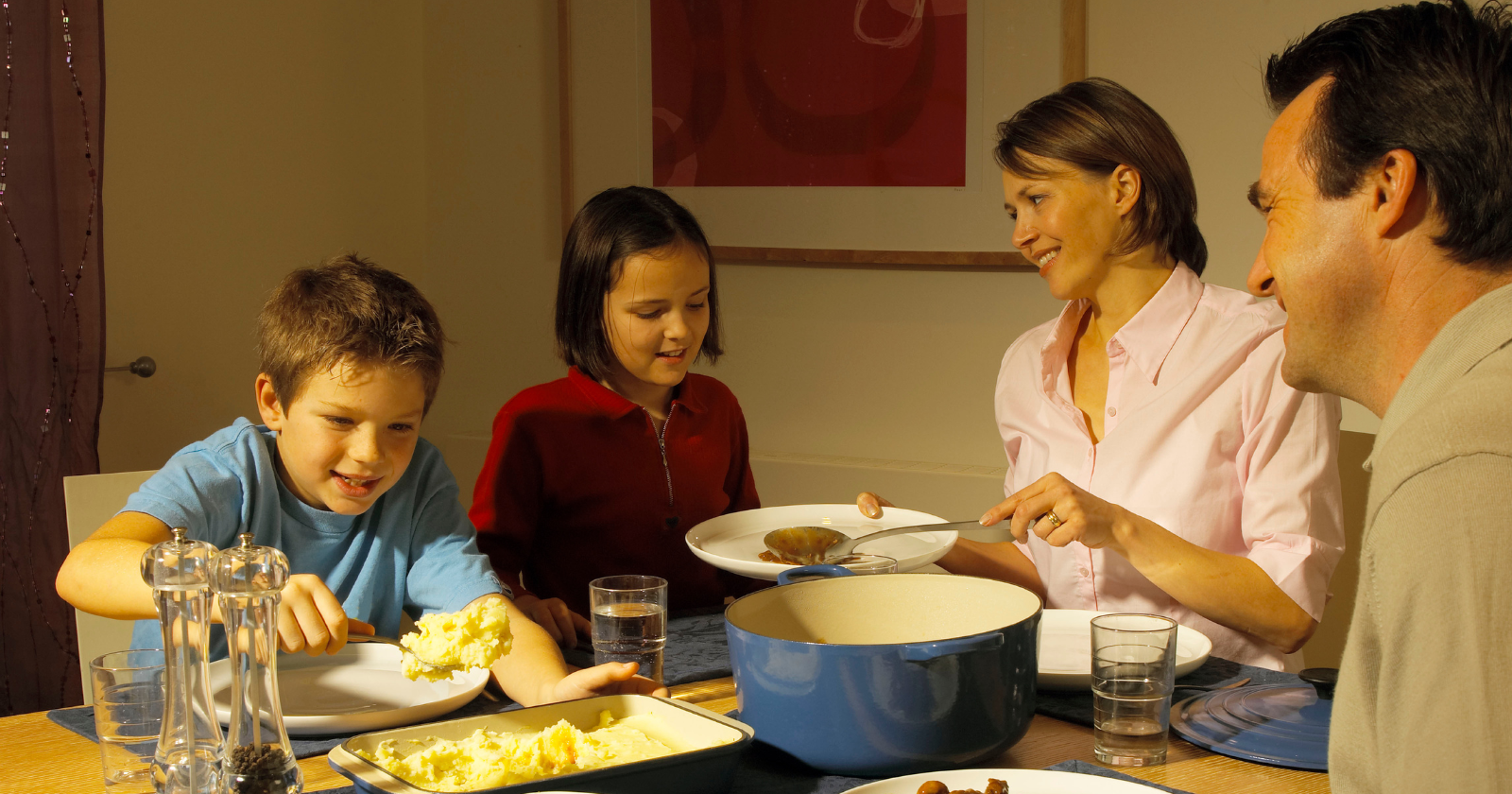
There’s a particular kind of chaos that unfolds in our kitchen around 5:45 p.m. Julien is usually fussing in his high chair, Elise is asking for a snack despite dinner being three minutes away, and I’m trying to remember if I actually turned the oven on or just thought about it.
And yet, somehow, we sit down together most nights. Not because we’ve figured out some secret formula, but because we’ve stopped trying to make family meals look a certain way.
The families I know who actually pull off regular shared meals aren’t the ones with elaborate systems or chef-level skills. They’re the ones who’ve quietly adopted a few non-negotiable habits that remove friction and keep everyone coming back to the table.
These aren’t rigid rules handed down from parenting experts. They’re practical agreements that make the whole thing sustainable. Here are eight that seem to show up again and again.
1) They protect the time like it matters
This sounds obvious, but it’s the one that trips up most families. Dinnertime gets treated as flexible, something that can shift around sports practice or work calls or that one last email. Families who eat together consistently treat the meal as an appointment that rarely gets bumped.
That doesn’t mean 6:00 p.m. sharp every single night. It means there’s a window, and everyone knows it. In our house, dinner lands somewhere between 5:45 and 6:15 depending on the day. Camille and I sync our calendars on Sunday nights, and we flag anything that might interfere. If one of us has a late meeting, the other knows they’re on point.
Research backs this up. A study published in the journal Pediatrics found that children who share family meals at least three times per week are significantly more likely to be in a healthy weight range and have healthier eating patterns. The consistency matters more than the cuisine.
2) They keep the menu boring on purpose
I used to think family dinners needed variety. New recipes, rotating cuisines, something interesting every night. That lasted about two weeks before I burned out completely. The families who sustain this habit long-term have embraced a rotation of reliable, repeatable meals.
We have a loose system: Mondays are usually pasta, Wednesdays are rice bowls, Fridays are pizza or something easy. The other nights flex a bit, but having anchors means I’m not standing in front of the fridge at 5:30 wondering what to make. Elise actually likes the predictability. She knows what’s coming and feels some ownership over the rhythm.
Boring doesn’t mean bad. It means sustainable. When you’re not exhausted by decision fatigue, you’re more likely to actually sit down and be present. Save the adventurous cooking for weekends when there’s margin for it.
3) They let kids be involved, even when it slows things down
Elise loves to “help” with dinner. And by help, I mean she stirs things very slowly, asks forty questions, and occasionally drops an egg on the floor. It would be faster to do it myself. But families who eat together regularly tend to view meal prep as part of the experience, not just a means to an end.
Related Stories from The Artful Parent
- 8 signs you’re raising an emotionally secure child even when it doesn’t feel like you know what you’re doing
- 9 things creative kids do that look like misbehavior but are actually signs their mind is working overtime
- The 8 messiest childhood activities are actually the ones building your child’s brain in ways screens never will
Letting kids participate builds buy-in. When Elise tears lettuce for a salad, she’s more likely to actually eat it. When she sets the table, she feels like dinner is partly hers. It shifts the dynamic from “come eat what I made” to “we did this together.”
This doesn’t have to be elaborate. A two-year-old can put napkins on the table. A four-year-old can wash vegetables. The point is presence, not perfection. And honestly, some of my favorite moments with Elise happen in those fifteen minutes before we sit down, when she’s standing on her stool and narrating everything she’s doing.
4) They have a clear start to the meal
One habit I’ve noticed in families who eat together consistently is that they mark the beginning of the meal in some way. It might be a short gratitude practice, a simple “bon appétit,” or just everyone sitting down at the same time before anyone picks up a fork.
We started doing a quick “highs and lows” round at the beginning of dinner. Each person shares one good thing and one hard thing from their day. Elise has gotten surprisingly good at this. Last week her low was “the slide was too hot” and her high was “I saw a worm.” It’s not profound, but it signals that we’re here, together, and this time matters.
As noted by researchers at The Family Dinner Project, these small rituals help children feel secure and connected. The ritual itself can be almost anything. What matters is that it exists and everyone knows it’s coming.
5) They don’t force anyone to eat
This one took me a while to internalize. I grew up with the “clean your plate” mentality, and it’s hard to shake. But families who maintain peaceful, regular mealtimes tend to follow a division of responsibility: parents decide what’s served and when, kids decide whether and how much to eat.
This framework, developed by dietitian Ellyn Satter, has been a game-changer for us. Elise goes through phases where she barely touches dinner, and other phases where she asks for thirds. We serve a variety, always include at least one thing we know she’ll eat, and then we let it go. No bribing, no bargaining, no battles.
The result? Mealtimes are calmer. She’s more willing to try new things because there’s no pressure. And we’re not spending the whole dinner negotiating bites of broccoli. It’s a relief for everyone.
6) They keep devices out of reach
This is a hard boundary in our house, and I think it’s one of the reasons we’ve managed to keep family meals consistent. Phones stay in another room. The TV is off. If Elise has been watching something before dinner, we turn it off at least five minutes before we sit down so she has time to transition.
It’s not about being anti-technology. It’s about protecting the one time of day when we’re all in the same place, not distracted, actually looking at each other. That’s rare. It’s worth guarding.
I’ll admit, there are nights when I want to scroll through my phone while Julien smears sweet potato everywhere. But when I stay present, I notice things. Elise telling a rambling story about her stuffed animals. Julien learning to use a spoon. These moments are easy to miss if you’re half somewhere else.
7) They end the meal before it falls apart
Young kids have a limited window of focus. Families who eat together regularly seem to understand this and don’t try to stretch dinner into a long, leisurely affair. When the energy shifts, when the wiggling starts, when someone’s clearly done, the meal ends.
We’ve learned to read the signs. Elise starts sliding off her chair. Julien throws food on the floor with increasing enthusiasm. That’s our cue. We don’t drag it out hoping for five more minutes of togetherness. We say “okay, let’s clean up” and move on.
Ending on a good note means everyone associates the table with something positive. If every meal ends in tears or frustration, no one’s going to want to come back tomorrow. Short and sweet beats long and miserable every time.
8) They give themselves grace on the hard nights
Here’s the truth: we don’t eat together every single night. Some nights Camille has a work dinner. Some nights I’m solo-parenting and survival mode kicks in. Some nights Julien’s nap schedule implodes and dinner becomes a free-for-all of cheese sticks and desperation.
The families who sustain this habit over years aren’t the ones who never miss a meal. They’re the ones who don’t let a rough week derail the whole thing. They come back to the table the next night without guilt or fanfare. They treat consistency as a trend, not a streak.
Parenting is full of ideals that sound great until you’re living them in real time. The goal isn’t perfection. The goal is showing up more often than not, and making it feel like something worth returning to.
Closing thoughts
Family meals aren’t magic. They won’t solve every problem or guarantee your kids grow up to be healthy, well-adjusted adults. But there’s something about sitting down together, even for twenty minutes, that builds connection in a way few other rituals can.
The rules that make this sustainable aren’t complicated. Protect the time. Keep it simple. Let kids help. Start with intention. Don’t force food. Put the phones away. End before it falls apart. And give yourself grace when it doesn’t happen.
Tonight, like most nights, we’ll gather around our small kitchen table. Julien will probably throw something. Elise will probably tell us a story that makes no sense. And for a few minutes, the chaos will feel like exactly where we’re supposed to be.