
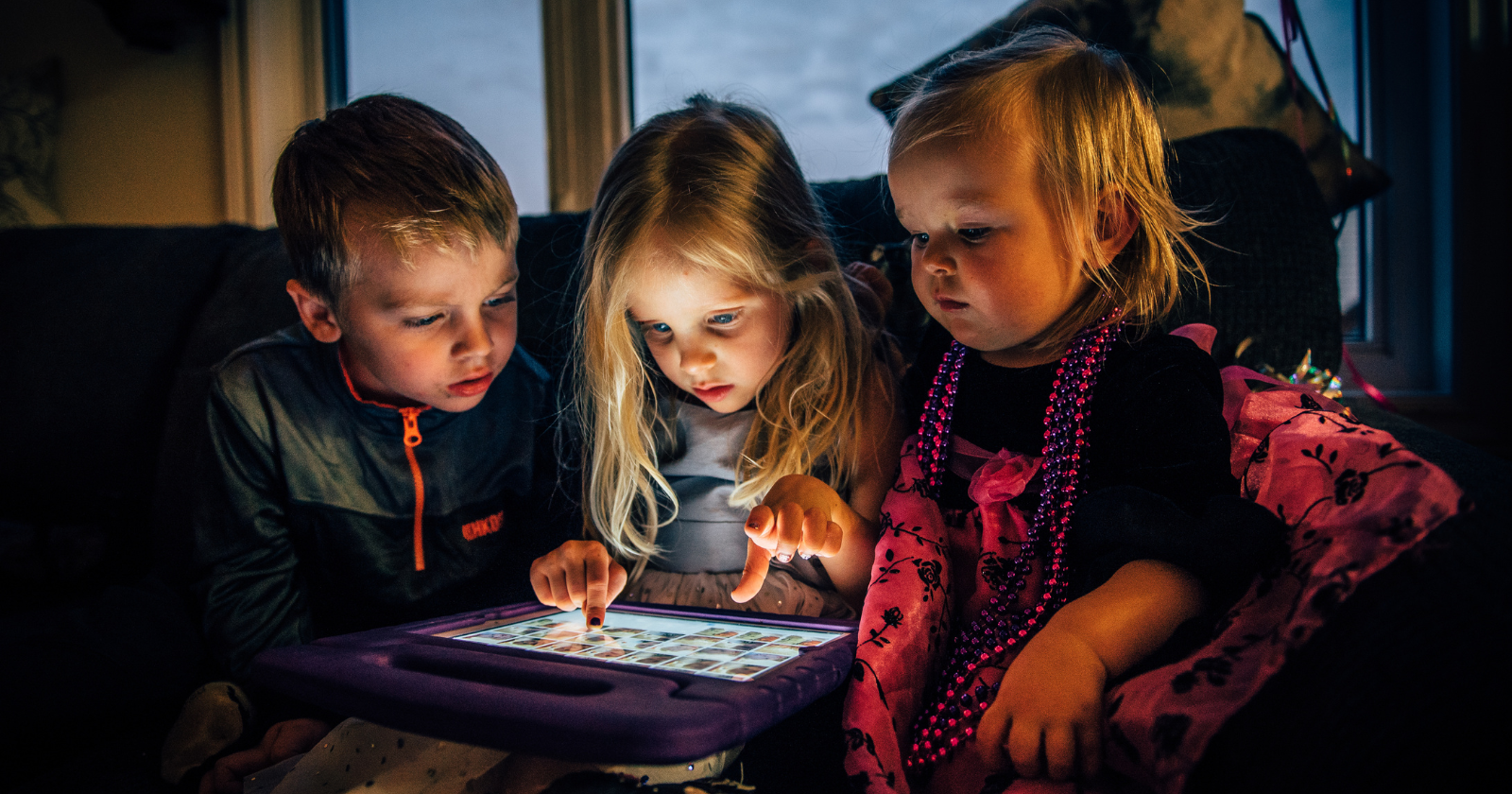
I remember when my biggest worry about my grandchildren was whether they’d scrape their knees at the playground.
These days, I find myself watching them tap away at tablets and wondering if what I’m seeing is normal childhood curiosity or something that needs addressing.
Here’s the thing. Screens aren’t going anywhere. They’re woven into education, entertainment, and how kids connect with friends. But there’s a difference between healthy use and something that starts to look like dependency.
As a grandfather who’s watched this shift happen in real time, I’ve learned that the signs aren’t always obvious. Sometimes they creep up so gradually that we don’t notice until we’re in the thick of it. So let’s talk about what to actually look for.
1) They become a different person when screens are taken away
Every child protests a little when screen time ends. That’s normal. What isn’t normal is a reaction that seems wildly out of proportion to the situation.
I’m talking about full meltdowns, screaming, throwing things, or saying hurtful things they’d never say otherwise. If your typically sweet seven-year-old transforms into someone you barely recognize the moment you say “time’s up,” that’s worth paying attention to.
According to the American Academy of Pediatrics, extreme emotional reactions to screen removal can indicate that a child has developed an unhealthy attachment to their device. The intensity of the reaction often reflects how dependent they’ve become on that stimulation to regulate their emotions.
Think of it like this. If taking away a toy causes mild disappointment but taking away a tablet causes a volcanic eruption, the tablet has become something more than entertainment.
2) They’ve lost interest in activities they used to love
My youngest grandson used to beg me to kick a football around whenever I visited. Then, almost overnight, he stopped asking. He’d rather sit inside with his iPad than do anything else.
When screens start replacing hobbies, friendships, and outdoor play, that’s a red flag. Kids are naturally curious and energetic. They want to explore, create, and move their bodies. If your child has abandoned activities that once brought them joy in favor of more screen time, something has shifted.
This doesn’t mean every child who prefers video games to football has a problem. But when the preference becomes exclusive, when nothing else seems to spark their interest anymore, it’s time to dig deeper.
Related Stories from The Artful Parent
- 8 signs you’re raising an emotionally secure child even when it doesn’t feel like you know what you’re doing
- 9 things creative kids do that look like misbehavior but are actually signs their mind is working overtime
- The 8 messiest childhood activities are actually the ones building your child’s brain in ways screens never will
What is the screen providing that real life isn’t? Sometimes the answer reveals more than we expect.
3) They sneak screen time or lie about their usage
Have you ever found your child hiding under the covers with a device at midnight? Or caught them quickly switching apps when you walk into the room?
Secrecy around screen use is one of the clearest warning signs. When children start hiding their behavior, they usually know on some level that what they’re doing isn’t okay. They’re not just breaking rules. They’re actively working to deceive you about it.
This pattern mirrors addictive behavior in adults. The hiding, the lying, the elaborate cover stories. If your child has started treating their screen time like a secret they need to protect, that’s a signal that their relationship with technology has become unhealthy.
It’s also an invitation for a conversation, not a lecture, but a genuine talk about what’s going on.
4) Their sleep has suffered
I’ve mentioned this before, but sleep is the foundation of everything. Mood, focus, physical health, emotional regulation. When sleep falls apart, everything else tends to follow.
Screens and sleep are natural enemies. The blue light suppresses melatonin production, and the stimulating content keeps young minds buzzing when they should be winding down. If your child is struggling to fall asleep, waking up exhausted, or fighting bedtime more than usual, screens might be the culprit.
Research from the Sleep Foundation has shown that children who use screens before bed take longer to fall asleep and experience lower quality rest. Over time, this creates a cycle where they’re tired, irritable, and more likely to seek out passive screen entertainment because they lack the energy for anything else.
5) They can’t seem to stop on their own
Here’s a simple test.
Can your child put down their device when asked, or do they need multiple warnings, escalating consequences, and sometimes a physical removal of the device?
Healthy screen use includes the ability to self-regulate. A child who can finish a game, turn off the TV, or close an app without a battle has a manageable relationship with technology. A child who genuinely cannot stop, who seems almost hypnotized by the screen, is showing signs of compulsive behavior.
This isn’t about willpower or discipline. Young brains are particularly susceptible to the dopamine hits that games and social media are designed to deliver. When a child can’t disengage, it often means their brain has become accustomed to a level of stimulation that real life can’t match.
That’s not a character flaw. It’s a neurological response that needs addressing.
6) Their grades or school performance have dropped
Teachers often notice this before parents do. A child who was once engaged in class starts daydreaming. Homework that used to get done without fuss now becomes a nightly battle. Test scores slip.
When screens take priority, everything else becomes secondary. And because screen time often feels more immediately rewarding than schoolwork, it’s easy for children to mentally check out of their education.
Why struggle with math when there’s a game waiting at home that makes you feel successful without any effort?
If you’ve noticed a decline in your child’s academic performance and can’t pinpoint another cause, take an honest look at their screen habits. The correlation might be stronger than you think.
7) They’ve become more irritable and moody overall
This one’s tricky because kids go through moody phases for all sorts of reasons. Growth spurts, social challenges, just being a kid. But there’s a particular quality to screen-related irritability that’s worth noting.
Children who are over-reliant on screens often seem restless and dissatisfied when they’re not using them. They might complain of boredom constantly, snap at siblings, or seem generally on edge. It’s as if they’re waiting for their next “fix” and everything in between is just an annoyance to endure.
As noted by Dr. Victoria Dunckley, author of “Reset Your Child’s Brain,” excessive screen time can dysregulate a child’s nervous system, leading to chronic irritability that parents often mistake for behavioral problems or mood disorders. Sometimes the solution isn’t therapy or medication. It’s a significant reduction in screen exposure.
8) They’ve withdrawn from family and friends
One of the saddest things I’ve witnessed is a child choosing a screen over human connection. Not occasionally, but consistently.
When your child would rather text than talk, when they skip family dinners to game online, when they’ve stopped making plans with friends in favor of virtual interactions, something important is being lost. Screens can create an illusion of connection while actually fostering isolation.
Real relationships require effort, vulnerability, and sometimes discomfort. Screens let kids avoid all of that. But in doing so, they miss out on the skills and experiences that build genuine human bonds.
If your child has retreated into their device and away from the people who love them, that withdrawal deserves your attention.
9) They show physical symptoms
Our bodies weren’t designed for hours of sedentary screen use, and children’s bodies are even less equipped to handle it. Watch for complaints of headaches, eye strain, neck pain, or back problems. Notice if your child has gained weight or seems physically lethargic.
These symptoms often develop gradually. A child might not even connect their constant headaches to the five hours they spend staring at a screen each day. But the body keeps score, as they say, and physical complaints can be the first concrete evidence that screen time has crossed into unhealthy territory.
Don’t dismiss these symptoms or assume they’re unrelated. Sometimes the simplest explanation is the right one.
10) They use screens to escape difficult emotions
This is perhaps the most important sign, and the hardest to spot.
All of us use entertainment to unwind sometimes. That’s fine. But when a child consistently turns to screens to avoid feeling sad, anxious, bored, or frustrated, they’re developing a coping mechanism that will serve them poorly throughout life.
Ask yourself: Does my child reach for a device whenever they’re upset? Do they seem unable to sit with uncomfortable feelings without digital distraction? Have screens become their primary way of managing stress?
If the answer is yes, the screen isn’t really the problem. It’s a symptom of something deeper. Your child may need help developing healthier ways to process emotions, and that’s a gift you can give them that will last far longer than any parental control setting.
Where do we go from here?
Recognizing these signs is the first step, not the last. If you’ve nodded along to several of these warning signs, don’t panic. You’re not a bad parent, and your child isn’t broken. You’ve simply identified a problem that millions of families are facing right now.
The path forward involves honest conversations, clear boundaries, and patience. It might mean enduring some difficult days as you help your child recalibrate their relationship with technology. It will definitely mean examining your own screen habits too.
But here’s what I know after all these years of watching families navigate challenges: kids are resilient. With guidance and support, they can develop a healthy relationship with screens. The question is, are you ready to help them get there?