

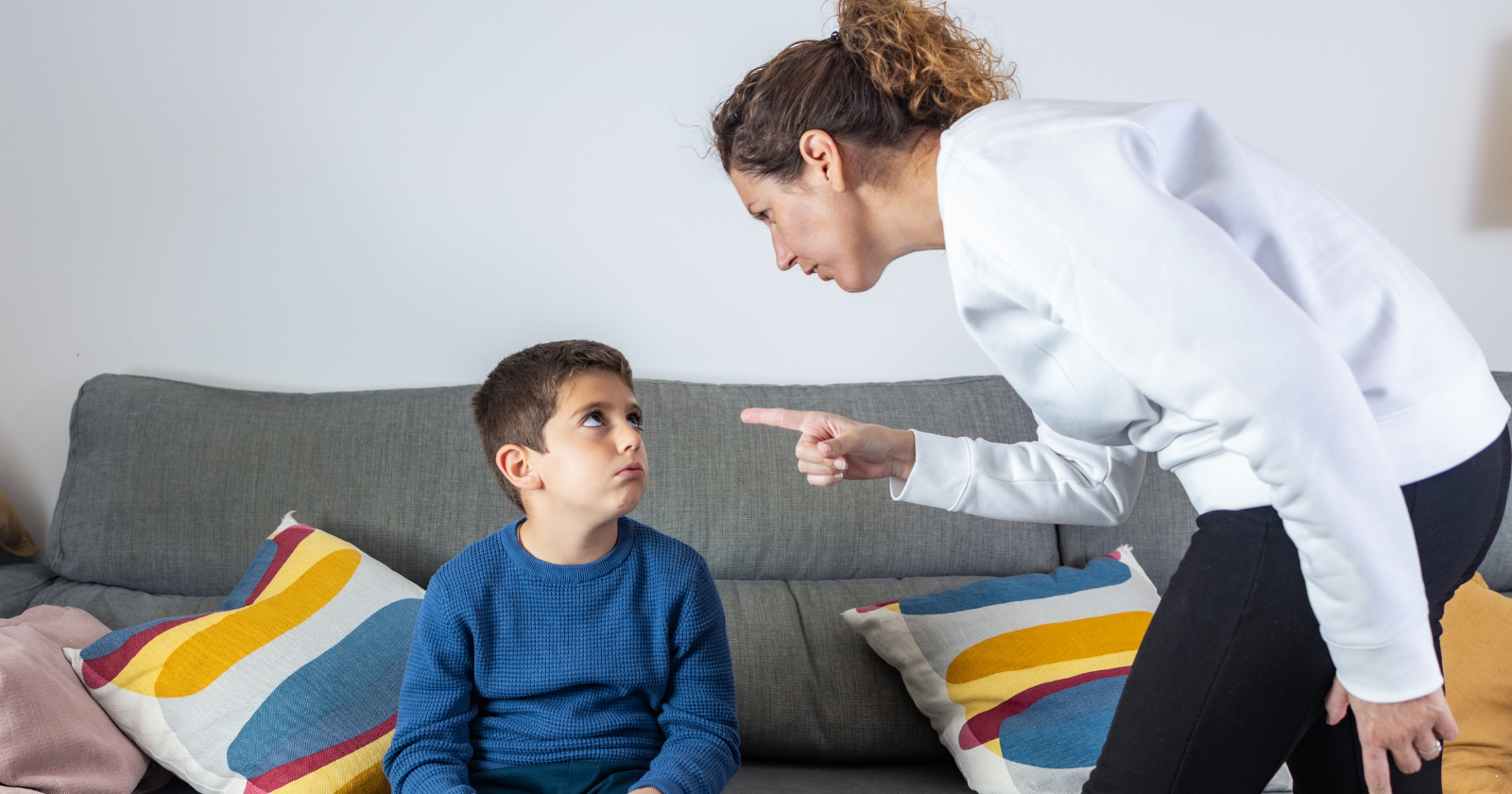
You know that tight feeling in your chest when your little one starts getting angry? That instant urge to shut it down, redirect, or fix it before things escalate? I get it. I really do. Because for the longest time, that was my automatic response too.
It wasn’t until I watched my daughter stomp her feet and yell “I’m SO MAD!” that something clicked. My whole body tensed up, and I heard myself saying the exact words my mother used to say: “We don’t act like that in this house.” The irony? I’d spent years in therapy unpacking how those same words affected me as a kid.
Growing up in my small Midwest town, anger was the emotion that simply didn’t exist in our household. We could be disappointed, sure. Frustrated, maybe. But angry? That was disrespectful, ungrateful, and definitely not allowed at our dinner table where we sat together every night, keeping conversations light and pleasant.
Now here I am, watching my own kids navigate big feelings, and I’m catching myself repeating patterns I swore I’d never pass on. If this sounds familiar, you’re not alone. Those of us who couldn’t express anger as children often struggle with these same parenting mistakes.
1) Shutting down anger immediately
Remember being told to “go to your room until you can be pleasant”? I do. And sometimes I catch those same words forming in my mouth when my son throws his blocks in frustration.
When we weren’t allowed to express anger, we learned it was dangerous or bad. Now when our kids get mad, every alarm bell in our nervous system goes off. We rush to stop it, distract from it, or minimize it. “You’re okay!” we say, even when they’re clearly not.
But here’s what I’m learning: anger is just information. It tells us something feels unfair, overwhelming, or out of our control. When I validate my kids’ anger instead of shutting it down, something magical happens. They move through it faster, and they trust me more with their feelings.
2) Taking their anger personally
When my daughter yells “I don’t like you!” in the heat of the moment, it takes everything in me not to crumble or lash back. Growing up, expressing anger toward my parents would have been unthinkable. So when my kids direct theirs at me, that old programming kicks in: this is disrespect, this must stop immediately.
But their anger isn’t about me. It’s about them feeling powerless, tired, or overwhelmed. When I remember this, I can stay calm and be the anchor they need instead of making it about my hurt feelings.
3) Over-explaining and rationalizing
“But honey, if you just share your toys, everyone will be happy and…”
Sound familiar? When anger makes us uncomfortable, we often try to logic our kids out of it. We explain why they shouldn’t feel that way, offer solutions, or point out the silver lining. Anything to make the uncomfortable feeling go away.
Related Stories from The Artful Parent
- Psychology says the best kind of parents aren’t the ones who sacrifice everything for their children — they’re the ones who model what a life worth living actually looks like, even when that means disappointing their kids in small ways
- A clinical psychologist explains that today’s parents give children more freedom, more voice, and more emotional validation than any generation before them, and the children are more anxious than ever — not because freedom is harmful, but because a child’s brain was never designed to carry the weight of unlimited choice before it can carry a conversation
- Most people assume the grandmother who keeps calling even when nobody picks up is lonely — they don’t realize she’s doing the only thing she knows how to do with love that no longer has anywhere to land
Growing up, I became an expert at talking myself out of anger before anyone else had to. Now I catch myself doing the same to my kids. But feelings aren’t logical. They need to be felt first, then we can problem-solve.
4) Creating too many rules around emotional expression
In my childhood home, there were unspoken rules about feelings. You could be upset in your room, quietly. You could disagree, politely. But raise your voice? Slam a door? Absolutely not.
I’ve noticed myself creating similar rules. “We can be angry, but we don’t yell.” “It’s okay to feel mad, but we don’t say mean things.” While some boundaries around expression are necessary for safety, too many rules just teach kids that anger is still somehow wrong.
5) Modeling emotional suppression
How often do you let your kids see you angry? Really angry, not just “frustrated” or “disappointed”?
For me, the answer was almost never. I’d stuff it down, breathe through it, save it for later when I could privately explode at my husband about the dishes. But kids are watching. They’re learning that adults don’t get angry, which means something must be wrong with them when they do.
Now I try to model healthy anger. “I’m feeling really angry that our plans got canceled. I need a minute to feel my feelings.” It’s uncomfortable, but it shows them anger is normal and manageable.
6) Using distraction as the go-to strategy
“Oh look, a bird!” “Want a snack?” “Let’s read a book!”
Distraction was my survival strategy as a kid. Feel anger bubbling up? Quick, think about something else. And naturally, I found myself doing the same with my kids. The moment big feelings arose, I’d redirect their attention.
But constantly distracting kids from anger teaches them it’s something to avoid rather than work through. Now I try to sit with them in it, even when every fiber of my being wants to make it stop.
7) Praising emotional suppression
“You were so good today! You didn’t get upset even once!”
I used to say things like this, thinking I was reinforcing positive behavior. But what message does this really send? That being “good” means not having difficult feelings.
Growing up, I got lots of praise for being the easy child, the one who never caused problems. That praise felt good, but it also locked me into a pattern of suppressing anything that might disappoint others.
8) Avoiding conflict at all costs
Peace at any price. That could have been my family’s motto. We didn’t argue, we didn’t disagree, we definitely didn’t fight. Everything stayed surface-level and pleasant.
I find myself desperately trying to keep that same false peace with my kids. Giving in to avoid tantrums. Negotiating endlessly to prevent upset. But conflict is how kids learn to navigate disagreement, stand up for themselves, and work through problems.
9) Apologizing for their emotions
“I’m sorry she’s having such a hard time.” “Sorry about the meltdown.”
Why do we apologize for our children’s anger? Because we learned that anger was an inconvenience, something to be ashamed of. When we apologize for our kids’ emotions, we teach them the same shame we carry.
Finding a different way
Breaking these patterns isn’t easy. Some days I nail it, sitting calmly while my son rages about his sister touching his tower. Other days, I hear my mother’s voice coming out of my mouth and have to apologize and try again.
What helps is remembering that anger is just energy that needs to move. It’s not dangerous or bad. It’s human. When I can hold space for my kids’ anger without trying to fix, minimize, or redirect it, they learn to trust their feelings and, more importantly, trust me with them.
We’re all doing the best we can with the tools we were given. The fact that you’re reading this, thinking about these patterns, means you’re already breaking the cycle. Give yourself grace as you unlearn old ways and practice new ones. Your kids don’t need perfect; they need real. And that includes real feelings, even the angry ones.
