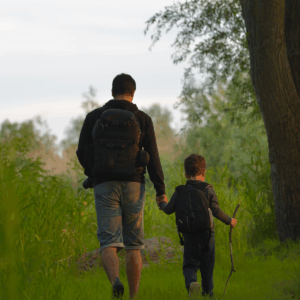

I was walking through the park with my grandson last week when he tripped over a tree root and scraped his knee. Before I could say anything, he looked up at me and said, “It’s okay, Grandpa. I can handle hard things.” He’s seven years old.
That moment stuck with me. Where did he learn that? From his parents, of course. From hearing it repeated during tough moments until it became part of how he talks to himself. It reminded me just how powerful our words are as parents and grandparents.
The phrases we use don’t just comfort children in the moment. They become the internal scripts our kids carry into adulthood, shaping how they respond to failure, disappointment, and challenge.
So what exactly should we be saying? Here are ten phrases that emotionally resilient kids tend to hear growing up.
1) “I believe in you”
These four words might be the most underrated gift we can give a child. When kids hear “I believe in you,” they start to believe in themselves. Simple as that.
What makes this phrase so powerful is that it communicates trust without pressure. You’re not saying “You have to succeed” or “Don’t let me down.” You’re saying, “Whatever happens, I trust your ability to figure it out.”
I’ve watched my own children struggle with everything from math homework to friendship drama. And I’ve noticed that when I lead with belief rather than advice, they stand a little taller. They try a little harder. They become more willing to take risks because they know someone has faith in them, even when they don’t have faith in themselves.
The key is meaning it. Kids can spot hollow encouragement from a mile away. But genuine belief? That lands differently. It plants a seed that grows into self-confidence over time.
2) “It’s okay to feel that way”
Too often, we rush to fix our children’s emotions. They’re sad, so we try to cheer them up. They’re angry, so we tell them to calm down. They’re scared, so we dismiss their fears as silly.
But here’s what I’ve learned after decades of parenting and grandparenting: emotions need to be felt before they can be processed. When we validate a child’s feelings with “It’s okay to feel that way,” we’re teaching them that their emotional experience matters. We’re showing them that feelings aren’t problems to be solved but signals to be understood.
Research from the Gottman Institute shows that children who receive emotional validation from parents develop better emotional regulation skills and stronger relationships later in life. They learn to sit with discomfort rather than run from it.
Related Stories from The Artful Parent
- 8 signs you’re raising an emotionally secure child even when it doesn’t feel like you know what you’re doing
- 9 things creative kids do that look like misbehavior but are actually signs their mind is working overtime
- The 8 messiest childhood activities are actually the ones building your child’s brain in ways screens never will
This doesn’t mean we let kids act out however they want. We can validate the feeling while still setting boundaries on behavior. “It’s okay to feel angry. It’s not okay to hit your sister.” Both things can be true.
3) “Mistakes help us learn”
I made plenty of mistakes raising my kids. More than I’d like to admit. But one thing I got right was treating mistakes as teachers rather than failures.
When children hear “Mistakes help us learn,” they develop what psychologist Carol Dweck calls a growth mindset. They start to see challenges as opportunities rather than threats. They become more willing to try new things because they’re not terrified of getting it wrong.
Think about how you respond when your child spills milk or forgets their homework. Do you sigh and express disappointment? Or do you help them see what they can do differently next time?
The goal isn’t to pretend mistakes don’t matter. They do. But they matter as stepping stones, not stumbling blocks. Every successful person I’ve ever met has a long list of failures behind them. The difference is they learned to view those failures as part of the journey, not the end of the road.
4) “I love you, no matter what”
Unconditional love sounds obvious, doesn’t it? Of course we love our children no matter what. But do they know that?
- From eMoms to Sparkplugging: what Wendy Piersall’s pivot still teaches us about building online - The Blog Herald
- What a painful 2007 WordPress upgrade reveals about running a site today - The Blog Herald
- The blogs that feel effortless to read are usually the product of a revision process most creators skip entirely - The Blog Herald
Kids are constantly testing boundaries, messing up, and pushing buttons. And in those moments, they’re often watching to see if our love has limits. Will Mom still love me if I fail this test? Will Dad still love me if I disappoint him?
Saying “I love you, no matter what” removes that uncertainty. It tells children that their worth isn’t tied to their performance, their behavior, or their achievements. They are loved simply because they exist.
This creates a secure foundation from which children can take risks and explore the world. They know that even if everything goes wrong, they have a safe place to land. That security is the bedrock of emotional resilience.
5) “What do you think you should do?”
Here’s a phrase I wish I’d used more when my kids were young. Instead of jumping in with solutions, asking “What do you think you should do?” puts the child in the driver’s seat.
It communicates respect for their judgment. It builds problem-solving skills. And it teaches them that they have the capacity to figure things out on their own.
I’ve mentioned this before, but one of the hardest parts of parenting is resisting the urge to fix everything. We see our children struggling and we want to swoop in and make it better. But every time we solve a problem for them, we rob them of the chance to develop confidence in their own abilities.
Of course, this doesn’t mean abandoning them to figure out everything alone. We can guide, suggest, and support. But starting with “What do you think?” shows them we trust their thinking. Over time, they start trusting it too.
6) “I’m proud of how hard you tried”
Notice the emphasis here. Not “I’m proud of your A+” or “I’m proud you won the game.” But “I’m proud of how hard you tried.”
When we praise effort over outcome, we teach children that their value comes from showing up and giving their best, not from being the best. This is crucial for building resilience because life doesn’t always reward hard work with success. Sometimes you try your hardest and still fall short.
Children who are praised only for achievements often become afraid to attempt anything they might fail at. They stick to what’s safe and easy. But children praised for effort become more adventurous. They’re willing to stretch beyond their comfort zone because they know the trying itself has value.
So next time your child brings home a test or finishes a project, pay attention to the process. Ask about the challenges they faced. Celebrate the persistence, not just the result.
7) “It’s okay to ask for help”
There’s a stubborn streak in many of us that equates asking for help with weakness. I certainly felt that way for much of my life. But it’s a lie that holds us back.
When children hear “It’s okay to ask for help,” they learn that needing support is a normal part of being human. They become more likely to reach out when they’re struggling, whether with homework, friendships, or bigger challenges down the road.
This phrase is especially important for building emotional resilience because resilient people aren’t those who never struggle. They’re the ones who know how to seek support when they need it. They understand that leaning on others isn’t a sign of failure but a sign of wisdom.
Model this yourself. Let your kids see you asking for directions, seeking advice, or admitting when you don’t know something. Show them that strong people ask for help all the time.
8) “I’m here for you”
Sometimes children don’t need advice. They don’t need solutions. They just need to know someone is in their corner.
“I’m here for you” is a simple phrase that communicates presence and availability. It tells children that they don’t have to face their problems alone. Even if you can’t fix what’s wrong, you can sit with them in the difficulty.
As noted by researchers at Harvard’s Center on the Developing Child, one of the most important factors in building resilience is having at least one stable, committed relationship with a supportive adult. That relationship becomes a buffer against stress and adversity.
Being present doesn’t require grand gestures. It can be as simple as sitting next to your child while they do homework. Listening without interrupting when they tell you about their day. Showing up to their events, even the small ones. These moments add up to a lifetime of security.
9) “You can do hard things”
This is the phrase my grandson echoed back to me in the park. And it’s become something of a family motto.
“You can do hard things” acknowledges that life is challenging while expressing confidence in the child’s ability to meet those challenges. It doesn’t minimize difficulty or pretend everything is easy. It simply says: yes, this is hard, and yes, you’re capable.
I’ve found this phrase particularly useful during moments of frustration. When a child wants to give up on a puzzle, a sport, or a friendship, reminding them that they can do hard things often provides just enough encouragement to keep going.
Over time, this phrase becomes internalized. Children start saying it to themselves. They approach obstacles with a “can do” attitude because they’ve heard it so many times that they believe it. And belief, as any grandparent will tell you, is half the battle.
10) “Tell me more about that”
Finally, one of the most powerful phrases for building emotional resilience is also one of the simplest. “Tell me more about that.”
This phrase does several things at once. It shows genuine interest in the child’s experience. It encourages them to articulate their thoughts and feelings. And it keeps the conversation going without judgment or interruption.
Too often, we respond to our children’s stories with our own opinions, corrections, or redirections. But when we say “Tell me more,” we create space for them to explore their own thinking. We become curious rather than directive.
Children who feel truly heard develop stronger emotional intelligence. They learn to process their experiences by talking through them. And they grow up knowing that their thoughts and feelings matter to the people who love them.
The voice they’ll carry forever
Here’s what I’ve come to understand after all these years: the voice we use with our children becomes the voice they use with themselves. The phrases we repeat during their childhood echo in their minds long after they’ve left our homes.
So choose your words carefully. Not perfectly, because perfection isn’t the goal. But intentionally. With love. With belief in who they are and who they’re becoming.
What phrases did you hear growing up that shaped who you are today?