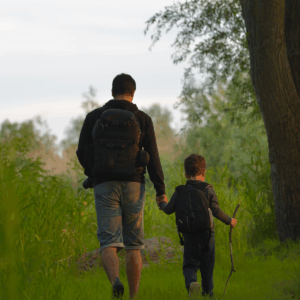
There’s a moment I remember clearly from years ago. My grandson, probably about six at the time, stopped mid-bite of his ice cream cone and said, “Grandad, I’m really glad you took me here today.” Nothing fancy. Just a simple acknowledgment. But it struck me how naturally gratitude came to him, and I knew his parents had something to do with that.
Gratitude isn’t just good manners or polite behavior we drill into children so they don’t embarrass us at family gatherings. It runs much deeper than that. When kids learn to genuinely appreciate what they have, the people around them, and the experiences life offers, something shifts inside them.
And that shift stays with them. The research backs this up, and so does my own experience watching children grow into adults who either embrace life or constantly feel shortchanged by it.
They develop stronger mental health
Let’s start with the big one. Kids who practice gratitude tend to have better mental health, and this benefit follows them right into adulthood. When children regularly notice and appreciate the good things in their lives, they’re essentially training their brains to look for positives instead of dwelling on negatives.
This isn’t wishful thinking. Research from UC Berkeley’s Greater Good Science Center has shown that gratitude practices can lead to lasting changes in the brain, making people more sensitive to experiencing gratitude in the future. For children, whose brains are still developing, this is particularly powerful.
Think about it this way. A child who learns to appreciate a sunny afternoon, a kind word from a friend, or even just a warm meal is building a mental toolkit. When harder times come, and they always do, that toolkit helps them find light in dark places. They become more resilient, less prone to anxiety and depression, and better equipped to handle life’s inevitable disappointments.
Their relationships become richer
Have you ever been around someone who never seems satisfied? Who takes everything for granted and rarely acknowledges what others do for them? It’s exhausting, isn’t it? Now think about the opposite. People who express genuine appreciation draw others toward them like magnets.
Children who grow up grateful tend to form deeper, more meaningful relationships throughout their lives. They notice when someone goes out of their way for them. They say thank you and mean it. They don’t keep score in friendships, always calculating who owes whom.
As I’ve mentioned before, the small things in parenting often matter most. Teaching your child to write a thank-you note, to acknowledge a friend’s kindness, or to express appreciation for a teacher’s help might seem minor.
But these habits compound over time. By adulthood, grateful kids have become the kind of people others want to be around. They attract quality friendships and romantic partnerships because they make the people in their lives feel valued.
They experience greater life satisfaction
Here’s something that might surprise you. Grateful people don’t necessarily have more than ungrateful people. They just appreciate what they have more fully. And that appreciation translates directly into life satisfaction.
Related Stories from The Artful Parent
- 8 signs you’re raising an emotionally secure child even when it doesn’t feel like you know what you’re doing
- 9 things creative kids do that look like misbehavior but are actually signs their mind is working overtime
- The 8 messiest childhood activities are actually the ones building your child’s brain in ways screens never will
I’ve watched this play out countless times. Two people can have nearly identical circumstances, yet one feels blessed while the other feels cheated. The difference almost always comes down to perspective, and that perspective is often shaped in childhood.
When kids learn to savor experiences rather than rush through them looking for the next thing, they develop a capacity for contentment that serves them for life. They’re less likely to fall into the trap of thinking happiness lies just around the corner, if only they could get that promotion, that house, that relationship. Instead, they find joy in the present moment because they’ve been practicing that skill since they were young.
Harvard Health has noted that gratitude is strongly and consistently associated with greater happiness, helping people feel more positive emotions, relish good experiences, and deal with adversity. That’s quite a gift to give your child.
They become more generous and empathetic
This one might seem counterintuitive at first. You’d think that focusing on what you have might make you more protective of it, more reluctant to share. But the opposite turns out to be true.
Grateful children tend to become more generous adults. When you appreciate what you have, you’re more inclined to share it. When you recognize the kindness others have shown you, you want to pass that kindness along. Gratitude creates a ripple effect that extends far beyond the individual.
There’s also an empathy component here. Kids who practice gratitude become more attuned to the experiences of others. They notice when someone is struggling. They recognize that not everyone has the same advantages they do. This awareness naturally leads to compassion and a desire to help.
- Blog bullies are real — here’s how to handle them - The Blog Herald
- Blogging your convictions: why the best posts aren’t written to please anyone - The Blog Herald
- Psychologists explain why people who maintain anonymous blogs for decades are often emotionally healthier than influencers — the privacy creates a space for truth-telling that public identity performance actively destroys - The Blog Herald
I’ve seen this in my own grandchildren. The ones who regularly express gratitude are also the first to share their toys, to comfort a crying friend, to think about how their actions affect others. It’s not a coincidence. Gratitude opens the heart in ways that benefit everyone around the grateful person.
They handle setbacks with more grace
Life will knock your children down. That’s not pessimism, just reality. Jobs will be lost. Hearts will be broken. Dreams will sometimes crumble. What matters is how they respond to these inevitable challenges.
Grateful kids grow into adults who bounce back faster from setbacks. Why? Because they’ve developed the habit of looking for silver linings, of finding something to appreciate even in difficult circumstances. This doesn’t mean they ignore pain or pretend everything is fine when it isn’t. It means they have the emotional flexibility to hold both the difficulty and the gratitude at the same time.
As noted by Dr. Robert Emmons, a leading gratitude researcher, grateful people are better able to cope with everyday stress and are more resilient in the face of trauma. They don’t deny the negative aspects of life, but they don’t let those aspects overwhelm the positive either. That balance is something that can be cultivated from childhood.
They achieve more without the constant hunger for more
There’s a common misconception that gratitude leads to complacency. If you’re happy with what you have, why would you strive for anything better? But research and real-world observation tell a different story.
Grateful people often achieve more, not less. They’re more motivated, more energetic, and more persistent. The difference is that their striving comes from a place of abundance rather than scarcity. They’re not desperately chasing success to fill an inner void. They’re building on a foundation of appreciation.
This matters enormously for children. Kids who feel grateful for their opportunities tend to make the most of them. They work hard in school not because they’re terrified of failure, but because they appreciate the chance to learn. They pursue goals with enthusiasm rather than anxiety. And when they achieve something, they actually enjoy it instead of immediately moving the goalposts.
They sleep better and enjoy improved physical health
This benefit often gets overlooked, but it’s significant. Grateful kids tend to have better physical health, including better sleep. When you go to bed thinking about what went well during the day rather than ruminating on problems, you fall asleep faster and sleep more soundly.
The health benefits extend beyond sleep. Grateful people report fewer aches and pains, take better care of their health, and exercise more regularly. Some researchers believe this is because gratitude reduces stress, which has well-documented negative effects on the body. Others suggest that grateful people simply value their bodies more and treat them accordingly.
For parents, this is worth considering. The bedtime gratitude practice you start with your five-year-old could still be benefiting their health when they’re fifty-five. That’s the power of habits formed early in life.
How to nurture gratitude in your children
So how do you actually raise grateful kids? It starts with modeling. Children learn far more from what we do than what we say. If you regularly express appreciation, if you notice the good things in your life and comment on them, your children will absorb that orientation.
Make gratitude a family practice. Some families share three good things at dinner. Others keep gratitude journals. The specific method matters less than the consistency. What you’re doing is training attention, helping your child’s brain develop the habit of noticing positives.
Encourage your children to express thanks directly to others. A verbal thank you is good. A written note is even better. The act of articulating gratitude deepens it. And don’t force it. Coerced gratitude isn’t gratitude at all. Create opportunities and model the behavior, but let genuine appreciation develop naturally.
Finally, help your children see the bigger picture. Talk about where things come from. The food on the table. The clothes they wear. The roof over their heads. When kids understand the effort and resources that go into their daily lives, appreciation follows naturally.
The beautiful thing about gratitude is that it costs nothing and gives so much. It’s available to every family regardless of income or circumstance. And its benefits last a lifetime.
What are you grateful for today? And more importantly, have you shared that with your children?