
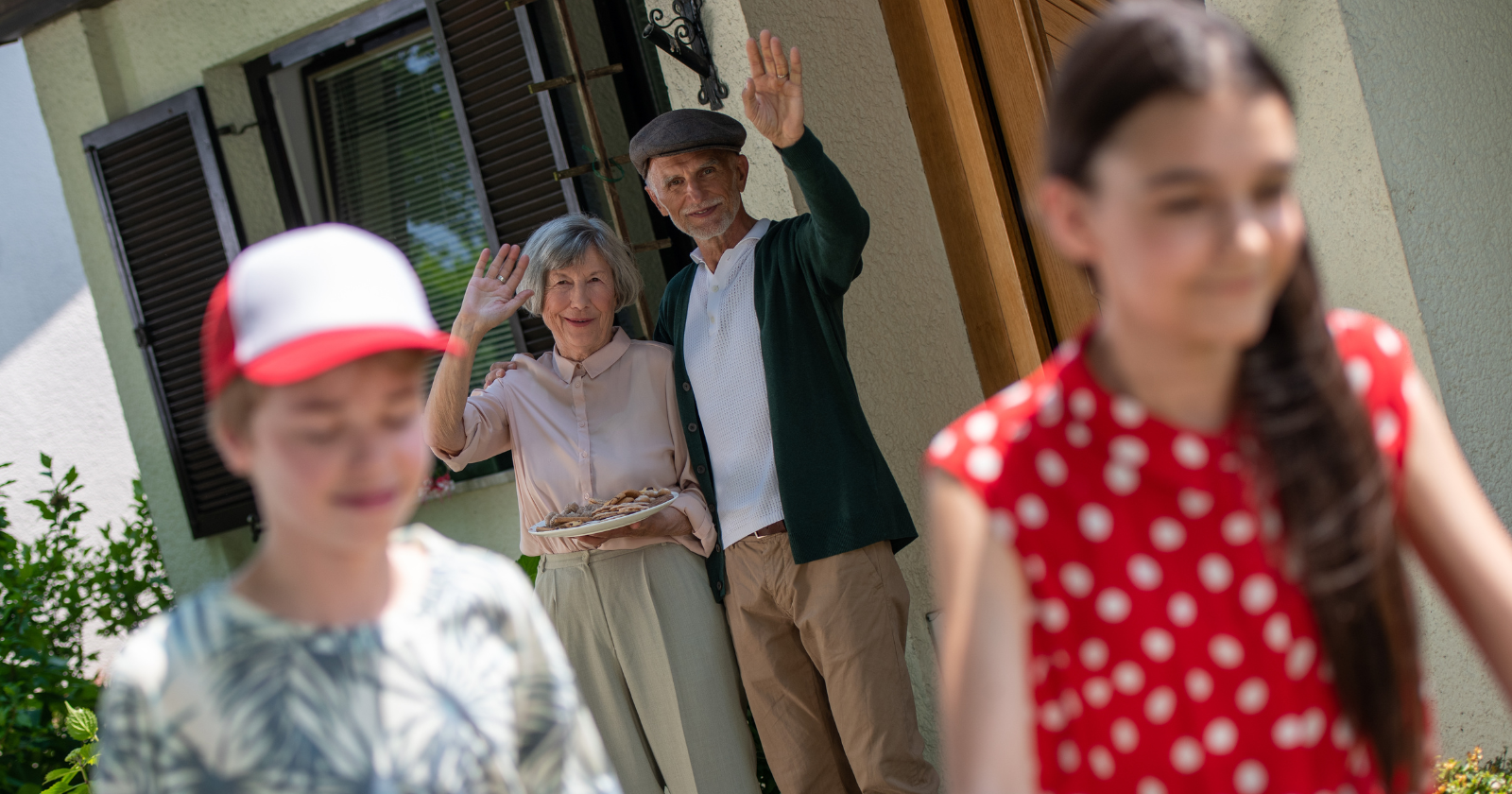
Last summer, I watched a Danish grandmother let her 4-year-old grandson climb a tree that had to be at least fifteen feet tall. No hovering, no “be careful!” every two seconds. Just a calm presence and trust. Meanwhile, back home, I’ve seen parents rush to catch their toddlers before they even stumble on flat ground.
After spending time with European families through various parenting groups and during our extended stay in France last year, I’ve noticed something fascinating: what many European grandparents consider completely normal Tuesday activities would probably have American grandparents reaching for their phones to call 911. Or at least strongly questioning the parents’ judgment.
Is one approach better than the other? That’s not really the point. But these differences definitely made me rethink some of my own assumptions about safety and childhood independence.
1) Sending kids to the bakery alone
Picture this: a 6-year-old walking three blocks to buy bread. Alone. With actual money. In many European neighborhoods, this is Tuesday morning routine when grandma’s watching the kids.
I remember my jaw dropping when a French grandmother told me she sends her granddaughter to pick up croissants every morning she visits. The girl was seven. She crossed two streets and handled money like a pro. The grandmother’s response to my surprise? “How else will she learn?”
Here’s what struck me: the entire community seemed in on it. The baker knew these kids by name. Other adults on the street kept a casual eye out. It wasn’t neglect; it was intentional community-based independence building.
2) Letting them use real knives in the kitchen
Swedish grandparents hand 3-year-olds actual sharp knives to help prep vegetables. Not butter knives. Not plastic knives. Real ones.
The first time I saw this, my helicopter parent instincts kicked in hard. But then I watched. These kids were remarkably careful and focused. They’d been taught proper technique from toddlerhood. By five, they could dice onions better than most American teenagers.
One German grandmother explained it simply: “Children rise to meet our expectations. If we expect them to be capable, they become capable.”
It made me think about how often we underestimate what kids can handle when given proper instruction and trust.
3) Walking to school without adults
In Switzerland, it’s standard for kindergarteners to walk to school independently. Grandparents might walk them the first week, then gradually step back. By October, five-year-olds navigate crosswalks and traffic lights on their own.
Can you imagine suggesting this at an American PTA meeting? The gasps would be audible from space.
Yet Swiss children have lower accident rates than American kids. Why? Because they learn traffic awareness early, and the entire infrastructure supports child pedestrians. Speed limits drop near schools, drivers expect kids, and crossing guards are stationed at tricky intersections.
4) Playing outside unsupervised for hours
Dutch grandparents think nothing of sending grandkids outside with a vague “come back when you’re hungry.” No GPS trackers, no checking in every 30 minutes, no adults organizing their play.
A Norwegian grandmother once told me she worries American children don’t know how to entertain themselves. “They always need an adult directing them,” she said, watching her grandkids build a fort in the woods behind her house.
These kids weren’t just aimlessly wandering. They were problem-solving, negotiating with peers, assessing risks, and yes, occasionally getting scraped knees. But they were also building confidence I rarely see in constantly supervised children.
5) Taking public transportation alone
By age eight or nine, many European kids navigate buses and trains solo when staying with grandparents. They know their stops, can read maps, and handle delays.
I met a Italian grandmother who sends her 10-year-old grandson on the metro to his piano lessons. “Traffic is terrible, and he knows the way,” she shrugged. “Why would I drive him?”
The independence these kids develop is remarkable. They’re not anxious about getting lost because they’ve been taught navigation skills progressively since they were small.
6) Biking everywhere without helmets
OK, this one makes me squirm a bit. In Amsterdam or Copenhagen, you’ll see grandparents biking with grandkids, often without helmets, sometimes with multiple kids balanced on one bike.
Before you judge too harshly, consider this: these cities have extensive bike infrastructure, drivers expect cyclists everywhere, and biking is so normalized that accident rates are surprisingly low. The whole system is designed for bikes first, cars second.
Still, this is one European practice I probably won’t be adopting anytime soon. But it does make me wonder if our helmet obsession sometimes prevents us from addressing bigger issues like actual safe biking infrastructure.
7) Climbing trees and playground structures meant for older kids
German playgrounds would give American liability lawyers nightmares. Massive climbing structures, minimal padding, and grandparents sitting on benches reading while kids navigate equipment that would be deemed “age-inappropriate” in the US.
A British grandmother once asked me why American playgrounds are “so boring.” Her point hit home when I watched her 4-year-old granddaughter master a climbing wall that would be marked 8+ in the States.
These kids develop incredible physical literacy and risk assessment skills. They know their limits because they’ve been allowed to find them.
8) Eating whatever grandma serves
No special kids’ menu. No negotiations about chicken nuggets. European grandparents serve one meal, and kids eat it or go hungry. Raw milk cheese, rare meat, unpasteurized honey for toddlers? All normal Tuesday lunch items.
French grandmothers especially find American food fears puzzling. “How will they develop taste if they only eat bland food?” one asked me, serving her 3-year-old grandson blue cheese.
These kids eat everything because that’s what’s expected. There’s no drama, no separate meals, just an assumption that children can handle real food.
Final thoughts
Watching European grandparents with their grandchildren challenged so many of my assumptions about childhood safety and capability. Are some of these practices genuinely riskier? Maybe. But the confidence, independence, and resilience these kids develop is undeniable.
I’m not suggesting we abandon all safety measures or blindly adopt every European practice. But maybe, just maybe, we could trust our kids a bit more. Maybe we could let them fail occasionally, figure things out independently, and surprise us with their capabilities.
The real question isn’t whether European or American grandparents have it right. It’s whether our current approach is actually serving our kids or just soothing our own anxieties. What would happen if we loosened the reins just a little? Our kids might just amaze us with what they can handle on a regular Tuesday.
