
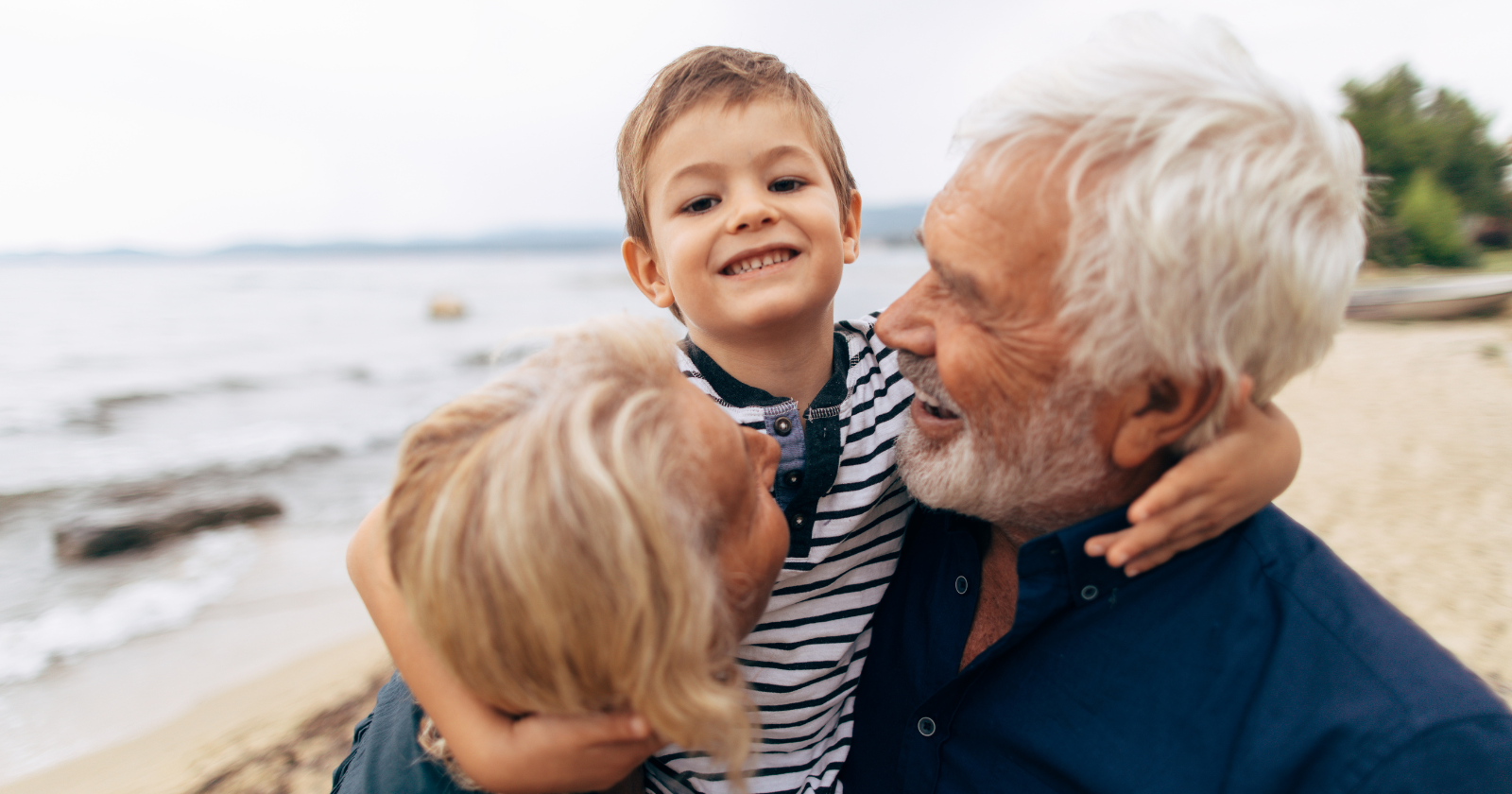
Last week, my mom came over for dinner, and I watched something magical happen
. My usually reserved daughter was sprawled across the couch, singing made-up songs at the top of her lungs while my toddler son performed what can only be described as interpretive dance with a wooden spoon. Instead of telling them to settle down or use their “inside voices,” my mom clapped along and asked for an encore.
Later that evening, after bedtime stories and endless cups of water, I found myself thinking about how different this scene was from my own childhood. Not that my parents were harsh—they weren’t—but there was always this underlying expectation to be “good” when grandparents visited. To perform politeness rather than just be ourselves.
You know what I’ve noticed? The grandparents whose grandkids genuinely light up when they visit, who get the real giggles and the honest tears and the full-blown tantrums without anyone suddenly becoming stiff or quiet—they all seem to create similar environments.
And having spent seven years in a kindergarten classroom before having my own kids, I’ve seen firsthand how rare and precious this kind of space really is.
1) They welcome the mess and the chaos
Remember being a kid and having that one relative whose house felt like a museum? Where you were afraid to touch anything and spent the whole visit perched on the edge of the couch?
The grandparents who get the real, unfiltered versions of their grandkids do the opposite. They put away the breakable things without making a big deal about it. They spread out old sheets for painting projects. They let kids eat snacks in the living room even though crumbs are inevitable.
My mom used to be the queen of white carpets and perfectly arranged throw pillows. These days? She keeps Play-Doh in her kitchen drawer and has a designated “mess corner” where creativity trumps cleanliness. She figured out pretty quickly that you can either have a spotless house or grandkids who actually want to visit—rarely both.
This doesn’t mean letting kids destroy everything. It means recognizing that childhood is inherently messy and choosing connection over perfection. When kids know they won’t get in trouble for accidentally spilling juice or tracking in mud, they relax. They stop monitoring themselves and start just being kids.
2) They remember what it feels like to be small
Have you ever watched an adult crouch down to a child’s eye level versus talking down at them from above? The whole dynamic shifts.
The grandparents who really connect don’t just physically get on kids’ level—they remember emotionally what it was like to be small in a big world. They remember how frustrating it was when adults didn’t take your problems seriously. They remember how it felt when someone dismissed your fears as silly.
I see this with my own parents, who were initially skeptical of what they called my “hippie parenting” but are slowly coming around.
My dad, who used to tell me to “shake it off” when I got hurt, now sits patiently while my daughter explains in great detail why she’s upset that her favorite leaf broke. He doesn’t minimize it or rush her to feel better. He just listens and says things like, “That sounds really hard.”
When grandparents validate those big feelings instead of trying to logic kids out of them, something beautiful happens. Kids learn their emotions matter. They learn it’s safe to feel things fully in that space.
3) They focus on connection over correction
Here’s something I learned during my teaching years: kids who feel constantly corrected eventually stop trying. They either shut down or act out, but either way, the authentic child disappears behind a defensive wall.
The grandparents who get to know their grandchildren’s true selves pick their battles carefully. They don’t comment on table manners at every meal. They don’t point out every mispronounced word. They don’t turn every interaction into a teaching moment.
Instead, they focus on connecting. They ask real questions and actually listen to the rambling answers. They share their own stories, including the embarrassing ones. They laugh at the silly jokes even when the punchline makes no sense.
My mom recently told me she has a rule for herself: for every correction, she aims for five positive interactions. Not fake praise, but genuine connection. Noticing things. Asking questions. Being present. The result? My daughter actually seeks her out to share both triumphs and troubles.
4) They create predictable spaces for unpredictability
This might sound contradictory, but stick with me. Kids feel safest being themselves when they know what to expect from the adults around them. Not rigid schedules or strict rules, but emotional predictability.
The best grandparent spaces have reliable rhythms. Maybe it’s always pancakes on Saturday mornings. Maybe there’s always a puzzle on the coffee table. Maybe bedtime stories happen in the same cozy corner every time. These anchors create safety.
But within that structure? Anything goes. Dance parties can break out. Fort building can take over the living room. Imaginary games can stretch for hours.
My kids know that at grandma’s house, there will always be art supplies on the kitchen table and a snack drawer they can access themselves. But what they create and when they’re hungry? That’s up to them. This balance of structure and freedom lets them exhale and just be.
5) They show their own imperfections
Nothing shuts down authenticity faster than feeling like you’re in the presence of perfection. When grandparents present themselves as having it all together, never making mistakes, always knowing best, kids instinctively put on their “good behavior” masks.
But the grandparents who see the real child? They’re real people too. They burn the cookies and laugh about it. They admit when they don’t know something. They share age-appropriate stories about their own mistakes and what they learned.
Recently, my dad was helping my daughter with a puzzle and put a piece in the wrong spot. Instead of quietly fixing it when she wasn’t looking, he said, “Oh shoot, I goofed that up! Let me try again.” Such a small moment, but I watched my perfectionist daughter’s shoulders relax. If grandpa could make mistakes and it was okay, maybe she could too.
Finding the magic balance
Creating an environment where grandchildren feel completely themselves isn’t about being the “fun” grandparent who says yes to everything. It’s not about having no boundaries or letting chaos reign.
It’s about seeing children as whole people, not projects to be improved. It’s about creating space for all parts of them—the silly and the serious, the confident and the scared, the cooperative and the defiant. It’s about showing up as a safe harbor in their sometimes overwhelming world.
The grandparents who master this balance get something precious in return: they get to know who their grandchildren really are. Not the performed version, not the “company manners” version, but the real, beautiful, complex little humans who are still figuring out their place in this world.
And honestly? Those are the grandparents whose homes become refuges, whose visits are counted down to, whose memories stick long after childhood fades. They’re the ones who get the tight hugs, the secret worries, the biggest laughs, and the trust that comes from being seen and loved exactly as you are.
