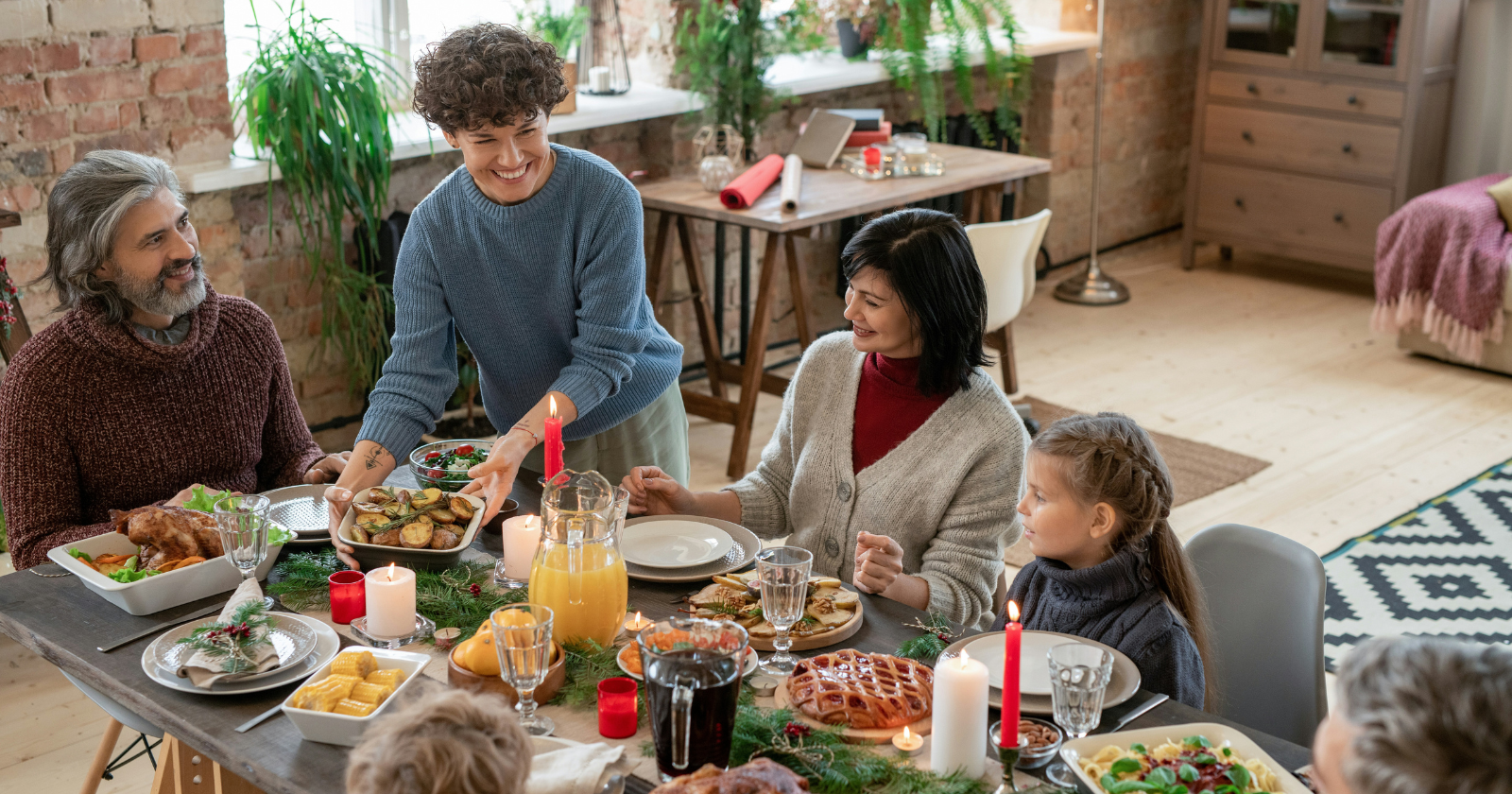
The wine glasses seem heavier in my parents’ hands these days. Last Christmas, I watched my dad struggle with the corkscrew for a moment before my brother Justin quietly took over. Nobody said anything, but we all noticed.
If you’re feeling a strange weight during holiday gatherings as your parents age, you’re not imagining it. That subtle shift in the atmosphere isn’t just nostalgia playing tricks on you.
Psychology tells us there’s something deeper happening here. As our parents grow older, family dynamics undergo profound changes that affect everyone at the table. The roles we’ve played for decades start to blur, creating an emotional complexity that can make even the most festive occasions feel surprisingly heavy.
Here are seven reasons why those holiday gatherings hit different now, backed by psychological insights that might help you understand what you’re really experiencing.
1. You’re witnessing role reversal in real time
Remember when your parents had all the answers? When they were the ones organizing everything, making decisions, and keeping the family ship sailing smoothly?
That dynamic shifts gradually, then suddenly all at once.
Psychologists call this “filial maturity” – that moment when adult children realize they’re becoming the caregivers, the decision-makers, the ones others look to for guidance. It’s a fundamental reorganization of family structure that happens right there at the dinner table.
I felt it acutely last year when my mom asked me to handle the holiday planning. “You’re better at this stuff now,” she said casually, but the weight of that transition hung in the air.
This role reversal triggers what researchers describe as “ambiguous loss” – you’re grieving the parents you once knew while they’re still sitting right there. Your protectors are becoming the protected, and that shift fundamentally changes the emotional landscape of every gathering.
2. Everyone’s mortality is suddenly visible
There’s something about seeing your parents age that makes your own mortality feel startlingly real.
Developmental psychologists recognize this as part of what they call “generational consciousness” – the awareness that you’re moving up in the family hierarchy. When your parents show signs of aging, you’re confronted with the reality that you’re next in line.
This awareness creates what I explore in my book, Hidden Secrets of Buddhism: How To Live With Maximum Impact and Minimum Ego – a pressing need to find meaning in impermanence.
Buddhist philosophy teaches us about the interconnectedness of all generations, but experiencing it firsthand at the holiday table hits differently than reading about it.
The empty chairs become more noticeable. The stories get repeated more often. And suddenly, you’re acutely aware that these gatherings are numbered.
3. Unresolved family dynamics intensify
Got unfinished business with your siblings? Old resentments with your parents?
As parents age, these dormant conflicts often resurface with surprising intensity. Psychologists note that the prospect of limited time acts like emotional rocket fuel, amplifying feelings we’ve kept buried for years.
Growing up as one of three brothers in Melbourne, our dinner debates about politics and life shaped how we communicate.
Now, working with Justin and Brendan in business, I’ve learned that those old patterns of interaction become more pronounced when we gather around our parents’ table. The stakes feel higher because we know the clock is ticking on opportunities for resolution.
Family therapists call this “compressed emotional processing” – trying to resolve decades of complexity in the limited gatherings we have left.
4. The burden of being the memory keeper
Who remembers Grandma’s stuffing recipe? What year did we take that family trip? What was Dad’s first job again?
As parents’ memories become less reliable, adult children often find themselves becoming the family historians. This responsibility carries unexpected emotional weight.
You’re not just remembering events; you’re preserving the family narrative. Psychology research shows that this “biographical work” requires significant emotional labor. You become the bridge between past and future, holding stories that might otherwise disappear.
I notice this especially when spending time with my wife’s Vietnamese family, where oral tradition and respect for elders means stories are currency. The pressure to remember correctly, to pass things on accurately, adds another layer of heaviness to what should be light conversation.
5. Decision anxiety peaks
Should Mom still be driving? Is Dad managing his medications properly? Who’s checking in on them regularly?
These questions hover over holiday gatherings like uninvited guests. Psychologists identify this as “anticipatory burden” – the stress of future caregiving decisions that haven’t been made yet but cast shadows over present moments.
Every stumble, every forgotten word, every repeated story becomes data in an ongoing assessment you never wanted to conduct. You’re simultaneously trying to enjoy the moment while evaluating what needs to change.
The cognitive dissonance is exhausting. You want to preserve your parents’ dignity and independence while ensuring their safety. This internal conflict makes every gathering feel like an emotional marathon.
6. Your own aging becomes undeniable
Here’s what nobody tells you: watching your parents age forces you to confront your own aging in ways that looking in the mirror never quite does.
When I became a father to my daughter this year, the generational shift became even more pronounced. Suddenly, I’m not just someone’s son; I’m the link between my aging parents and my infant daughter. This “sandwich generation” experience, as psychologists term it, creates a unique form of existential awareness.
The lessons from Hidden Secrets of Buddhism: How To Live With Maximum Impact and Minimum Ego about embracing impermanence take on new meaning when you’re literally watching life cycles unfold at your holiday table.
You catch yourself doing things your parents used to do. Using their phrases. Making their gestures. The mirror of generational time reflects back at you, and it’s both beautiful and terrifying.
7. The performance of normalcy becomes exhausting
Perhaps the heaviest aspect is the unspoken agreement to pretend everything is fine.
We maintain traditions even when they no longer fit. We avoid difficult conversations to preserve the peace. We perform happiness when we’re actually navigating complex grief.
Social psychologists call this “emotional labor” – the work of managing feelings to create a desired emotional state in others. During holiday gatherings with aging parents, this labor intensifies exponentially.
Everyone sees the changes but nobody wants to be the first to acknowledge them. So we all participate in this elaborate dance of denial and forced cheer, which only adds to the emotional weight of the occasion.
The gap between what we’re feeling and what we’re expressing creates a form of psychological dissonance that leaves everyone drained.
Final words
Those heavier holiday gatherings aren’t your imagination, and they’re not just nostalgia making you melancholy.
They’re the result of profound psychological and family system shifts that occur as parents age and roles evolve. Understanding these dynamics doesn’t make them disappear, but it can help you approach them with more compassion for yourself and everyone at the table.
The weight you feel is the weight of love, loss, and the complex beauty of family bonds stretching across time. It’s heavy because it matters. Because these people matter. Because these moments, complicated as they are, won’t last forever.
Maybe that’s not such a bad thing to carry.