
Remember those Sunday mornings when the whole house smelled like cinnamon rolls rising in the oven, and you could hear the coffee percolating while Dad rustled through the newspaper at the kitchen table? I can still feel the texture of our scratchy wool church clothes and hear the creak of our old station wagon as we all piled in together.
Growing up in a small Midwest town in the 80s, my family didn’t have much money. But looking back now, as I watch my own kids grow up in this digital age, I realize we had something that feels increasingly rare: uninterrupted time together. Not quality time squeezed between soccer practice and screen time, but whole lazy Sundays that unfolded without agenda or expense.
Those Sundays taught me something I’m trying desperately to recreate with Ellie and Milo: real connection doesn’t require a credit card. In fact, some of the deepest family bonds are built through the simplest rituals.
1) Everyone helped make Sunday dinner from scratch
Sunday dinner prep started right after church. My mother would tie on her apron, and we’d all get assignments. The older kids peeled potatoes while the youngest set the table. Nobody questioned it; this was just what Sundays looked like.
I remember standing on a stepstool, carefully stirring gravy while my mother made pie crust from memory. We’d talk about nothing and everything. Who sat where at church, what vegetables were coming up in the garden, whether the neighbor’s cat had her kittens yet.
There were no meal kits delivered to our door, no takeout menus magnetted to the fridge. Everything came from our own garden or the grocery store, transformed by our own hands. The kitchen would fog up with steam from boiling potatoes, and we’d draw pictures in the condensation on the windows.
Matt and I try to recreate this with our kids now, though I’ll admit we don’t manage it every Sunday. But when we do, when Ellie measures flour and Milo “helps” by sneaking tastes, I see the same magic happening. They’re learning that food is love, that working together creates something bigger than any individual effort.
2) Taking long walks after dinner
After dishes were done, the whole family would head out for a walk. Not a power walk with fitness trackers and podcasts, but a meandering stroll around the neighborhood. The grown-ups walked ahead while us kids collected interesting rocks and picked dandelions.
These walks cost absolutely nothing, but they gave us something invaluable: transition time between the day’s activities, a chance to digest both our food and our thoughts. We’d wave at neighbors sitting on their porches, stop to pet dogs, notice which houses had new flowers blooming.
I’ve started this tradition with my own family, and it amazes me how much Ellie opens up during these walks. Away from toys and distractions, she’ll suddenly tell me about the girl who was mean at preschool or ask why clouds move. Milo toddles along, pointing at every bird and airplane, teaching me to see the world through his eyes again.
3) Playing board games by lamplight
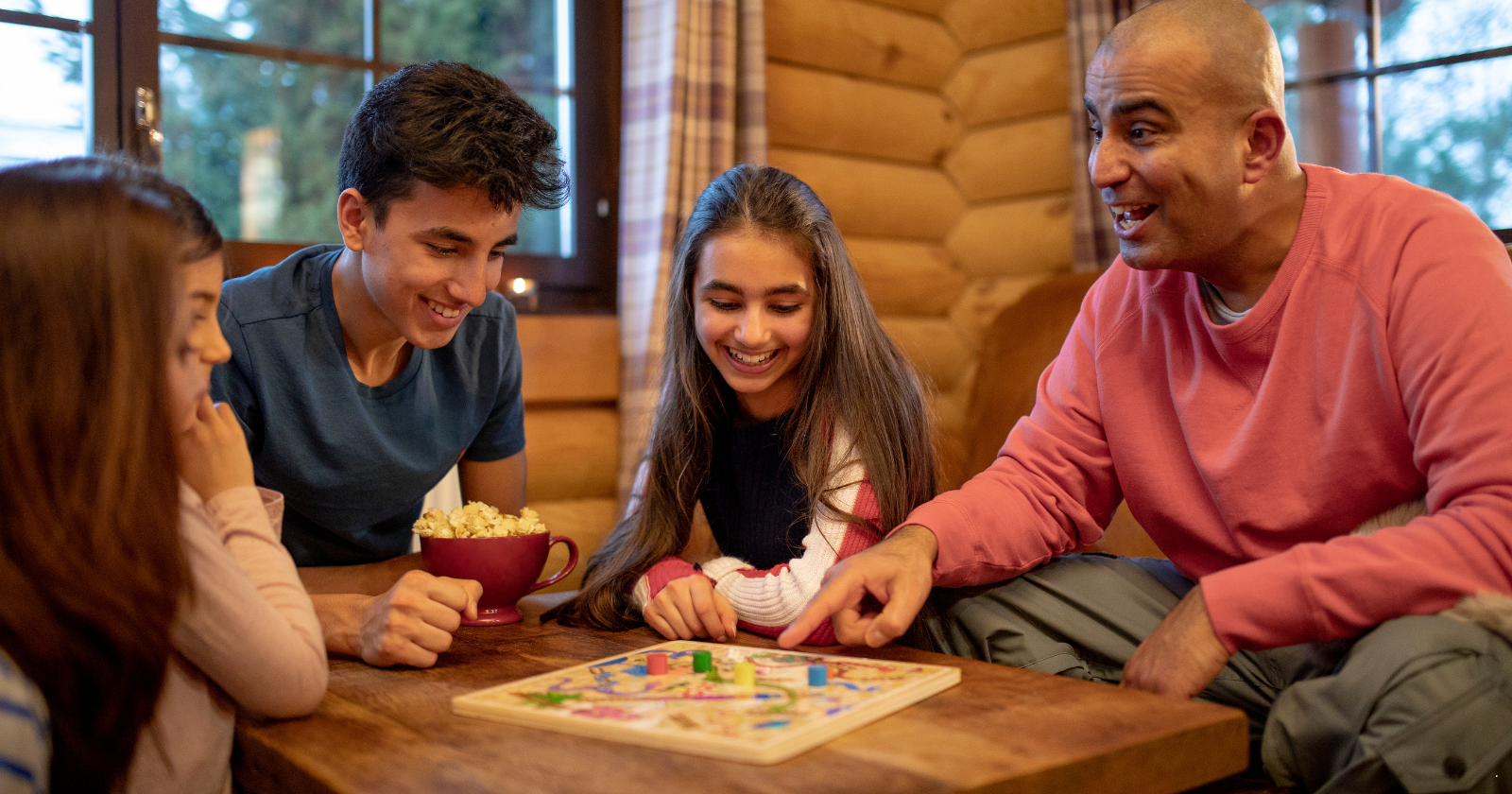
Sunday evenings meant Monopoly, Scrabble, or a deck of cards spread across the dining room table. The overhead light stayed off; we played by the warm glow of the table lamp, which somehow made everything feel cozier.
We’d play for hours, teaching the younger kids strategy, letting them be the banker, celebrating dramatically when someone finally got Park Place. There were no notifications pinging, no screens to check. Just us, the game, and time stretching out comfortably.
These games taught us patience, how to lose gracefully, how to strategize. But mostly, they gave us an excuse to sit together without the pressure of making conversation. The game provided structure while allowing for natural interaction.
4) Reading the Sunday comics together
The Sunday paper was an event in our house. My dad would spread it out across the living room floor, and we’d all claim our sections. The comics were fought over, naturally, but we’d eventually share, reading our favorites aloud to each other.
We’d lie on our stomachs, legs kicking in the air, taking turns with Calvin and Hobbes and Garfield. Sometimes my dad would read the editorial cartoons and try to explain them to us, which usually led to discussions about things happening in the world.
That simple ritual taught us to share, to wait our turn, to enjoy stories together. It gave us common references and inside jokes that we still share decades later.
5) Having “church clothes” fashion shows
Before church, while my mother fixed her hair, us kids would parade around in our Sunday best, making up elaborate stories about where we were going in our fancy outfits. We’d pretend to be news anchors, wedding guests, or important business people.
My younger sister would clip-clop around in my mother’s heels while my brother practiced tying his tie. We’d critique each other’s outfits with exaggerated seriousness, inventing awards for “shiniest shoes” or “most wrinkled collar.”
These silly morning rituals took no money but gave us permission to be creative, to play pretend, to see each other as more than just annoying siblings.
6) Listening to radio shows while doing puzzles
Sunday afternoons often found us gathered around a card table working on a massive jigsaw puzzle while Prairie Home Companion played on the radio. We’d sort pieces by color, celebrate when someone found a corner piece, groan collectively at Garrison Keillor’s puns.
The combination of gentle focus and ambient storytelling created this meditative family space. We could work quietly or chat, come and go as we pleased, but the puzzle and the radio show held us in loose orbit around each other.
7) Making popcorn on the stove for Sunday night TV
Sunday night meant one thing: popcorn made in a pot on the stove while we watched whatever family show was on that night. The kernels would start popping slowly, then build to a crescendo that had us all counting to see who could guess when it was done.
We’d melt real butter, salt it heavily, and pile into the living room with one big bowl to share. We had to negotiate who held the bowl, how to pass it fairly, how to handle the inevitable spill on the couch.
That single bowl of popcorn did what separate snacks never could: it kept us physically close, required cooperation, and gave us a shared experience beyond just watching the same screen.
8) Having “Sunday baths” with extra bubbles and no rush
Sunday night baths were different from weekday scrub-downs. My mother would let us use extra bubble bath, bring in toys we normally couldn’t have in the tub, and let us soak until our fingers pruned.
She’d sit on the closed toilet lid, reading or just talking with us about the week ahead. Sometimes she’d tell us stories about when she was little, or we’d make up elaborate tales about the bubble mountains we created.
Those unhurried bath times gave us one-on-one attention in a world where three kids meant constantly competing for our parents’ focus. They signaled the transition from weekend to week, from family time to school time, in the gentlest possible way.
Finding our own Sunday rhythms
When I think about those 1980s Sundays, what strikes me most is how little they required beyond presence. No memberships, no equipment, no entrance fees. Just time, attention, and the decision to be together.
With Ellie and Milo, I’m trying to recapture some of that simplicity. We make pancakes together on Sunday mornings, Matt tells elaborate stories during bath time, and we’ve started our own puzzle tradition. Not everything translates perfectly to modern life, and that’s okay.
What matters is protecting that slow, sacred Sunday feeling—that sense that we have nowhere else to be and nothing more important than being together. In a world that profits from our constant consumption and distraction, choosing simplicity becomes almost revolutionary.
Those lower middle class 1980s families knew something we’re in danger of forgetting: the best connections happen in the spaces between activities, in the quiet moments when there’s nothing to do but be together. Money can buy experiences, but it can’t buy the easy intimacy that comes from peeling potatoes side by side, year after year, until you know each other’s rhythms by heart.
