It happened last Tuesday morning. I was rushing around the kitchen, trying to get breakfast on the table while simultaneously packing lunch boxes and reminding my five-year-old for the third time to put on her shoes.
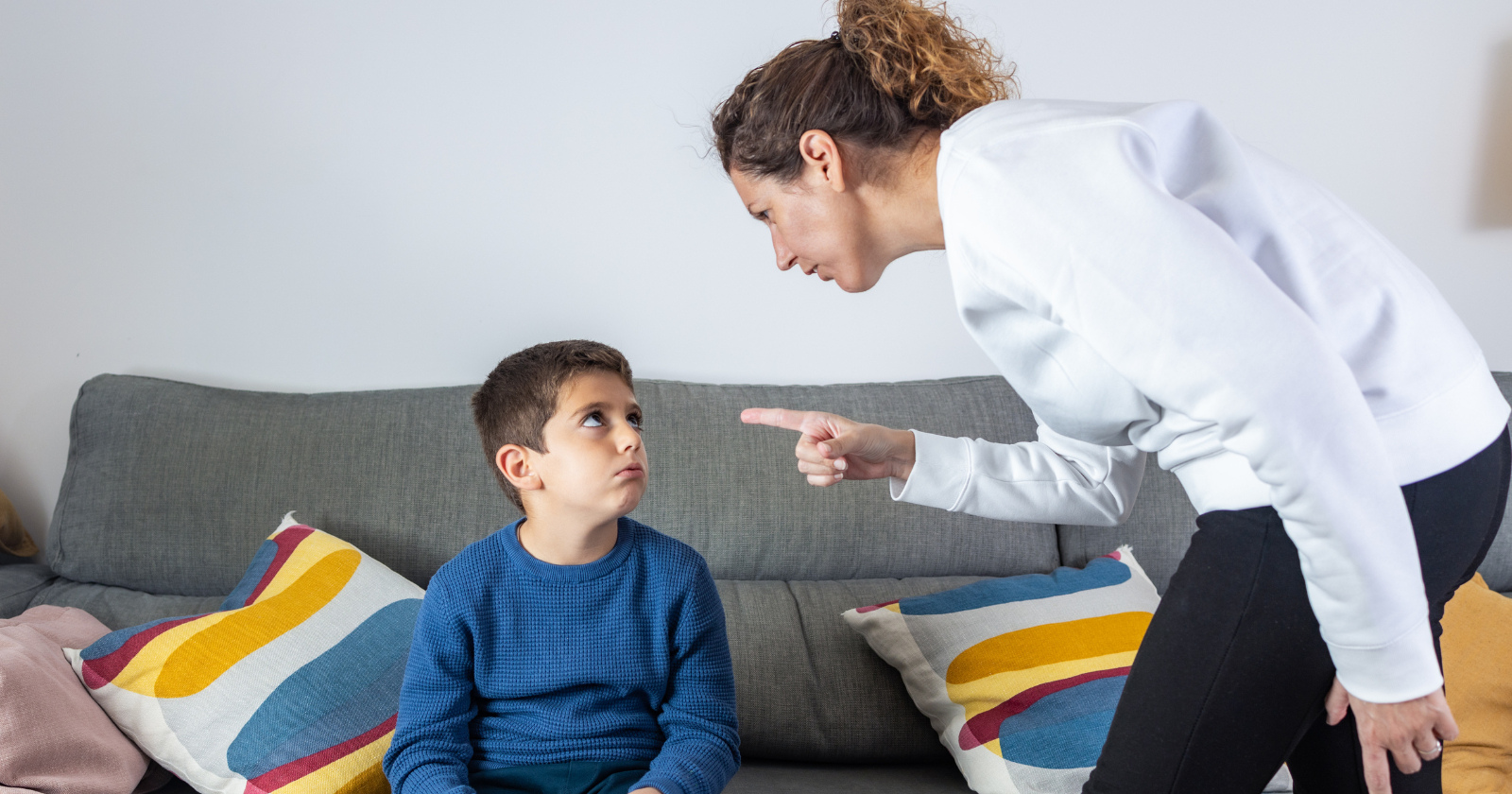
My two-year-old was having a meltdown because I’d cut his toast “wrong,” and somewhere between wiping tears and spreading almond butter, I heard myself say it: “Because I said so, that’s why.”
The words hung in the air like a confession I wasn’t ready to make. Those exact words, in that exact tone, belonged to my mother circa 1995.
And there I was, three decades later, serving them up with the same exhausted finality I’d once sworn I’d never use.
But here’s the thing that really got me: I wasn’t even sorry. In that moment, I understood completely why my mother had said it.
I understood the bone-deep tiredness, the mental load of explaining every single decision, the simple need for something, anything, to just happen without negotiation.
The promises we make before we know better
Remember being twenty-something and knowing exactly how you’d parent differently? I had a whole manifesto. I’d never shut down questions with “because I said so.”
I’d never be too busy to play. I’d never prioritize a clean house over quality time. I’d definitely never tell my kids to “stop crying” when they were upset.
I was going to be present, patient, and endlessly understanding. My children would grow up knowing their feelings mattered, their voices were heard, and their mother was nothing like the stressed-out, perpetually overwhelmed woman who raised me.
What I didn’t account for was the reality of parenting while also being a human being with limitations, triggers, and a nervous system that occasionally needs everyone to just stop talking for five minutes.
When criticism becomes understanding
My father worked constantly when I was growing up. He’d leave before we woke up and come home just in time for dinner, where he’d sit quietly, too drained to engage much beyond asking about our grades.
I spent years resenting his absence, promising myself I’d never choose work over presence.
Then last month, I found myself hiding in the bathroom, scrolling through work emails while my kids played in the next room. When my daughter knocked to show me a picture she’d drawn, I called out “Just a minute, honey!” and kept scrolling. It took me another ten minutes to emerge.
Was I becoming my father? Or was I finally understanding that sometimes parents need to steal moments for themselves, even if it means missing a few crayon masterpieces?
The shift from judgment to empathy happened so gradually I almost missed it. One day I was criticizing my parents’ choices, the next I was making remarkably similar ones and finding them not just defensible but necessary.
The inheritance we don’t choose
You know what nobody tells you about becoming a parent? How much of your own childhood comes flooding back. Not just the memories, but the patterns, the responses, the deeply embedded ways of being that you thought you’d left behind.
I’m a recovering people-pleaser and perfectionist, gifts from a childhood spent trying to be the “good” middle child who never caused problems. My older brother was rebellious, my younger sister was the baby, and I was the one who kept everything smooth, everyone happy.
Now I watch myself doing it with my own kids. Rushing to prevent any discomfort, smoothing over conflicts before they can fully form, exhausting myself trying to create a perfect childhood for them.
The very patterns I recognize as unhealthy, I find myself repeating because they’re as familiar as breathing.
When your parents become human
My parents are skeptical of my “hippie parenting,” as they call it. The cloth diapers, the co-sleeping, the extended breastfeeding, the limited screen time. They raise their eyebrows at the organic everything and the gentle parenting philosophy.
“We didn’t have all these rules and you turned out fine,” my mother likes to say.
But recently, something’s shifting. My mother watched me navigate a massive tantrum with breathing exercises and patient validation instead of timeout threats.
Later, she admitted she wished she’d known those tools when we were young. “I did my best with what I knew,” she said quietly. “But sometimes I wonder…”
That conversation cracked something open in me. For the first time, I saw my parents not as the all-knowing adults of my childhood but as young people who were figuring it out as they went, just like I am now.
They were probably scared, definitely overwhelmed, and absolutely doing their best with the resources they had.
The behaviors that surprise us most
What really gets me are the unexpected moments of becoming them. Not the obvious stuff like saying their phrases or making their faces. It’s the subtle things.
The way I organize the pantry exactly like my mother. How I tap the steering wheel to the rhythm of songs just like my father. The way I worry about money even when we’re fine, inherited anxiety from generations of scarcity.
But the biggest surprise? Defending the very behaviors I once criticized. When my friend without kids comments on how much TV her nephew watches, I find myself explaining how sometimes screens are survival, not surrender.
When someone judges a mother for losing her patience in the grocery store, I’m the first to defend her humanity.
Because now I know what I didn’t know at twenty: Parenting is not a performance of perfection. It’s a messy, beautiful, exhausting dance of trying your best while accepting your limitations.
Breaking cycles while honoring truth
Don’t get me wrong. I’m still committed to doing things differently where it matters. I’m learning to set boundaries my parents never could.
I’m teaching my children that all feelings are valid, even when behaviors need limits. I’m working through my own stuff in therapy so I don’t pass on every inherited pattern.
But I’m also learning to hold space for the truth that my parents were doing their best, and sometimes their best looks a lot like mine.
Sometimes “because I said so” is a complete sentence. Sometimes hiding in the bathroom is self-care. Sometimes good enough is actually great.
Making peace with becoming
Last week, my daughter was frustrated with her brother for breaking her block tower. As I watched her take a deep breath and say, “I need a minute by myself,” I realized she was already learning what took me thirty years to understand: It’s okay to need space, to set limits, to be human.
Maybe that’s the real gift we can give our children. Not the perfect parent we thought we’d be, but the real one who makes mistakes, acknowledges them, and keeps trying. The one who sometimes sounds exactly like their own parents and sometimes breaks entirely new ground.
These days, when I catch myself becoming my parents, I try to notice without judgment. Yes, I just used my mother’s exasperated tone. Yes, I just chose dishes over playing dolls. Yes, I just did exactly what I swore I’d never do.
And that’s okay. Because I’m also choosing connection over control more often than they could. I’m apologizing when I mess up. I’m learning and growing and becoming, just like they were, just like my children will.
The moment I knew I was becoming my parents wasn’t a failure. It was a recognition. An understanding. Maybe even a form of forgiveness, both for them and for myself.