
Last Sunday morning, around 7:45, I was standing at the counter mixing box-mix pancakes while Elise perched on her stool beside me, stirring her own little bowl of batter with a focus that bordered on surgical. Julien was on my hip, grabbing at the spatula. The kitchen smelled like butter and coffee, and for a moment everything was exactly the kind of scene you’d photograph and post with some caption about slow mornings.
Then my phone buzzed on the counter. My mother, calling from her apartment. I picked up on speaker, and she chatted with Elise for a minute — asked about the pancakes, about preschool, about the drawing Elise had taped to her wall. Before she hung up, she said, “Tell Papa I love him.” Elise relayed the message with admirable seriousness.
After we hung up, I stood there for a second, the spatula dripping batter onto the stove. Because my mother says “I love you” freely now, casually, the way you might say “drive safe.” But her parents — Elise’s great-grandparents — almost never did. My mother grew up in a house where affection was communicated through acts. Through plates of food. Through a coat draped over the back of a chair because someone noticed the temperature dropping. Through hands, not words.
And I’ve been thinking about that ever since. About what it means to grow up in a house where love is present but rarely spoken. About what that does — and doesn’t do — to a person’s capacity to feel it.
The myth of the emotionally stunted child
There’s a common narrative, especially in pop psychology circles, that goes something like this: emotionally reserved parents produce emotionally stunted children. That if you didn’t hear “I love you” growing up, you’re walking around with some fundamental deficit — a hole where the warmth should be.
But that’s not what the research actually says.
Attachment theory, the framework pioneered by John Bowlby and later expanded by Mary Ainsworth, has always been more nuanced than the simplified version that circulates on social media. Bowlby’s core insight wasn’t that parents must be verbally expressive to raise securely attached children. It was that children need consistent, responsive caregiving — and responsiveness can take many forms. Ainsworth’s original Strange Situation studies demonstrated that what matters most is the child’s confidence that a caregiver will be available and attuned, not that the caregiver communicates in any single prescribed way.
Emotionally reserved parents aren’t necessarily emotionally unavailable. That distinction matters more than most people realize. A parent who rarely says “I love you” but who consistently shows up — who packs the lunch, fixes the broken thing, sits in the hallway outside the bedroom during a thunderstorm — is communicating attachment in a language the child absolutely learns to read.
The child doesn’t develop less capacity for love. They develop a different fluency for it. One built on watching hands instead of listening to words.
What hands teach that words sometimes don’t
I think about my grandfather — Camille’s Grandmère’s husband, who died before Elise was born. By every account, he was a man who expressed love almost exclusively through physical acts. He built things. He repaired things. He drove two hours in a snowstorm to bring his daughter a space heater he’d rewired himself because hers had stopped working.
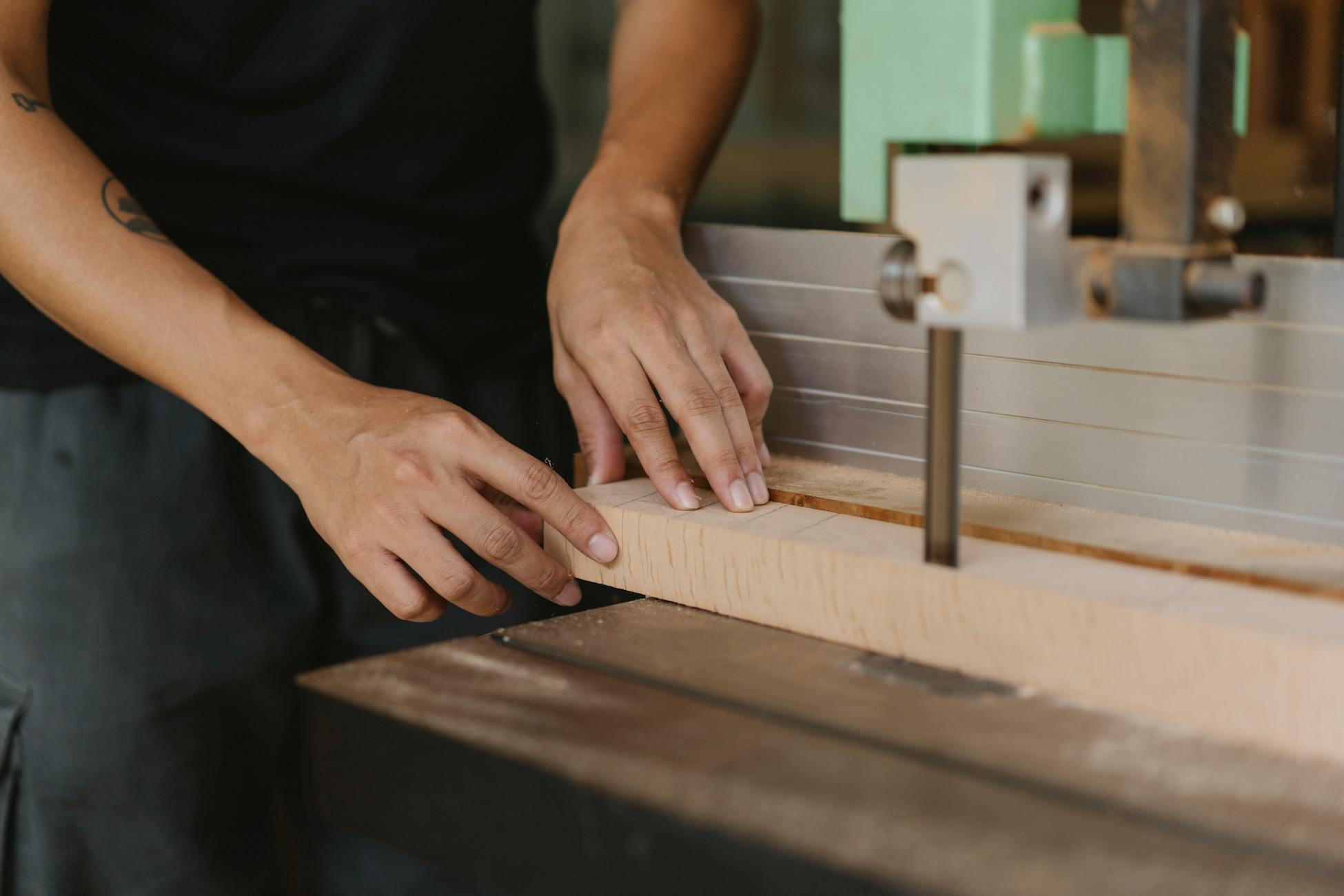
He never once said “I’m proud of you” to his children — at least, not that anyone remembers. But Camille’s mother can describe, in extraordinary detail, the way he sanded the edges of a bookshelf he built for her bedroom when she was nine. She can tell you the way he tested each shelf with his palm to make sure nothing would snag her fingers. She is sixty-two years old and she remembers the grain of the wood.
That’s not a deficit. That’s a different dialect.
Research published in Child Development has shown that children are remarkably adept at extracting emotional information from nonverbal cues — gestures, proximity, physical care behaviors — and that these cues can carry as much emotional weight as verbal affirmations, particularly when they are consistent over time. Children raised in homes where love is demonstrated through action learn to read a room with extraordinary precision. They notice when someone refills a glass of water without being asked. They register the coat draped on the chair.
This tracks with something I’ve written about before — the idea that stay-at-home parents do things for their children that only become visible decades later. So much of what we give our children isn’t legible in the moment. It accrues. It layers. And for children of emotionally reserved parents, what accrues is a deep, almost somatic understanding of love-as-action that can be remarkably durable.
The fluency no one talks about
There are people walking around right now who struggle to say “I love you” to their partners but who will drive across town at midnight to bring them medicine. People who freeze during emotional conversations but who have never once forgotten an anniversary, a preference, a fear mentioned in passing three years ago.
These aren’t people who lack love. These are people who learned love in a language that doesn’t always translate easily into the one our culture privileges.
Dr. Gary Chapman’s framework of love languages, which has been examined in relational research, gets at something real here — even if the academic community debates its specifics. The core observation holds: people express and receive love differently, and those differences are often rooted in how love was modeled in their families of origin.
A child who grows up watching a parent communicate love through acts of service — repairing, providing, showing up physically — doesn’t grow up loveless. They grow up fluent in a particular grammar of care. And when they encounter a partner or a friend who speaks a different dialect — one that relies more on verbal affirmation or overt emotional expression — the result isn’t incompatibility. It’s a translation problem. And translation problems are solvable.
This is something I think about when Elise watches me with Julien. I’m more verbally expressive than my own parents were, probably because I’ve read enough attachment research to make me self-conscious about it. I say “I love you” to my kids multiple times a day. But I also catch myself wondering whether the words carry as much weight as the moments when I’m just there — sitting on the floor while Julien pulls himself up on the coffee table, not saying anything, just being a body he can reach for.
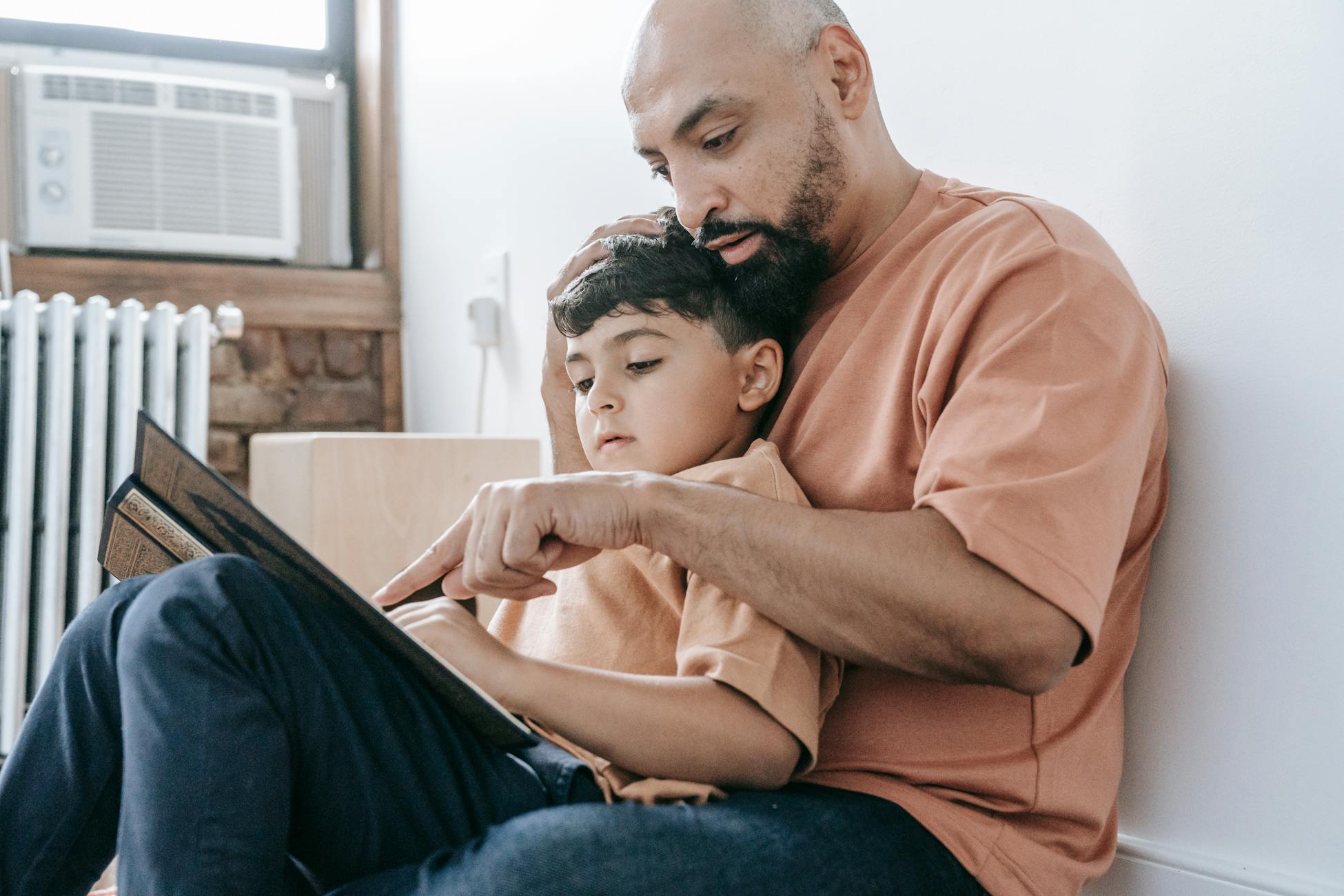
There’s a concept in developmental psychology called being with — the idea that a caregiver’s simple, non-intrusive presence communicates safety. Research on parental sensitivity and attachment security suggests that this quiet co-presence — what some clinicians describe as “holding the space” — can be as powerful a foundation for secure attachment as explicit verbal warmth. It’s not about which channel the love arrives through. It’s about whether the child can count on the signal being there.
Rewriting the story we tell about our parents
I think one of the most important things we can do as adults is revisit our parents’ emotional language with more generous interpretation. Not to excuse neglect — there’s a hard line between emotional reserve and emotional absence, and I’m not blurring it. But many of us who grew up with quiet parents have absorbed a cultural narrative that tells us our upbringing was lacking, that we were deprived of something essential.
Sometimes that’s true. Sometimes it isn’t.
Sometimes the parent who never said “I’m proud of you” was the same parent who adjusted the rearview mirror every time you got in the car so you’d have the right sightline. The same parent who checked the oil before every road trip, who left the porch light on, who did those quiet, old-school things that today’s parenting experts recognize as remarkably wise.
My own father was not a talker. That’s about all I want to say about that, except to note that for years I interpreted his reserve as disinterest. It took becoming a father myself — specifically, it took a night when Julien wouldn’t stop crying and I sat in the rocking chair holding him for forty-five minutes without saying a single word, just breathing, just being the warm thing he could press his face against — to understand that silence and absence are not the same thing.
Presence doesn’t require narration.
What this means for how we parent now
I’m not arguing against verbal affirmation. I tell Elise I love her every morning at preschool drop-off, right before “see you later, alligator.” I want my kids to hear the words. Research on positive parenting and expressed affection supports what most of us intuit: hearing “I love you” matters, especially in early childhood.
But I also want to honor the other channel. The one my mother’s parents used. The one Camille’s grandfather used when he sanded the edges of a bookshelf until they were safe for a nine-year-old’s fingers.
Because if I’ve learned anything from watching Elise and Julien — and from reading enough developmental psychology to make my head spin — it’s that children are extraordinary readers of behavior. They’re watching everything. They notice when you put down your phone. They notice when you kneel to their eye level. They notice the phrases you say casually that they’ll carry for decades, and they also notice the things you never say but always do.
The child raised by emotionally reserved parents isn’t growing up in an emotional vacuum. They’re growing up in a classroom where the curriculum is behavioral — where love is taught through demonstration rather than declaration. And the fluency they develop isn’t lesser. It’s just quieter.
Sometimes, when the house is finally still — Julien asleep, Elise in her room talking softly to her stuffed animals, Camille reading on the couch — I walk through the kitchen and straighten the chairs. I wipe down the counter where the pancake batter dried. I check the lock on the back door.
No one sees me do this. No one needs to.
But if you grew up in a house where love sounded like a lock turning, a chair being pushed in, a light left on — you already know what I mean. You’ve been reading that language your whole life. And the fact that you learned to read it doesn’t mean you were deprived of something. It means you were given a fluency that most people never develop — the ability to see love in motion, even when it never announces itself.
That’s not a deficit. That’s a gift passed down through hands.