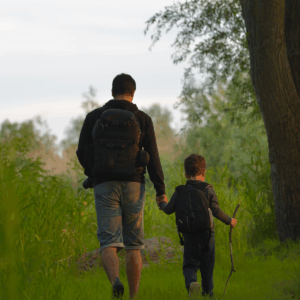
He said it without anger. That’s the part that still gets me. We were sitting in my kitchen last autumn, just the two of us, mugs of tea going cold between us. I’d asked him something about his childhood—what he remembered about our Saturday mornings, I think. And he looked at me with this expression that wasn’t hurt exactly, more like he was delivering a weather report. Dad, I don’t remember a single conversation we had before I turned eighteen. I remember you working. I remember you tired. I remember you in the next room. You were always providing and never actually arriving.
I didn’t argue. I didn’t get defensive. I just sat there and let it land. Because he was right. And somewhere underneath the ache of hearing it, I felt something close to relief—that at least one of us had the words for what happened.
The Provider Trap
I worked in HR for over thirty years at a manufacturing company. I started in payroll administration when my older boy was still in nappies and didn’t leave until both sons were well into their thirties with families of their own. For most of those years, I told myself a story: that I was doing what a good father does. I was keeping the lights on. I was making sure there was food on the table, shoes that fit, holidays that happened. I was providing.
And I was. That part wasn’t a lie. But it was incomplete in a way I couldn’t see at the time.
There’s a concept in psychology that researchers call parental presence versus parental availability—the difference between being physically in the house and being emotionally accessible to your child. You can be home every evening and still be unreachable. I was unreachable. I was in the next room with my briefcase open, or on the phone about someone else’s workplace dispute, or sitting in front of the television with my eyes glazed over because I’d spent eight hours navigating other people’s emotions and had nothing left for my own family.
Linda—my wife of thirty-eight years—she was the one who was actually there. She knew what our boys were afraid of, what made them laugh, which friend had said something cruel at school. She carried the emotional architecture of our household while I carried the mortgage. And for a long time, I thought that was a fair trade. It wasn’t. It was a quiet abdication dressed up as sacrifice.
What My Sons Remember
My two boys are in their thirties now, both married, both fathers. They turned out well—not because of me, I think, but despite certain gaps I left. My older son calls weekly. We’ve built something in the last decade that resembles genuine closeness, the kind where you say what you actually mean and don’t tiptoe around the hard stuff. I pushed him toward engineering when he was younger. He got the degree but never used it. He teaches now, makes a third of what an engineer would make, and he’s never been happier. I’ve had to sit with the fact that my ambitions for him were really my anxieties wearing a mask.
My younger son texts occasionally rather than calling. Different communication style, different temperament. He’s not cold—he’s just honest. And his honesty that day in the kitchen cracked something open in me that I’ve been trying to understand ever since.
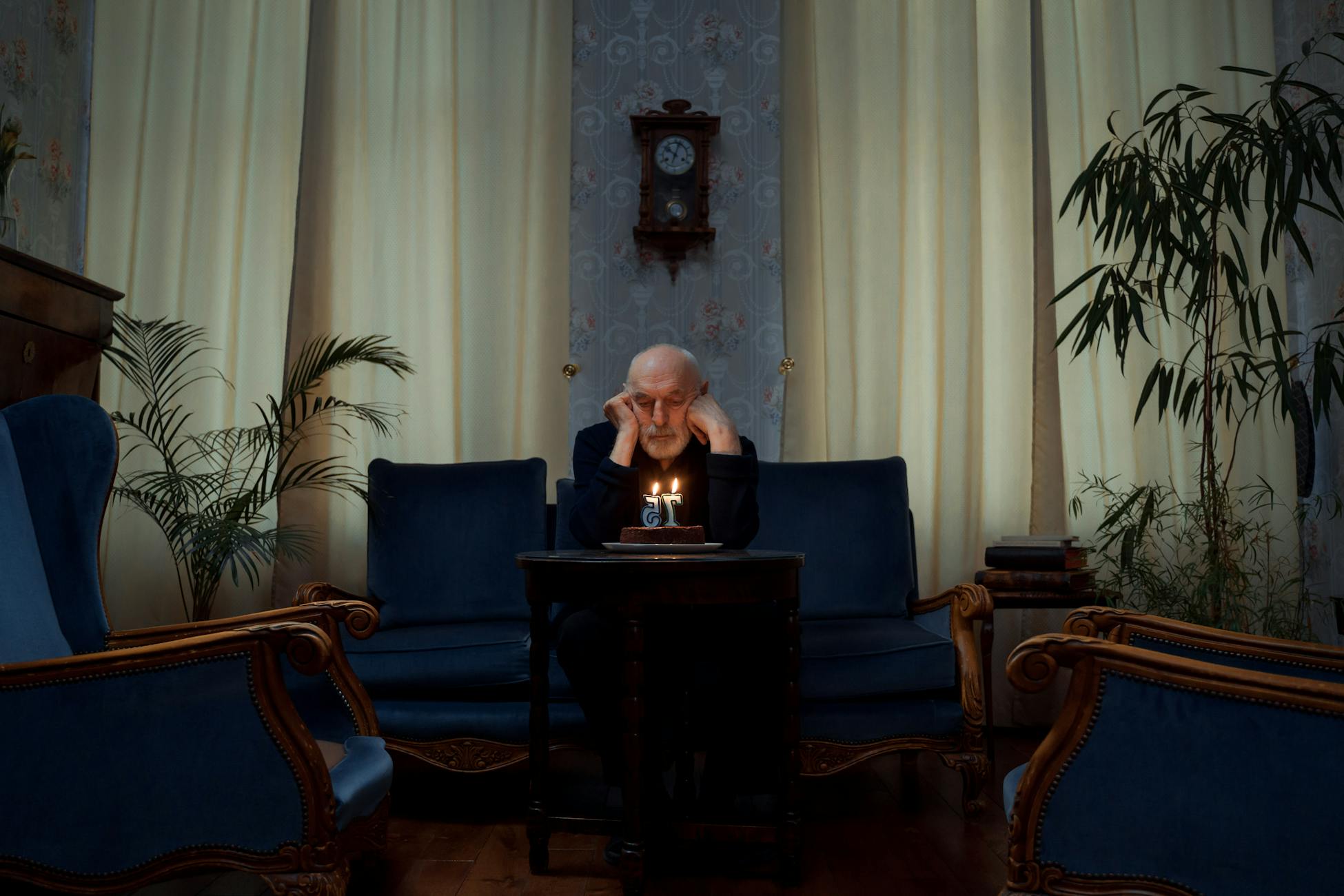
He didn’t say I was a bad father. He said I was an absent one. And the distinction matters, because emotionally unavailable parents don’t announce themselves. They don’t slam doors or forget birthdays. They just… aren’t quite there. They’re a room away. They’re a thought away. They’re close enough that you can hear them but never close enough that you feel held by them.
I’ve thought about this a lot since starting therapy a couple of years ago—something Linda suggested and something I wish I’d done decades earlier. My therapist asked me once what I thought my sons needed from me when they were young. I said stability. She said, What else? I said, guidance. She said, What else? And I sat there in silence because I genuinely didn’t know what else there was. That silence told both of us everything.
The Cost of Getting It Half Right
Here’s what I’ve come to understand: providing financially is real. It’s hard. It deserves acknowledgment. But it can also become a hiding place—a role you perform so thoroughly that nobody questions whether you’re also performing the other roles that matter. Research on father involvement has consistently shown that it’s not the number of hours a father spends at home that predicts child wellbeing, but the quality of engagement during those hours. Warmth, responsiveness, genuine attention—these are the things children actually absorb and carry into adulthood.
I gave my boys structure. Rules. Expectations. I checked homework but didn’t ask what they thought about what they were learning. I drove them to football practice but couldn’t have told you the name of a single teammate. I was a logistics coordinator masquerading as a parent.
And the thing is, nobody told me I was getting it wrong. Not Linda, not my own parents, not anyone at work. Because in my generation—and I say this not as an excuse but as an observation—we didn’t talk about emotional presence. We talked about responsibility. We talked about duty. My own father worked six days a week and I loved him, and he died when I was in my forties, and I realised afterward that I couldn’t remember him ever asking me how I felt about anything. Not once. I inherited a template and followed it faithfully.
What Grandparenting Taught Me About Fathering
I have four grandchildren now, ages three to eleven. Two live close enough that I see them every weekend—park visits, non-negotiable—and the other two live a few hours away so we manage monthly visits when we can. And something shifted in me the first time I sat on a bench and watched my oldest grandchild dig in the dirt with a stick.
I wasn’t checking my phone. I wasn’t thinking about a meeting. I wasn’t running through the mental spreadsheet of bills and obligations. I was just there. Fully. And I felt something open in my chest that I can only describe as grief for all the times I wasn’t there for my own sons.
People joke about grandparents spoiling their grandchildren, but I think what’s really happening—at least for me—is that grandparenting offers a second chance at presence. You can’t undo what you missed. But you can practice being the person you wish you’d been. And sometimes, if you’re lucky, your adult children see you doing it and something softens between you.
My older son watched me build a blanket fort with his daughter one Saturday afternoon. He didn’t say anything. He just stood in the doorway for a moment, and then he went back to the kitchen. Later, on the phone, he said, She loved that, Dad. And I heard in his voice the thing he didn’t add: I would have loved that too.
The Apology That Doesn’t Fix Anything But Matters Anyway
I’ve apologised to both my sons. Not in some grand, scripted way. Just in small moments, when the conversation opens enough to let it through. I’m sorry I wasn’t more present. I’m sorry I thought paying the bills was the same as paying attention.
My older son said, I know, Dad. It’s okay. My younger son said, Thanks for saying that. Different responses. Both real. Neither one erased anything, but both made the air between us slightly easier to breathe.
Studies on family reconciliation suggest that acknowledgment—simply naming what happened without defending it—does more for relational repair than elaborate attempts to make amends. You don’t have to fix everything. You just have to stop pretending nothing was broken.
I think about this when I write, too. I started writing after retirement, at Linda’s suggestion. She said I had stories worth telling. I wasn’t sure she was right, but I’ve come to realise that the patterns in families start earlier than we think, and naming them—even years later—matters. Not because it changes the past, but because it changes what happens next.
Arriving Late Is Still Arriving
I’m sixty-three. Retired. I walk in the park every morning. I write in the corner of our spare room. I visit my mother on Sundays and help her with groceries and sit with her over tea, and I try to actually listen when she talks instead of waiting for my turn. I’m still learning how to be present. It doesn’t come naturally to me, even now. I have to choose it deliberately, the way I choose to manage my diabetes—daily, without drama, because the alternative is worse.
My younger son and I still communicate mostly by text. I’ve accepted that. But last month he sent me a photo of his kids at the dinner table, and underneath it he wrote: Thought you’d want to see this. That’s not nothing. That’s him leaving a door open.
I keep thinking about something my therapist said. She told me that children don’t need perfect parents—they need parents who are willing to be honest about their imperfections. And that honesty can happen at any age. It can happen at thirty, when your kids are small, or at sixty-three, when your kids are grown and your grandchildren are the ones sitting in your lap.
I was always providing and never actually arriving. My son was right about that. But I’m arriving now—late, imperfect, a little out of breath. And I’ve learned that late is not the same as too late. Not if you mean it. Not if you stay.