
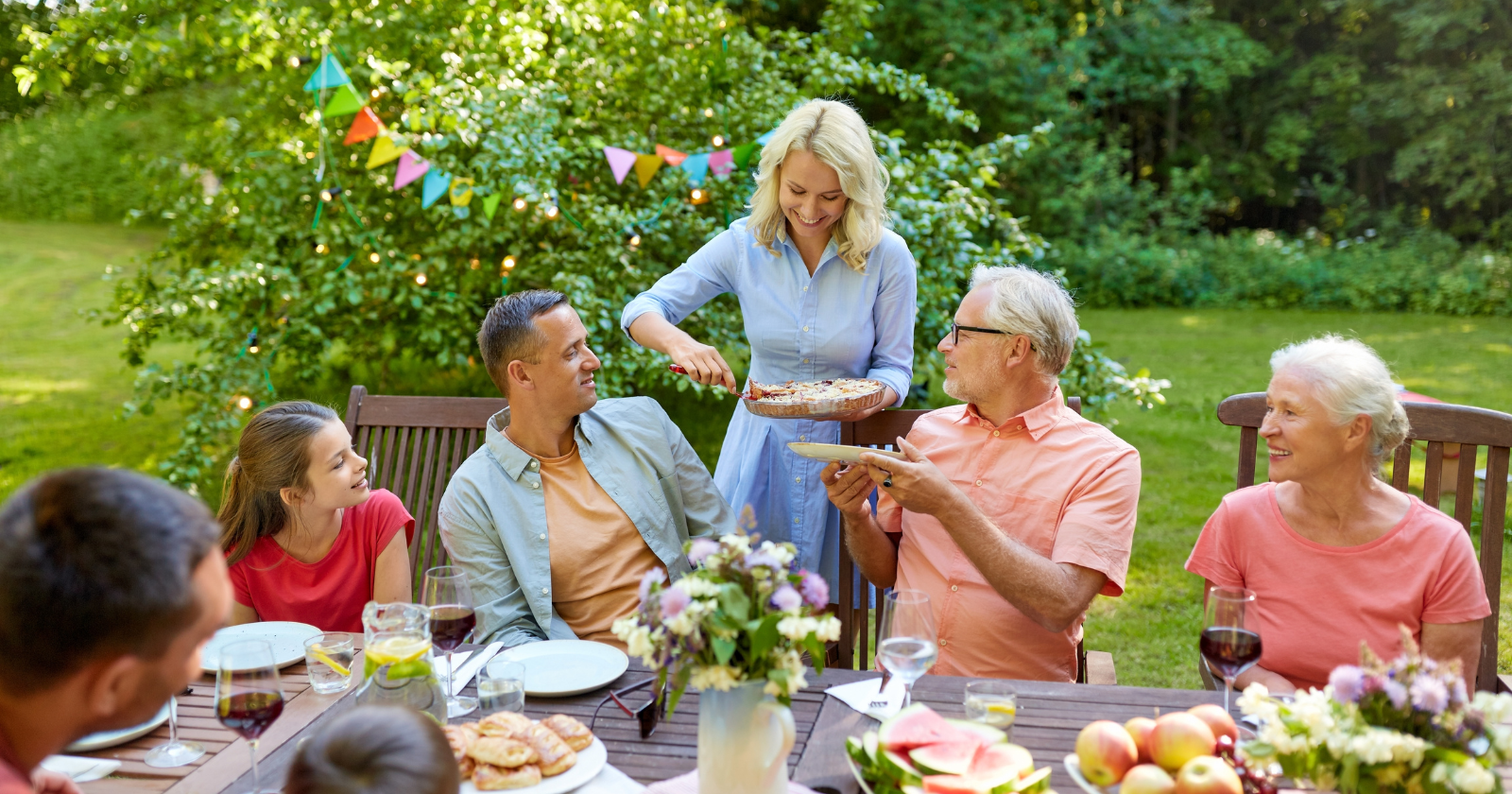
Remember those family gatherings where the adults sat around the dining room table for hours while we kids just… disappeared?
I was thinking about this the other day while watching Ellie organize an elaborate game with her brother using nothing but sticks and pinecones. It hit me that she was doing exactly what I did as a kid, minus the cloud of cigarette smoke and the complete absence of adult supervision.
Growing up in the Midwest with my siblings, family gatherings were these massive affairs where cousins, aunts, and uncles descended on whoever was hosting. The adults would settle in with their drinks and conversations while we kids were basically set loose to figure things out ourselves. And you know what? We did.
Modern parenting experts would probably need a fainting couch if they saw how things went down back then. But there’s something we’ve lost in our quest to optimize every moment of our children’s lives.
1. Kids rode in the back of pickup trucks like it was a carnival ride
Every summer gathering involved at least one trip with six or seven kids piled in the bed of Uncle somebody’s truck, going to get ice or more beer for the adults. We’d stand up, hold onto the sides, and feel like we were flying. No seat belts, no car seats that lasted until middle school, just wind in our hair and bugs in our teeth.
Was it safe? Absolutely not. But did it teach us to look out for each other and hold on tight? You bet it did.
2. Nobody knew where the kids were for hours at a time
This is the big one that people don’t talk about enough. Once the adults got settled with their coffee or beer, we kids essentially ceased to exist until someone needed to do a headcount for dinner. We’d roam the neighborhood, build forts in questionable locations, and create entire worlds without a single adult checking on us.
I watch parents today scheduling every minute of their kids’ time, and while I understand the impulse, I wonder what problem-solving skills we’re not developing when kids never have to figure things out alone.
3. Every adult smoked everywhere, all the time
The living room at family gatherings looked like a foggy London street. Pregnant aunts, grandparents holding babies, everyone had a cigarette going. We kids would wave our hands dramatically through the smoke and complain, but nobody thought twice about it.
My kids have never experienced anything like that haze, thankfully. But it’s wild to think how normal it was.
4. Kids drank from the garden hose and shared everything
Thirsty? Go drink from the hose. And not just your own hose, any hose. We’d run through multiple backyards, take a swig from whoever’s hose was closest, and keep playing. One kid would take a drink, pass it to the next kid, mouth right on the metal end.
The same cup of Kool-Aid would make rounds through eight cousins. These days, I see parents with labeled water bottles and hand sanitizer stations at playdates.
5. Older kids were automatic babysitters
The moment you turned eight or nine, congratulations, you were now in charge of all younger cousins. No training, no CPR certification, just “watch the little ones” as the adults disappeared into adult conversation land.
My older brother spent countless gatherings making sure my sister and I didn’t die while the grown-ups discussed whatever grown-ups discussed in the ’70s and ’80s. We learned responsibility because we had to, not because someone taught us in a structured environment.
6. Food safety was more of a suggestion
Potato salad sat out in the sun for six hours. The mayo-based everything baked in the heat while flies did reconnaissance missions. That casserole? It had been on the counter since noon, and we were eating it at 8 PM.
Nobody took temperatures or followed the two-hour rule. We just ate and hoped for the best. Our immune systems were basically doing CrossFit.
7. Conflict resolution meant figuring it out yourselves
When cousins fought, which happened approximately every ten minutes, the adult response was “work it out” or “don’t come crying to me unless there’s blood.” And even then, the blood had to be significant.
We learned to negotiate, to stand up for ourselves, to compromise, and occasionally to form strategic alliances, all without adult intervention. Today, I see parents rushing in at the first sign of discord between kids.
8. Dangerous games were just called games
Lawn darts flying through the air with deadly accuracy, or complete lack thereof. Slip ‘N Slides set up on concrete driveways. Trampolines without nets where double-bouncing someone into orbit was the whole point.
We played Red Rover until someone got clotheslined, and then we kept playing. Every gathering had at least one kid with a scraped knee, a fat lip, or a mysterious bruise, and that was just part of the experience.
9. Kids ate when they were hungry, or they didn’t eat
There was no special kids’ menu. You ate what the adults made or you went hungry. No negotiations, no making separate meals for picky eaters. The adult table had the good stuff, and if you were lucky, you might snag a roll when nobody was looking.
We learned to try things because the alternative was starving until someone eventually put out cookies.
10. Privacy was non-existent
Changing clothes meant finding a corner somewhere. Bathroom doors didn’t lock, or if they did, three cousins would pick the lock with a bobby pin. Diary? Better hide it well because someone would find it and read the juicy parts aloud.
We had no concept of personal space or privacy. Everything was communal, including embarrassment.
What we gained from benign neglect
Here’s what I’ve realized, watching my own kids play: when we weren’t supervised every second, we learned to be resourceful. We figured out how to entertain ourselves without an adult creating an activity. We solved problems because there was nobody else to solve them for us.
My siblings and I developed imagination, independence, and intuition because we had to. We learned to read social situations, to sense danger, to trust our guts. When Matt and I talk about raising our kids, we’re trying to find that balance between keeping them safe and letting them develop these same skills.
I’m not advocating for lawn darts or leaving mayo out all day. But maybe, just maybe, we could all benefit from a little less structure and a little more “go play and figure it out.”
When I see Ellie teaching her brother how to build fairy houses without any input from me, or watch them negotiate who gets the last apple slice, I realize they’re developing exactly the skills they need.
The truth is, those chaotic family gatherings taught us more than any carefully curated playdate ever could. We learned resilience not from a book or a class, but from living it.
And while I’ll never smoke around my kids or let them ride in truck beds, I’m trying to give them space to figure things out, to be bored, to create their own fun. Because that’s where the magic happens: in the spaces between adult supervision, where kids get to be kids and learn what they’re really made of.
