I still remember the exact moment my world tilted on its axis. We were sitting at the breakfast table on a rare lazy Sunday, and Ellie was drawing pictures of our family while I helped her with the crayons. Out of nowhere, she looked up and said, “Mommy, remember when we used to do this every Sunday? Those were my favorite days.”
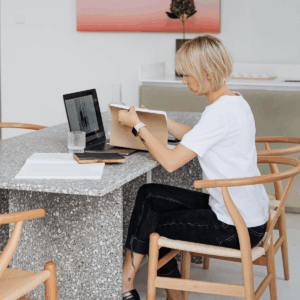
The thing is, we’d only had a handful of those quiet Sunday mornings. Most weekends, I was hunched over my laptop, grinding through freelance projects while the kids played in the next room. Most evenings, after bedtime stories, I’d slip back to my desk until midnight. For twenty years, first as a kindergarten teacher pulling extra tutoring gigs, then as a writer juggling every assignment that came my way, I’d convinced myself that working harder meant loving better.
The myth of the provider parent
Growing up, money was always tight in our house. I remember the stress on my parents’ faces when bills arrived, the careful calculations at the grocery store, the hand-me-downs that never quite fit right. So when I became a parent myself, I made a promise: my kids would have everything I didn’t. New shoes when they needed them. Organic food in the pantry. A college fund that actually existed.
What I didn’t realize was that in trying to give them everything, I was actually giving them less of what mattered most.
The irony? Kids don’t keep score the way we do. They don’t tally up the hours we worked to buy their winter coats or count the freelance articles that paid for their swimming lessons. They remember the texture of moments. The weight of presence. The feeling of being truly seen.
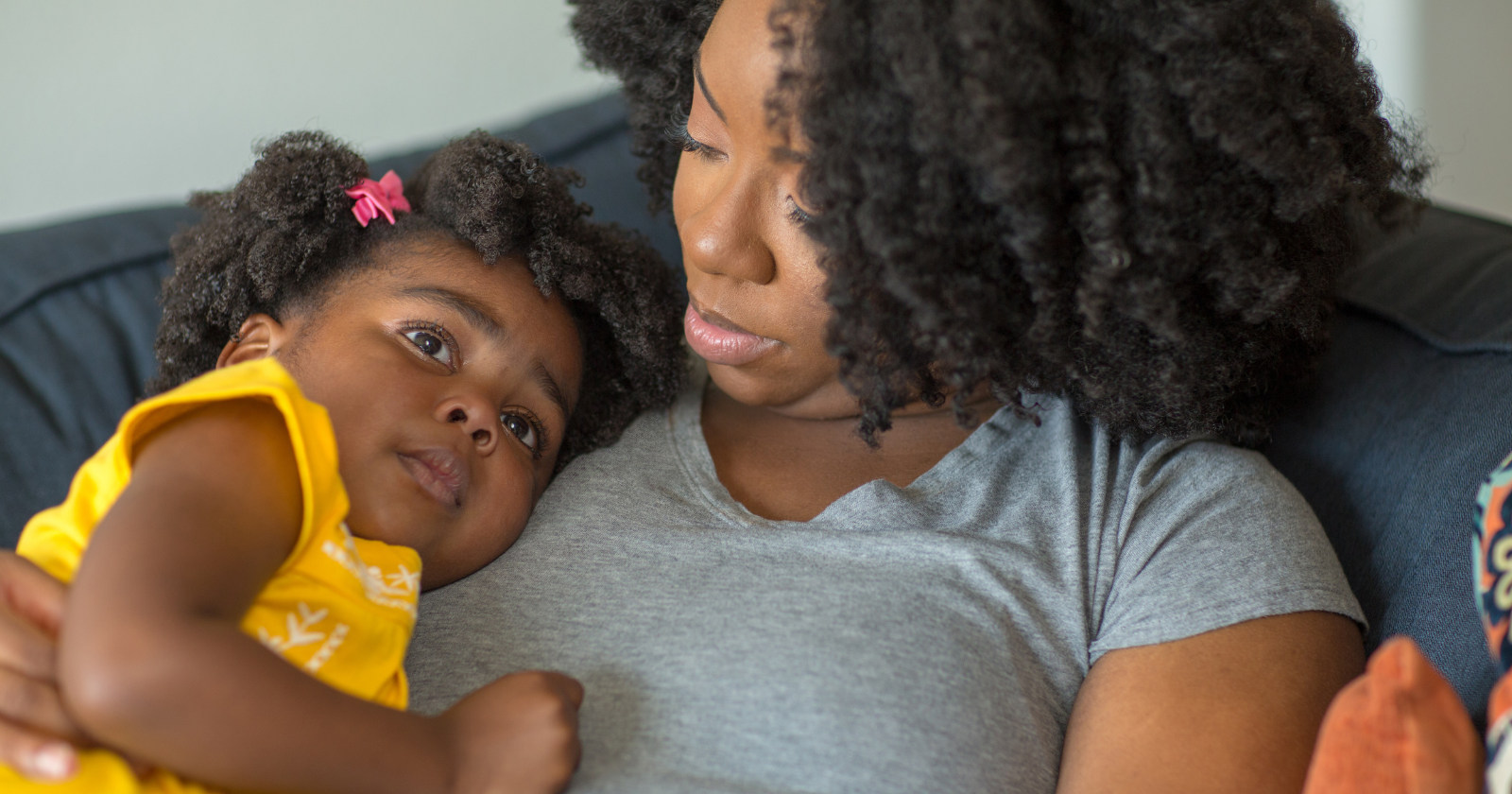
My two little ones taught me this in different ways. My daughter, now five, has always been my observant one. She notices when I’m distracted, when my “mm-hmms” are automatic rather than engaged. My two-year-old son? He just climbs into my lap and physically turns my face toward his when he wants attention. No subtlety there.
What success looked like from the outside
By any conventional measure, I was killing it. After leaving my teaching job when my daughter was born, I’d built a successful writing career from our kitchen table. We’d moved from our cramped apartment to a house with a real backyard. The kids had everything on their wish lists at Christmas. We even managed the occasional family vacation.
Friends would comment on how well I was doing, how I “had it all together.” They’d see the Instagram posts of our farmers market hauls, the kids in their adorable rain boots splashing through puddles. What they didn’t see were the hours after those photos were taken, when I’d park the kids with snacks and a movie so I could meet another deadline.
I told myself stories to make it okay. That I was teaching them work ethic. That they were learning independence. That the financial security I was building would give them opportunities I never had. All true, maybe. But not the whole truth.
The Sunday morning revelation
That morning at the breakfast table, when my daughter mentioned those precious Sunday mornings, I asked her what made them so special. She thought for a moment, then said, “You weren’t looking at your computer. You were looking at us.”
Five years old, and she’d articulated what I’d been too busy to see.
Those rare Sunday mornings when I wasn’t working weren’t just gaps in my schedule. They were the spaces where real connection happened. Where we’d make messes with watercolors. Where we’d build elaborate block towers just to knock them down. Where conversations meandered from silly to profound and back again. Where nobody was rushing to the next thing.
My husband has always been better at this than me. Saturday mornings are his domain, complete with his legendary pancake production that involves way too many bowls and inevitable flour explosions. He never checks his phone during pancake time. Never rushes through the cleanup. Never treats it like a task to complete before getting to the “real” work.
Recalibrating what matters
Since that breakfast table moment, I’ve been trying to unlearn twenty years of habits. It’s harder than I expected. The urgency of work, the pull of deadlines, the fear of financial instability, they all still whisper their familiar songs.
But here’s what I’m learning: presence is a practice. It’s choosing to close the laptop at 5 PM even when there’s more to do. It’s saying no to the weekend project that would pad the bank account but empty the time account. It’s recognizing that my kids won’t remember the brand of their sneakers, but they’ll remember whether I was there to tie them.
Some days I nail it. Other days I catch myself sneaking glances at my phone while my son shows me his couch cushion fort for the third time. The difference is that now I catch myself. Now I put the phone down. Now I crawl into that fort and pretend to be amazed, and somewhere in the pretending, I actually become amazed.
Final thoughts
I can’t get those twenty years back. Can’t reclaim the Sunday mornings I spent typing instead of playing, the bedtimes I rushed through to get back to work, the “just one more minute” that turned into hours. That grief is real, and I’m learning to sit with it without letting it paralyze me.
What I can do is choose differently now. Every morning, I have a chance to decide what kind of day I’m building for my kids’ future memories. Will they remember a mother who was physically present but mentally elsewhere? Or will they remember genuine engagement, real laughter, undivided attention?
The bills still need paying. Work still needs doing. But I’m finally understanding that the best thing I can provide for my kids isn’t financial security at the cost of emotional availability. It’s showing up, fully and completely, for as many ordinary moments as I can.
Because it turns out that a better life isn’t built from longer hours or bigger paychecks. It’s built from Sunday mornings at the kitchen table, crayons scattered everywhere, with nowhere else to be but right there together.