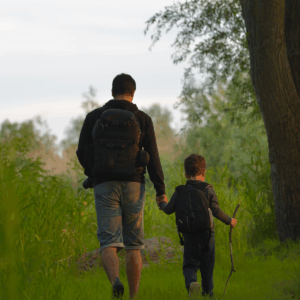
The house sounds different when it’s empty. Not just quiet—different. The refrigerator hums louder, the clock in the hallway ticks with a rhythm I never noticed before, and my footsteps echo in rooms that used to absorb the chaos of family life.
I find myself standing in what used to be my youngest son’s bedroom, now a guest room that rarely sees guests, wondering how I got here.
Twenty-two years. That’s how long I structured every major decision around my kids’ needs. Which job to take, where to live, when to take vacations, what car to buy—everything filtered through the lens of “what’s best for the boys?”
And you know what? I’d do it again in a heartbeat. But sitting here at sixty-something, with both sons in their thirties with families of their own, I’m facing a truth that catches me off guard every morning: I have absolutely no idea who I am when I’m not actively being their father.
The identity trap we don’t see coming
When you’re in the thick of parenting, nobody warns you about this part. They tell you about sleepless nights with newborns, terrible twos, and teenage rebellion. But nobody mentions the existential crisis waiting on the other side of an empty nest.
I was a hands-on dad when the boys were young. Every soccer practice, every school play, every scraped knee—I was there. Then work got more demanding during their teenage years, and I pulled back. The timing still haunts me. Just when they probably needed deeper conversations and more presence, I was buried in spreadsheets and conference calls.
But even during those busy years, being “Dad” was my North Star. Every promotion I chased was about college funds. Every late night at the office was justified by providing a better life for them. My identity wasn’t just intertwined with fatherhood—it was completely wrapped up in it.
When the music stops
The silence hit me in waves. First when the oldest moved out for college, then again when the youngest followed. But I could still pretend things hadn’t fundamentally changed. They’d call for advice, come home for holidays, need help moving apartments. I was still needed, still useful, still Dad with a capital D.
Then I retired at sixty-three—earlier than planned when the company offered a package during restructuring. Suddenly, I wasn’t just dealing with an empty nest; I was dealing with an empty calendar. The first few months felt like falling off a cliff. My identity had been wrapped up in being useful, and suddenly no one needed me for anything.
I remember one Wednesday morning, about three months into retirement, sitting at the kitchen table at 10 a.m. with nowhere to be and nothing urgent to do. My wife had gone to her book club. The phone wasn’t ringing. There were no permission slips to sign, no games to attend, no work emergencies to solve. Just me and the ticking clock.
Who was I if I wasn’t solving problems? If I wasn’t providing? If I wasn’t actively parenting?
The questions nobody asks out loud
Here’s what I’ve learned: millions of parents go through this, but we rarely talk about it honestly. We share empty nest memes on social media and joke about finally having the house to ourselves, but we don’t discuss the genuine identity crisis that can follow.
What hobbies did I have before kids? I couldn’t remember. What did my wife and I talk about before our conversations revolved around school schedules and weekend tournaments? It was fuzzy. What dreams did I put on hold that might still be achievable? The list was blank because I’d stopped keeping one.
The hardest part? Realizing that in trying to be the best parent possible, I’d slowly erased other parts of myself. Not intentionally, not dramatically, just… gradually. Like erosion. One missed poker night here, one declined invitation there, one abandoned hobby after another, until all that remained was the role I’d prioritized above all others.
Finding yourself in the quiet
Recovery isn’t the right word for what comes next. It’s more like archaeology—carefully excavating parts of yourself that got buried under two decades of lunch boxes and parent-teacher conferences.
I started small. What did I enjoy before the boys were born? Reading, but not parenting books or professional development guides—actual fiction. So I joined the library again. Sounds simple, right? But that first library card in twenty years felt like a tiny revolution.
Then I remembered I used to enjoy cooking—not just throwing together quick weeknight dinners, but actually experimenting in the kitchen. Without soccer practice to rush to, I could finally attempt that complicated Thai curry recipe I’d bookmarked years ago.
The process is slow and sometimes uncomfortable. There’s guilt too. Did I waste opportunities to develop myself alongside my children? Should I have maintained better boundaries? But as I’ve covered in previous posts, guilt rarely leads anywhere productive.
The unexpected gifts
Here’s what surprised me: rediscovering yourself after parenthood isn’t about going backward. You can’t become who you were before kids—that person doesn’t exist anymore. Instead, you’re creating someone new, someone who carries all the wisdom, patience, and perspective that parenting gave you, but applies it to fresh territories.
My relationship with my adult sons has evolved too. Without the constant pressure of active parenting, we’re developing something different—a friendship, maybe? They seek my advice less often now, but when they do, the conversations go deeper. We talk about their marriages, their careers, their own parenting challenges. I’m not just Dad anymore; I’m a person they’re getting to know in a different way.
And my wife? We’re rediscovering each other too. After years of divide-and-conquer parenting strategies, we’re learning to be a couple again without the kids as a buffer or common project. It’s terrifying and exhilarating in equal measure.
Closing thoughts
If you’re in the thick of parenting right now, this might feel like a distant concern. But trust me, it arrives faster than you think. One day you’re teaching them to tie their shoes, and the next, you’re standing in an empty house wondering what to do with yourself.
The key isn’t to panic or mourn. It’s to recognize that this is just another transition, another chapter. You spent decades pouring yourself into your children, and that was beautiful and necessary. But now?
Now it’s time to ask yourself a question you probably haven’t considered in years: Who do you want to be when you grow up?