
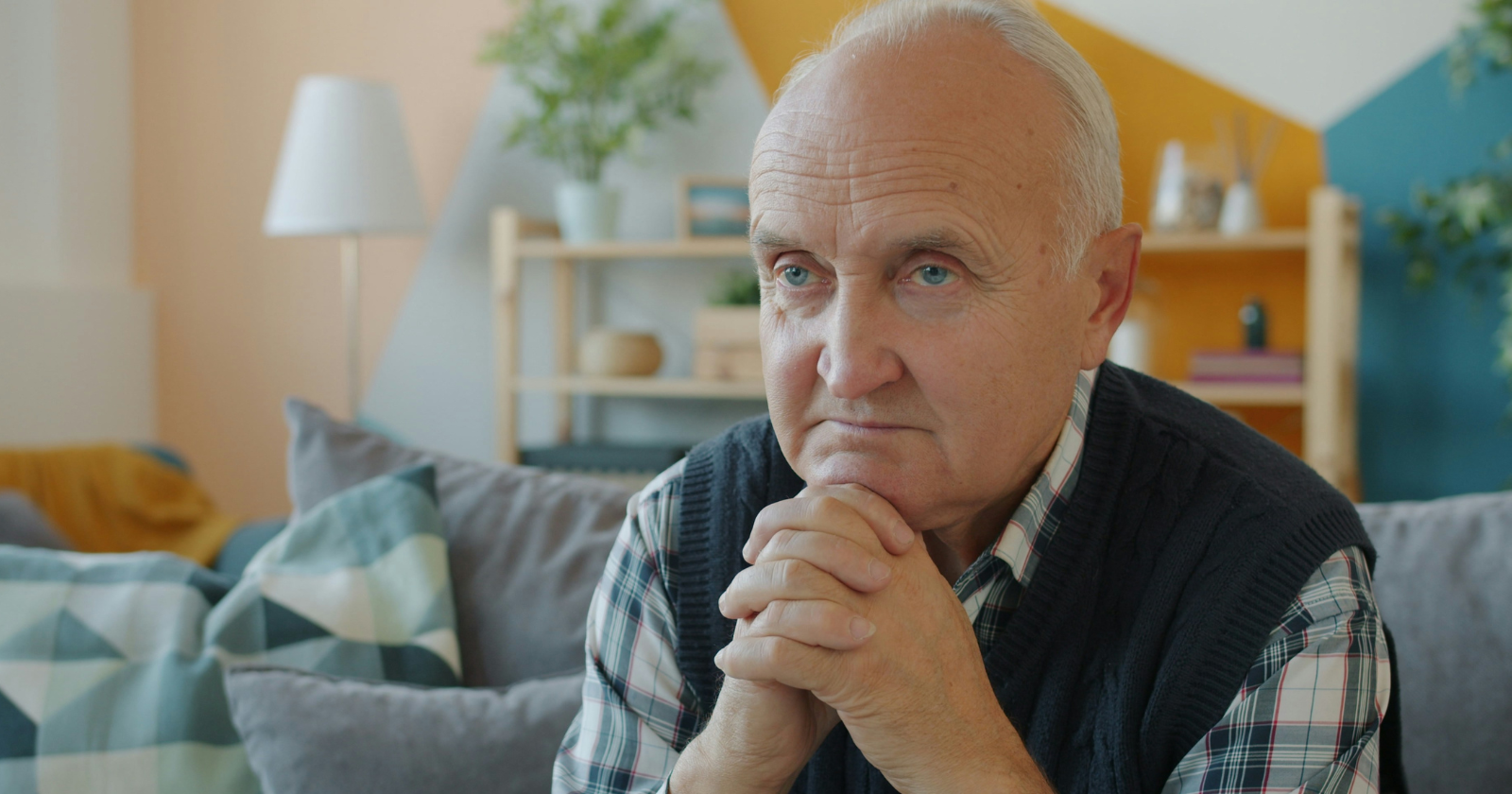
You know that feeling when you’re trying to convince your dad that maybe, just maybe, cloth diapers aren’t going to give your baby a rash? Or when you suggest to your mother-in-law that screen time limits might actually be beneficial, and she launches into a story about how kids in her day turned out just fine? I’ve been there more times than I can count.
What fascinates me isn’t their resistance itself—it’s the invisible walls they’ve built around their beliefs. These aren’t walls of stubbornness, as we often assume. They’re walls of comfort, built brick by brick over decades, with no real reason to tear them down until now.
The comfort zone becomes a fortress
My father worked long hours when I was growing up, providing everything we needed materially but keeping an emotional distance that felt normal at the time. Now, watching him interact with my kids, I see how his worldview solidified around certain truths: children should be seen and not heard, crying means weakness, and “because I said so” is a complete sentence.
For forty years, this worked for him. His colleagues agreed with him. His friends parented the same way. His environment never challenged these beliefs—in fact, it reinforced them. Why would he change? The cost of maintaining his beliefs was essentially zero.
Laura L. Carstensen, a psychologist who developed Socioemotional Selectivity Theory, puts it perfectly: “Older adults systematically hone their social networks so that available social partners satisfy their emotional needs.” They create echo chambers without realizing it, surrounding themselves with people who validate rather than challenge their perspectives.
When control slips away
Have you ever watched someone grip tighter to something the more it threatens to slip away? That’s what I observe with my parents when they visit. The more my parenting choices differ from theirs, the more they double down on their methods being “the right way.”
My mother recently watched me comfort my crying two-year-old instead of telling him to “toughen up,” and I could see the internal struggle on her face. She wanted to intervene, to correct what she saw as coddling. But here’s what’s happening beneath the surface: as people age, they face increasing losses of control in various areas of their lives. Their bodies change, their roles shift, their influence wanes.
Kimberly Hiroto, Ph.D., a geropsychologist, explains that “Older adults tend to hold on tighter to things that are within their control and that they value.” Their beliefs and opinions become one of the last territories where they maintain sovereignty.
The architecture is already complete
Think about building a house. Once the foundation is poured, the walls are up, and the roof is on, making structural changes becomes exponentially more difficult and expensive. You can’t just decide you want the kitchen on the other side of the house—not without major demolition.
The same principle applies to belief systems. By the time someone reaches their sixties or seventies, they’ve spent decades constructing their mental framework. Every experience, every validation, every unchallenged assumption has become a load-bearing wall in their psychological architecture.
When I first started setting boundaries with my family about our parenting choices—explaining why we co-sleep, why we limit screen time, why we choose organic foods—I was essentially asking them to renovate their entire worldview. The cost felt astronomical to them, especially when weighed against the comfort of their existing beliefs.
Why the cost equation finally changes
Here’s where things get interesting. The only time I’ve seen real change in my parents’ attitudes is when the cost of not changing became undeniable. When my mother realized her comments about our parenting choices were creating distance between us, when she saw how her grandchildren lit up with our approach to emotional openness, when she recognized she might miss out on deep relationships with them if she didn’t adapt—that’s when cracks appeared in those walls.
But even then, change comes slowly and often incompletely. Research shows that older adults are influenced heavily by the inclusion or exclusion of extraneous details, meaning they are likely to make serious decisions based on how information is framed rather than the qualitative differences between options. This framing effect means that how we present alternatives matters enormously.
Instead of saying “Your way damaged me,” which triggers defensiveness, I’ve learned to say “I’m trying something different that feels right for our family.” Instead of attacking their methods, I share how our approach makes us feel closer as a family. The reframing makes the cost of not changing about gaining something beautiful rather than admitting past mistakes.
The exits that sealed themselves
What strikes me most is how the exits from rigid thinking seal themselves over time. Early in life, we have natural off-ramps: college exposes us to new ideas, career changes force adaptation, young children challenge our assumptions. But as people age, these natural disruptions decrease. Retirement removes workplace diversity. Children move away. Social circles narrow.
My parents are slowly coming around to some of our “hippie parenting” choices, as they call them. But it took creating new exits—gentle ones that didn’t require demolishing their entire belief structure. When my father sees how my son freely expresses his emotions and still shows remarkable resilience, when my mother watches my daughter’s confidence bloom through attachment-focused parenting, they’re finding small doors they didn’t know existed.
Finding compassion in the struggle
Understanding this psychology has fundamentally changed how I approach these generational differences. Instead of frustration, I feel compassion for how threatening change must feel when you’ve invested seventy years in a particular worldview. Instead of anger, I recognize the fear behind the rigidity—fear of irrelevance, fear of having been wrong, fear of losing the last things they can control.
Creating different family dynamics with more emotional openness than I experienced growing up isn’t about proving my parents wrong. It’s about gently demonstrating that there are other ways to build a house, other materials to use, other designs that might let in more light. Sometimes they peer through the windows I’ve created and see something they like. Sometimes they retreat to the familiar rooms of their own construction.
The architecture might be complete, the exits might be sealed, but occasionally—just occasionally—love for their grandchildren becomes the sledgehammer that creates a new opening. And in those moments, when my father gets down on the floor to play with my kids, when my mother asks genuine questions about gentle parenting, I see that change is possible. It just requires the right combination of patience, compassion, and yes, sometimes making the cost of not changing feel greater than the comfort of staying the same.
