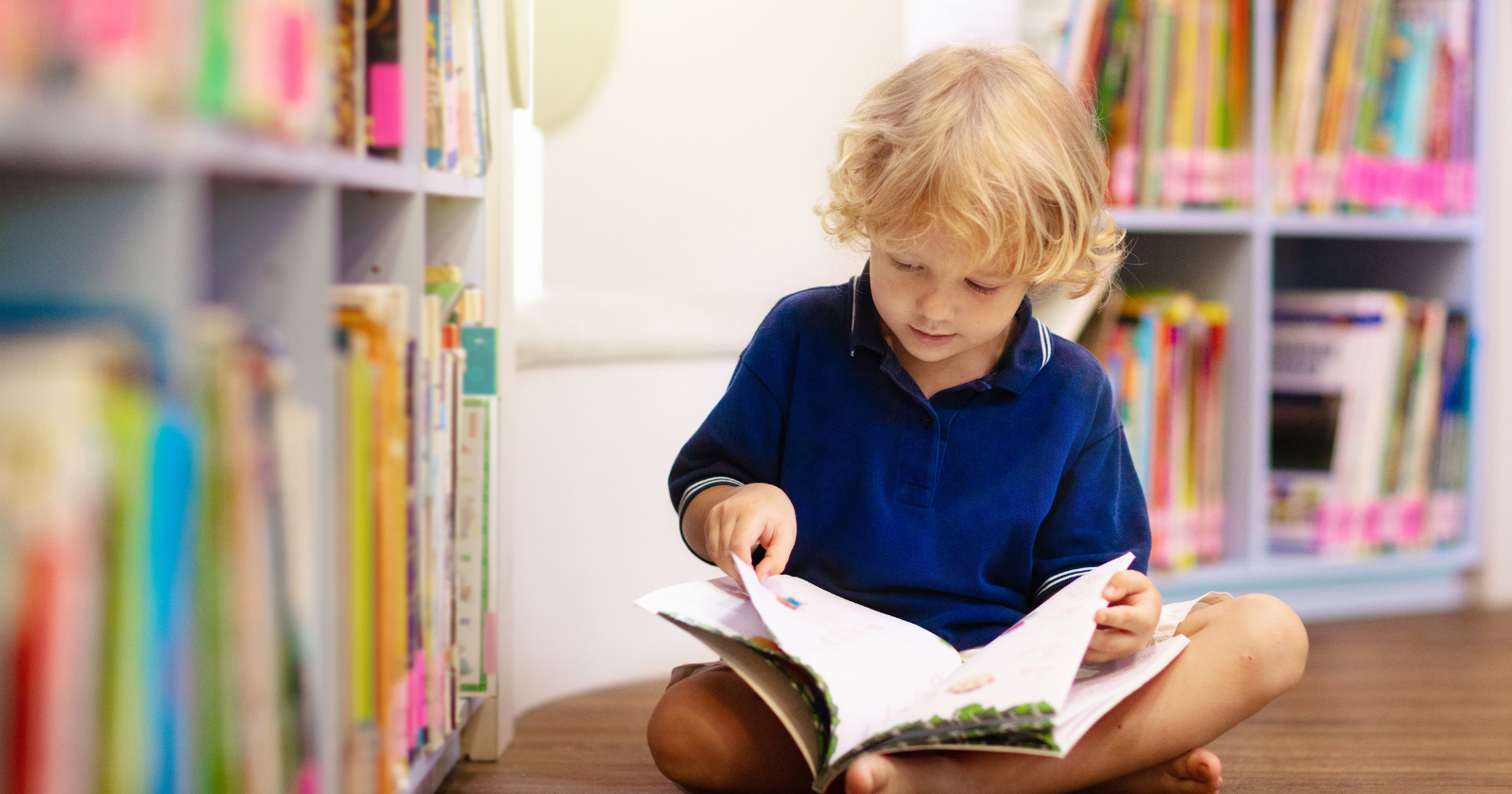
You know that quiet kid in the corner with their nose always buried in a book? The one teachers worried about, the one relatives called “too shy,” the one other parents thought needed more friends? I was that kid. And now, watching my own daughter choose library corners over playground games, I’m seeing something completely different than what most adults assumed about me back then.
We weren’t broken. We weren’t antisocial. We were doing something far more sophisticated than anyone realized.
The myth of the withdrawn child
Last week at the farmers’ market, I overheard a mom fretting about her son who’d rather read than join soccer practice. “He’s withdrawing from the world,” she said, and my heart ached because I heard my own mother’s worry from thirty years ago.
But here’s what Marti Olsen Laney, Psy.D. says: “Introverted children have rich inner lives, and understanding them is like embarking on an incredible journey.”
That journey? It’s not withdrawal. It’s observation at its finest.
Think about it. While other kids were in the thick of playground drama, we bookish kids were watching from our reading spots. We saw the patterns. Who started arguments. Who made peace. Which friendships would last and which would explode by lunch. We weren’t missing out on social education—we were getting a masterclass in human behavior, both from real life and from the thousands of characters we met between pages.
How stories train the observational mind
Remember being completely absorbed in a story, trying to figure out what the character would do next? That’s not passive entertainment. That’s active pattern recognition training.
Research shows that reading fiction leads to a statistically significant improvement in social-cognitive performance compared to reading nonfiction or no reading at all. Every plot twist, every character decision, every consequence—these become data points in a child’s understanding of cause and effect in human relationships.
I watch my daughter now, curled up with her books, and I see her making those same connections. Yesterday, she looked up from her story and said, “The mean girl in this book reminds me of someone at preschool. Now I know why she acts that way.” Five years old, and she’s already decoding behavior patterns.
The ten thousand hour advantage
Malcolm Gladwell’s ten thousand hour rule usually gets applied to violin practice or chess mastery. But what about ten thousand hours of studying human nature through stories?
By the time I hit high school, I’d probably logged those hours twice over. Each book was a safe laboratory for understanding emotions, motivations, betrayals, reconciliations. Studies have found that reading literary fiction enhances readers’ capacity to understand others’ thoughts and feelings, thereby improving empathy.
But it goes beyond empathy. It’s predictive power.
Reading rooms like reading books
Walk into any room now, and within minutes, I can usually tell you who’s anxious, who’s covering insecurity with bravado, who’s about to start an argument. Friends think it’s some kind of superpower. It’s not. It’s pattern recognition developed through years of careful observation.
Rice Psychology notes that “Introverted children tend to be reflective, observant, and deeply thoughtful.” That reflective observation becomes a permanent lens through which we see the world.
During my kindergarten teaching years, this skill was invaluable. I could spot brewing conflicts before they erupted, notice which child was struggling even when they smiled, understand parent dynamics within seconds of drop-off interactions. Other teachers asked how I always seemed to know what was coming. Simple: I’d seen these plot lines before.
The depth advantage
Our Mental Health points out that “Introverted children often display a preference for meaningful, in-depth discussions over casual small talk.”
This isn’t just about conversation preference. It’s about how we process the world. While others might skim the surface of social situations, quiet observers dive deep. We notice the micro-expressions, the contradictions between words and body language, the subtle power dynamics.
My daughter already does this. After playdates, she’ll tell me not just what happened, but why she thinks it happened. “She was upset about something else,” she’ll say about a friend who was cranky. “Not about the blocks.”
Building observational intelligence in any child
Not every child will be a natural bookworm, and that’s okay. But we can nurture this observational intelligence in all kids.
EuroKids India notes: “Introverted children are often highly observant and detail-oriented. They tend to notice things that others may overlook, such as small changes in their environment or subtle cues in others’ behavior.”
These skills aren’t exclusive to introverts—they can be developed. Here’s what works in our house:
After reading stories together, we talk about character motivations. Why did they make that choice? What else could they have done? When we’re at the park, we people-watch (respectfully) and make up stories about strangers. What’s their day been like? Where are they going?
We also honor thinking time. Susan Cain puts it perfectly: “Introverted kids need time to think. Demanding an immediate answer from an introvert is akin to telling your extroverted child to just sit still for once.”
When observation becomes intuition
The Center for Parenting Education describes how introverted children “learn well through observation” and “concentrate deeply.”
This deep concentration on observing human patterns eventually becomes what others call intuition. That gut feeling about someone? It’s actually thousands of micro-observations processed faster than conscious thought. That sense something’s about to go wrong? It’s pattern recognition from countless similar situations witnessed in books and life.
Finding balance in a loud world
Of course, observation without participation has its limits. My kindergarten teaching experience taught me that. You can understand all the playground dynamics in the world, but sometimes you need to get in the sandbox too.
Research suggests that the psychological complexity of literary fiction prompts deeper engagement with characters’ mental states—but real-world application matters too.
I encourage my daughter to test her observations. Make a friend based on what you’ve noticed about them. Join the game when you understand its rhythms. Use your observational superpowers to be the kid who notices when someone needs a friend.
The gift of seeing clearly
That quiet child with the book isn’t missing out on childhood. They’re gaining a different kind of wisdom—one that will serve them their entire lives. They’re developing the ability to see past surface interactions to deeper truths, to anticipate problems before they explode, to understand people in ways that seem almost magical but are actually the product of careful, sustained observation.
So next time you see a child choosing books over balls, reading instead of running, watching instead of participating—remember they’re not withdrawing from the world. They’re studying it with an intensity and focus that will one day allow them to navigate it with unusual grace.
And those ten thousand hours of reading? They’re not hours spent alone. They’re hours spent in the company of hundreds of characters, living thousands of experiences, building a database of human behavior that will inform every interaction for the rest of their lives.
That’s not withdrawal. That’s preparation. And it’s a gift we should celebrate, not fix.