
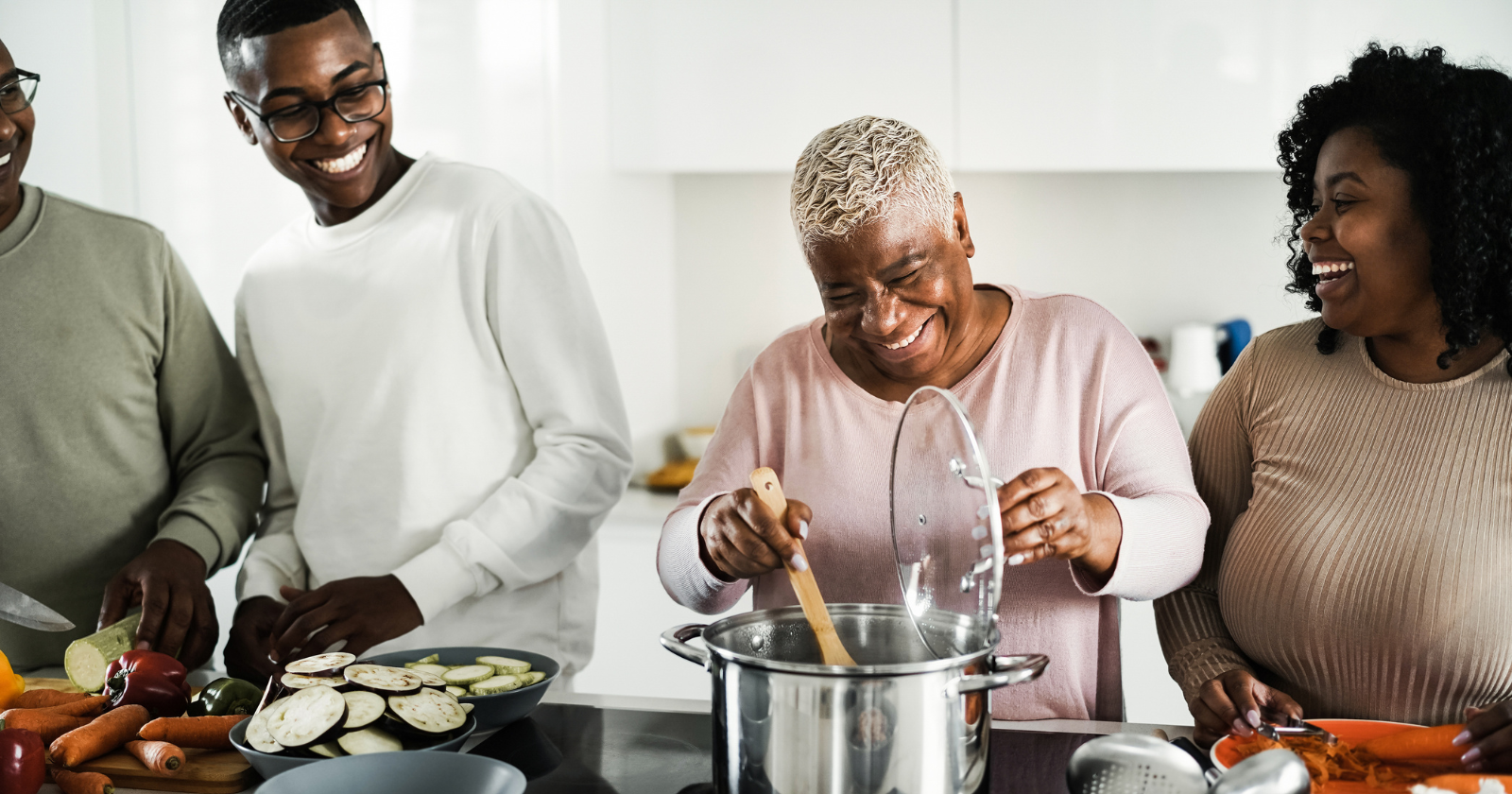
Every Sunday morning, the smell would start creeping through the house around ten o’clock. Onions hitting hot oil, the earthy sweetness of carrots, the sharp bite of celery softening in the pan.
By noon, our whole house smelled like roasted chicken, potatoes, and that particular blend of herbs my mother swore by. For thirty years, without fail, she made the exact same meal. Roast chicken, mashed potatoes, green beans, and her gravy that somehow never had lumps.
As a teenager, I’d roll my eyes. Really? Chicken again? My friends’ families ordered pizza or tried new recipes from magazines.
But there we sat, every single Sunday, passing the same white serving dishes around the table while making polite conversation about school and weather and anything except what really mattered.
Now I stand in my own kitchen, seasoning a chicken the exact same way she did, and my five-year-old daughter asks if we can have tacos instead. I smile and keep working, finally understanding something that took me decades to grasp.
The ritual was never about variety
When you’re young, repetition feels like punishment. You want adventure, novelty, something Instagram-worthy before Instagram even existed. I’d sit at that Sunday table plotting my escape to cities where people ate sushi and Thai food and definitely not the same roast chicken every single week.
My mother would spend her entire Sunday morning in the kitchen. Everything from scratch, always. She’d check the chicken three times, test the potatoes with a fork until they were perfectly tender, strain the gravy twice.
Looking back, I see now how her hands would shake slightly as she carried the platter to the table, how she’d exhale when my father said it was good.
She was anxious, though I didn’t have the words for it then. The ritual of that meal gave her something she could control, something she could perfect, something she could count on. In a world that felt unpredictable to her, Sunday dinner was her anchor.
What rituals are you creating without even realizing their deeper purpose? Sometimes what looks like boring routine is actually the framework holding everything together.
Memory lives in the smallest details
The thing about repetition is that it etches itself into your bones. I can close my eyes and see exactly how she’d test if the oil was hot enough, dropping in one small piece of onion and waiting for it to sizzle.
The way she’d flip the chicken at exactly the thirty-minute mark. How she’d mash the potatoes with the same wooden-handled masher her mother had used.
These details seemed insignificant then. Now they’re everything.
Last week, my two-year-old son climbed onto his step stool to watch me prepare our Sunday chicken. His little hands reached toward the bowl of potatoes, and suddenly I was teaching him how to hold the masher, just like she taught me during one of the rare times I actually paid attention.
The conversations at our childhood dinner table stayed safe, surface-level. We talked about grades and chores and plans for the week ahead. But underneath that careful distance, the meal itself was saying what we couldn’t: I’m here, we’re together, this is home.
Creating new patterns while honoring old ones
Matt handles Saturday morning pancakes in our house. That’s his territory, his tradition with the kids. They make faces with blueberries and drizzle syrup in patterns while I drink coffee and watch this new ritual taking shape. But Sunday? Sunday belongs to the chicken.
The difference is what happens around the meal. Where my childhood home kept emotions carefully contained, we let them spill over.
My daughter tells us about her dreams, her fears about starting kindergarten, the friend who said something mean. My son babbles about his stuffed dinosaur’s adventures. We don’t just eat together; we actually connect.
Still, I make that chicken exactly the way my mother did. Same herbs, same temperature, same timing. It’s my bridge between the family I came from and the family I’m building. Some Sundays, when the light hits the kitchen just right and the familiar smells fill our home, I can almost feel her there.
Food as a love language we don’t always recognize
Every Wednesday, I make bone broth in the slow cooker. The kids know that smell now too. They’ll grow up and maybe complain about how I was always pushing broth on them when they were sick, how our house constantly smelled like simmering bones and vegetables.
Or maybe they’ll stand in their own kitchens someday, adding apple cider vinegar to help pull the nutrients from the bones, and suddenly understand that this was how I said “I want you to be healthy, I want you to be strong, I love you” without using words.
My mother’s anxiety meant that saying those things out loud felt too vulnerable, too risky. But she could say them with food. Every Sunday, she could put that perfectly roasted chicken on the table and know she’d given us something good, something nourishing, something reliable.
How many of us missed those messages because we were too busy wanting something different?
The ache of understanding too late
She’s been gone for three years now. The last time I visited before she passed, she apologized for not having the energy to make Sunday dinner. I told her it was fine, we could order something. I didn’t tell her that I’d started making her chicken for my own family. I didn’t tell her that I finally understood.
There’s a particular grief in gaining wisdom after the person who could have shared in that understanding is gone. All those Sundays I sat there bored, checking the clock, waiting to be excused. Now I’d give anything to sit at that table one more time, to tell her the chicken is perfect, to actually taste it instead of just eating it.
My daughter recently asked why we always have chicken on Sundays. I told her it’s because that’s what families do, they create traditions. She seemed satisfied with that answer, but I know someday she’ll want tacos or pizza or whatever her generation considers exciting. And I’ll keep making the chicken anyway.
What remains when everything else falls away
The recipe itself is nothing special. You could find a hundred variations online. Butter under the skin, salt, pepper, rosemary, thyme, a lemon in the cavity. Potatoes boiled until fork-tender, mashed with butter and milk. Green beans blanched and tossed with garlic.
But recipes aren’t really about ingredients, are they? They’re about the hands that make them, the tables where they’re served, the people who gather to share them. They’re about showing up, week after week, even when it feels monotonous. Especially when it feels monotonous.
This Sunday, as I pulled the chicken from the oven, my daughter said it smelled like love. My two-year-old clapped his hands and shouted “Chicken!” like it was the most exciting thing in the world. Matt carved it the way I taught him, the way my mother taught me, the way her mother probably taught her.
After dinner, we’ll clear the table together. The kids will play while Matt and I clean up, and the leftover chicken will become tomorrow’s lunch, Wednesday’s soup stock, the continuation of something that seemed so ordinary but was actually extraordinary in its consistency.
I think about all the meals my mother made that I’ve forgotten, special occasions with elaborate menus that blur together. But those Sunday chickens? Those I remember. Every single one, even when I thought I wasn’t paying attention.
Maybe that’s the point. Not the food itself, but the showing up. The reliability. The promise that no matter what chaos the week brings, Sunday will smell like roasting chicken and there will be a place set for you at the table.
I wish I could tell her that I get it now.
That I make her chicken every Sunday and my children will probably take it for granted too, until someday they’re standing in their own kitchens, reaching for the same herbs, setting their own tables, finally understanding that love sometimes looks like the same meal, made the same way, over and over again, forever.
