
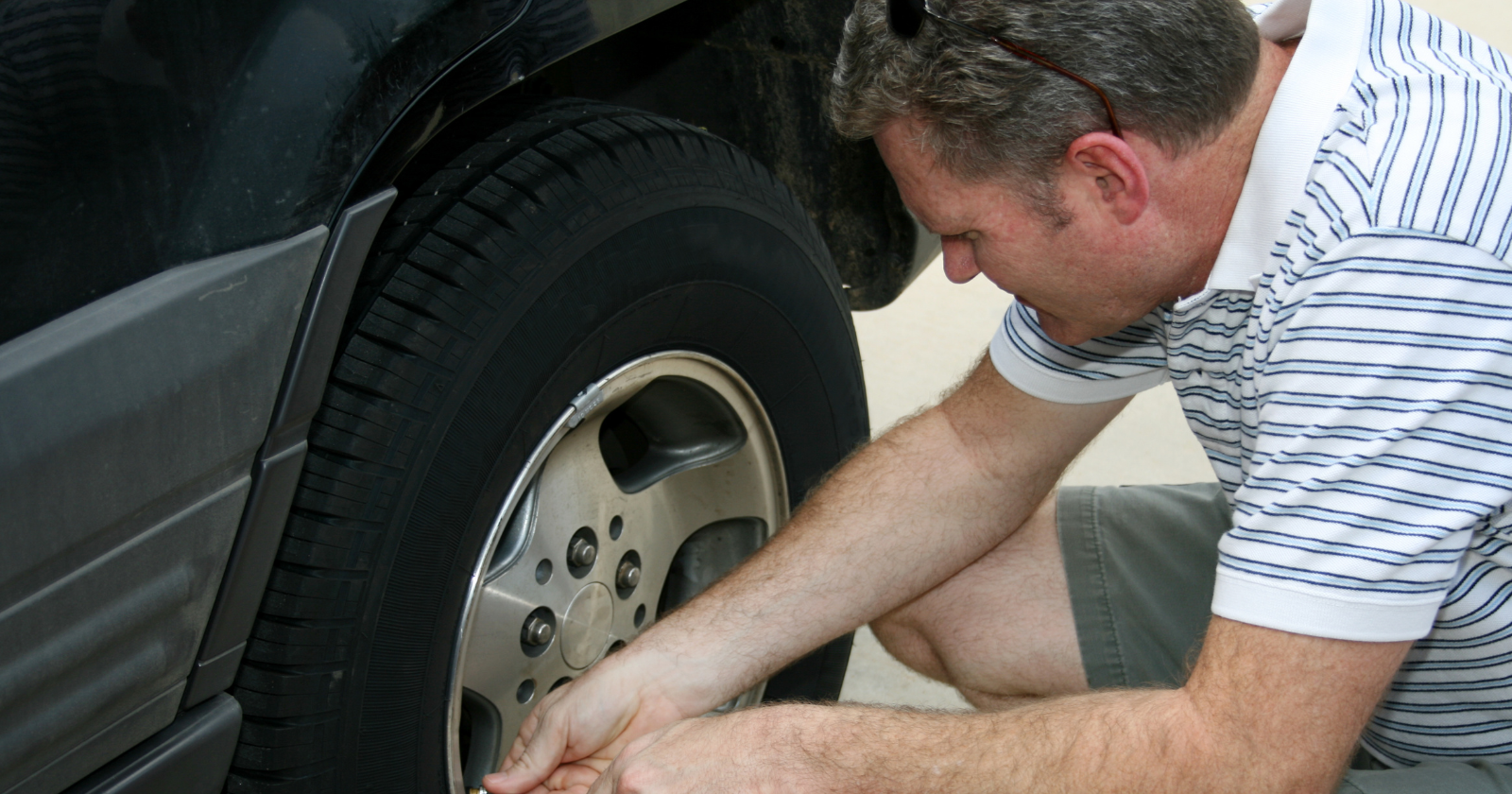
It was 5:47 AM when I found myself in the driveway, flashlight in one hand and tire pressure gauge in the other, crouched beside my daughter’s beat-up Honda.
She was still asleep inside, planning to head back to college after breakfast.
And that’s when it hit me—I’d become my father.
Growing up, I never heard those three words from him. Not once.
While my friends’ parents signed cards with “Love, Mom and Dad,” mine just had his name.
No hearts. No XOs. Just “Dad” in his blocky handwriting.
But every single time I came home from college, without fail, he’d be out there with that same tire gauge I was holding now.
Sometimes I’d catch him through the window at dawn, checking each tire, topping off the windshield fluid, testing the brake lights.
I’d roll my eyes, thinking he was just being obsessive about car maintenance.
I didn’t understand that this was his vocabulary of care.
Love speaks in different languages
Have you ever noticed how we expect love to show up in certain ways?
We want the words, the hugs, the obvious displays of affection.
But what if someone’s been saying “I love you” all along, just not in the language we were listening for?
My father worked long hours at the plant.
He’d come home exhausted, eat dinner mostly in silence, then disappear into his workshop.
Emotionally distant? Sure.
But he never missed a school event, even if it meant losing overtime pay.
He never forgot to leave gas money on the kitchen counter when I was running low.
And those tires?
Always perfectly inflated.
When I started my own family, I swore things would be different.
My kids would hear “I love you” every day.
And they do—probably too much if you ask them.
But here’s what I’m learning: saying the words doesn’t mean you stop speaking the other languages too.
The things we inherit without realizing
Last month, my parents visited and watched me pack Ellie’s lunch with homemade crackers and organic apple slices.
My mom shook her head at what she calls my “hippie parenting,” same as always.
But then I watched my dad sneak outside to check the oil in our car.
Some habits run deeper than our conscious choices.
Matt laughs about it now, but he says he knew I was my father’s daughter the first time I insisted on checking the spare tire before our road trip.
We’d been dating maybe three months, and there I was, hauling everything out of the trunk to make sure the spare had proper pressure.
“Just in case,” I said, hearing my dad’s voice come out of my mouth.
The funny thing is, I rebelled against everything I thought my father represented.
Where he was rigid, I became flexible.
Where he was silent about feelings, I became almost annoyingly open.
I babywear, co-sleep, and talk about emotions like they’re weather patterns.
But at 6 AM, I’m out there with a tire gauge.
When protection looks different than we expect
My dad never asked about my relationships, my dreams, or what made me happy.
But he made sure my car would get me safely wherever those dreams might take me.
He couldn’t say “be careful” or “I worry about you,” but he could hand me a winter emergency kit every November.
Now I get it.
Sometimes love looks like preparation.
Sometimes it looks like anticipating needs before they’re spoken.
Sometimes it’s being the person who thinks about the boring, practical stuff so your loved ones don’t have to.
Matt does this too, in his own way.
Saturday mornings, he’s up making pancakes with the kids, giving me that extra hour of sleep.
He never announces it, never asks for credit.
He just does it.
Every Saturday.
Rain or shine.
Even when he’s exhausted from the work week.
Teaching our kids to be multilingual in love
Here’s what worries me: am I teaching my kids to recognize all the ways love shows up?
Or just the ways that come naturally to me?
My little ones know I love them because I tell them constantly.
But will they also recognize love in their grandfather’s quiet car maintenance?
Will they understand that their dad’s Saturday pancakes are declarations of devotion?
Will they see care in the teacher who stays late to help them understand fractions or the friend who texts to make sure they got home safe?
I think about my daughter heading back to college, how she probably doesn’t even notice I’ve checked her tires.
Just like I didn’t notice for years.
Maybe that’s okay.
Maybe the point isn’t recognition—it’s just the doing.
The morning ritual that changed everything
That morning in the driveway, gauge in hand, I finally understood something crucial.
My father didn’t lack love—he lacked the words for it.
His generation of men, especially working-class men like him, were taught that provision was love.
Safety was love.
Showing up was love.
Saying it out loud?
That was extra, unnecessary, maybe even soft.
I called him later that day.
Didn’t mention the tires or the revelation.
We talked about the weather, the news, whether the lawn needed one more cut before winter.
But before hanging up, I said, “Thanks, Dad. For everything.”
There was a pause.
Then: “You check your tires lately?”
I smiled.
“Yeah, Dad. They’re good.”
“Good. That’s good.”
Finding your own language
We’re all walking around speaking different languages of love, aren’t we?
Some of us are words people.
Some are acts of service people.
Some show love through time, touch, gifts, or just showing up.
The magic happens when we learn to be translators.
These days, I watch for all of it.
The way my neighbor brings in our trash cans when we’re running late.
How my mom, despite thinking I’m too crunchy, started buying organic milk when we visit.
The friend who never says much but always texts funny memes when she senses I’m having a rough day.
And yes, I still check tire pressure.
Not because my kids need me to—they’re young enough that their bikes are their only vehicles.
But I check Matt’s tires, my mom’s when she visits, the babysitter’s before she drives the kids anywhere.
What love really looks like
Maybe the truth is that love was never meant to be just one thing.
Maybe it’s supposed to be messy and multilingual and sometimes hard to recognize.
Maybe the best we can do is keep our eyes open for all the ways it shows up, especially the quiet ones.
My father is in his seventies now.
His hands shake a little when he holds that tire gauge, but he still checks.
Last visit, I caught him teaching my five-year-old how to use it, her small hands wrapped around his weathered ones.
“Why do we check tires, Grandpa?” she asked.
He thought for a moment. “To keep the people we love safe.”
She nodded solemnly, then asked, “Is this love?”
He looked at me, maybe remembering all the times I didn’t understand his language. “Yeah,” he said quietly. “I guess it is.”
That night, after the kids were asleep, I found Matt in the garage, organizing the emergency kit in my car.
Adding new batteries to the flashlight.
Checking expiration dates on the first aid supplies.
I watched him for a moment, this man who speaks love in Saturday pancakes and bedtime stories and making sure the squeaky hinges get oiled before they drive me crazy.
“I love you too,” I said.
He looked up, confused. “I didn’t say anything.”
“Sure you did.”
We all say it.
Every day.
In a thousand different ways.
We just need to learn to listen.
