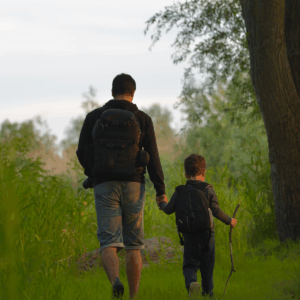
Last week at a family dinner, my daughter-in-law asked if I could watch the kids next Thursday. Before I could answer, she quickly added, “Unless you have plans, of course.” The thing is, I rarely have plans these days. But what struck me wasn’t the request—it was the assumption that came with it. Like many in my generation, I’ve become the reliable grandparent, the backup childcare, the one who’s always available. And while I love my grandkids dearly, there’s something deeply isolating about being seen only through the lens of what you can provide rather than who you are.
This got me thinking about something I’ve been noticing more and more among my peers. We’re not actually alone—most of us have families, friends, social circles. Yet the loneliness many of us feel is profound. It’s not about empty calendars or quiet houses. It’s about something much deeper.
When your worth becomes your function
Those first few months after retirement hit me like a ton of bricks. For decades, I’d been the guy with answers, the problem-solver at work, the provider at home. Suddenly, nobody needed me for anything. My identity had been so wrapped up in being useful that when that disappeared, I felt like I’d disappeared too.
The research backs this up. A study published in Innovation in Aging found that Baby Boomers experience higher loneliness levels compared to the Silent Generation. Why? Because we’re caught in this strange middle ground—old enough to be relegated to certain roles, young enough to remember when we were the ones running things.
What really gets me is how quickly family gatherings became about logistics rather than connection. “Can you pick up the kids?” “Are you free to help with the move?” Don’t get me wrong, I want to help. But sometimes I wonder if anyone’s curious about what I’m reading, what I’m thinking about, or how I’m really doing beyond the standard “How’s retirement treating you?”
The invisible person at the dinner table
Here’s something that might sound familiar: You’re sitting at a family gathering, surrounded by loved ones, and yet you feel utterly alone. The conversation flows around you—work drama, school events, vacation plans—but rarely includes you. When you do speak up, offering perspective from your years of experience, eyes glaze over. “Things are different now, Dad.”
My younger son actually did me a favor a few years back, though it stung at the time. He told me my constant advice felt like criticism. That was a wake-up call. I’d been so eager to stay relevant, to contribute something meaningful, that I’d become the guy nobody wanted to open up to.
Sherry Turkle, an MIT professor, puts it perfectly: “The world is now full of modern Goldilockses, people who take comfort in being in touch with a lot of people whom they also keep at bay.” This describes so many family relationships I see—close enough to call on when needed, distant enough to avoid real intimacy.
Technology and the generation gap
You know what’s interesting? A study in Computers in Human Behavior found that loneliness was negatively associated with search engine use among both Baby Boomers and the Silent Generation. In other words, the lonelier we are, the less likely we are to use the very tools that might help us connect.
But here’s the thing—it’s not really about the technology. It’s about what the technology represents. When your kids text you instead of calling, when family updates come through social media instead of conversations, when you’re added to group chats but rarely engaged directly, you start to feel like you’re being managed rather than included.
I’ve noticed something else too. When I stopped trying to prove I could keep up with every new app or trend, when I stopped pretending to care about things I didn’t understand, something shifted. My sons started talking to me more. Not about technology or current events, but about real things—their fears, their hopes, their struggles with parenting.
The unexpected loneliness of being needed
Here’s the paradox: being the go-to grandparent, the reliable helper, the one who’s always available, can actually increase loneliness. Because when you’re only called upon to fill a need, you’re not really being seen. You’re a solution to a problem, not a person with your own complexities, interests, and struggles.
I help with school pickups when needed, and I’ve discovered something wonderful—you learn so much about kids’ lives just being in the car. But I’ve also learned to set boundaries. To say, “I’d love to help, but I have plans that afternoon” even when those plans are just reading a book in the park.
Research on “elder orphans”—older adults without immediate family—found that social network sites can promote feelings of mattering. But here’s what I find ironic: those of us with families often feel less like we matter than those without. At least elder orphans aren’t being reduced to a function.
Breaking free from the role
After going through what I can only describe as a genuine identity crisis post-retirement, I had to figure out who I was without a job title. But the harder challenge was figuring out who I was within my family beyond “Dad” or “Grandpa.”
I started small. Instead of offering opinions at family dinners, I asked questions. Real questions, not the kind designed to make a point. “What surprised you most about that?” “How did that make you feel?” “What would you do differently?”
The change wasn’t immediate, but gradually, conversations shifted. My kids started seeing me as someone interested in their thoughts, not just someone waiting to dispense wisdom. They began asking me questions too—not about practical matters, but about my experiences, my regrets, my dreams for the years ahead.
Closing thoughts
The loneliness epidemic among our generation isn’t going to be solved by more family dinners or group activities. It requires something much harder—a fundamental shift in how we’re seen and how we see ourselves.
We need to stop accepting being cast only in supporting roles in everyone else’s story. We’re not just grandparents, retirees, or the older generation. We’re complete people with ongoing narratives, evolving interests, and yes, even futures worth planning for.
So here’s my question for you: When was the last time someone in your family asked you about your dreams, not your availability? And perhaps more importantly, when was the last time you insisted on being seen as more than just the role you play in their lives?