
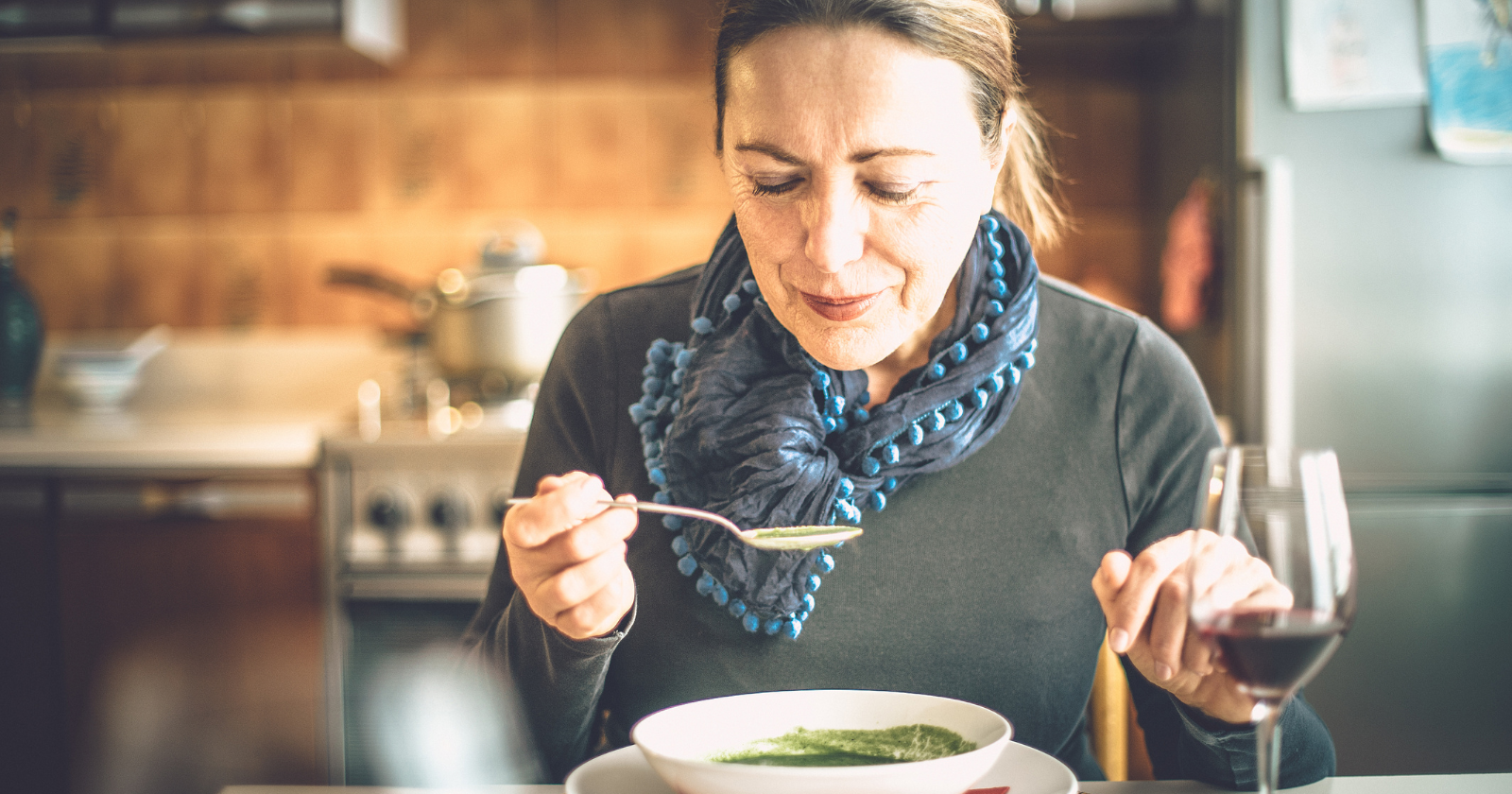
Last month, I walked into my mother’s kitchen at 3:45pm to find her already halfway through dinner.
Not preparing it.
Eating it.
When I asked if she was feeling okay, she just shrugged and said, “I was hungry.”
At midnight that same week, I caught her reorganizing her entire linen closet by the light of her phone flashlight because she “couldn’t sleep and felt like it.”
The woman who spent my entire childhood serving dinner at exactly 6:30pm, who kept every drawer organized according to some invisible system only she understood, who never did anything without considering how it might look to the neighbors, had apparently thrown out the rulebook.
And you know what?
Behavioral scientists have a name for this.
It’s called post-parental liberation, and it turns out what looks like eccentric behavior might actually be the healthiest thing happening to women after their kids leave home.
The invisible performance we never talk about
Growing up, my mother was the epitome of consistency.
Breakfast at 7, lunch at noon, dinner at 6:30.
She made everything from scratch, kept an immaculate house, and somehow managed to make it all look effortless.
But there was this underlying anxiety, this constant hum of worry about whether she was doing enough, being enough, performing motherhood correctly.
Sound familiar?
Because now that I’m knee-deep in my own parenting journey with a 5-year-old who collects leaves like they’re precious gems and a 2-year-old who treats our couch like a construction site, I get it.
The performance is exhausting.
We schedule our days around what works for everyone else.
We eat when it’s “normal” eating time.
We clean when we’re supposed to clean.
We structure our entire existence around these invisible rules that someone, somewhere, decided made you a good parent.
But what happens when that audience disappears?
When the curtain finally drops
My mother started talking to her plants about six months after I moved out.
Not just the occasional “grow big and strong” either.
Full conversations about her day, her thoughts on the news, whether she should repaint the bathroom.
When I gently suggested this might be… unusual, she laughed and said, “They’re excellent listeners.”
Dr. Ellen Langer’s research on mindfulness and aging shows that when people stop conforming to expected behavioral patterns, they often experience increased creativity, better health outcomes, and improved cognitive function.
In other words, my mother’s plant conversations might be doing more for her brain than all those crossword puzzles she used to force herself to do because “that’s what keeps you sharp.”
The midnight drawer organizing?
Turns out that’s her body’s natural rhythm asserting itself after decades of suppression.
Some people are genuinely more alert and productive at night, but parenthood doesn’t care about your circadian preferences.
You adapt to school schedules, bedtimes, and the general assumption that normal people function during daylight hours.
The science of liberation
Here’s what really got me: researchers studying empty nest syndrome discovered something unexpected.
While some parents struggle with the transition, a significant number experience what they call a “second wind” of personal development.
They’re not just filling time; they’re reclaiming it.
Dr. Karen Fingerman’s work on parent-adult child relationships found that mothers who embrace unconventional routines after their children leave home report higher life satisfaction than those who maintain their previous patterns.
They’re not having a crisis.
They’re having a revelation.
Think about it.
For decades, these women ate standing up while packing lunches, timed their showers around nap schedules, and organized their entire lives around other people’s needs.
Is it really that strange that given the freedom, they might want to eat dinner whenever they damn well please?
Why this matters for us right now
Watching my mother’s transformation has made me question everything about how I’m structuring my own days.
Just yesterday, my daughter asked if we could have pancakes for dinner, and my immediate response was “that’s not dinner food.”
But why?
According to whom?
I’ve started noticing all the arbitrary rules I enforce.
Crafts happen at the table.
Quiet time is after lunch.
Baths are before bed.
But when I really examine these rules, half of them exist because I’m performing parenthood for an audience that might not even be watching.
My mother worked herself into anxiety trying to be the perfect homemaker, and now she’s eating soup at 4pm and reorganizing closets by moonlight because that’s when her body wants to do those things.
What if we didn’t wait until our sixties to start listening to ourselves?
The permission we never give ourselves
Last week, I let my kids have ice cream at 10 am.
Not because it was a special occasion, but because we’d been gardening since sunrise (they wake up early, what can you do?), and we were hot and tired and ice cream sounded perfect.
The sky didn’t fall.
No one called child services.
My kids still ate lunch.
But you should have seen the look another parent gave me at the park later when my daughter mentioned her morning ice cream.
That look is exactly why my mother spent 30 years eating dinner at regulation time.
The research on intuitive living and parenting shows that families who follow their natural rhythms rather than prescribed schedules often have lower stress levels and stronger connections.
Yet we’re so afraid of judgment that we force ourselves into boxes that don’t fit.
My mother’s plant conversations aren’t hurting anyone.
Her midnight organizing sessions make her happy.
Her 4 pm dinners mean she’s finally listening to her body instead of the clock.
These aren’t signs of decline; they’re signs of recovery from decades of self-suppression.
Finding freedom in the everyday
I’m not suggesting we all start having full conversations with our houseplants tomorrow (though if that works for you, why not?).
But maybe we can start small.
Maybe dinner doesn’t have to be at 6:30.
Maybe organizing can happen when the mood strikes, not when the schedule demands.
Maybe we can trust ourselves to know what we need when we need it.
My kids are still young, and yes, they need structure and routine.
But they also need a mother who isn’t slowly disappearing under the weight of performing parenthood “correctly.”
They need to see that adults can make choices based on what feels right, not just what looks right.
When I told my mother I was writing about her newfound quirks, she said something that stopped me cold: “I spent 30 years being who I thought I should be. I figure I’ve earned the right to be who I actually am.”
The truth about those “quirks”
What we call quirky behavior in older women might just be the truest expression of who they’ve always been.
My mother didn’t suddenly become someone who likes eating early and organizing at midnight.
She always was that person.
She just finally has permission to act like it.
And that’s the real revelation here.
It’s not that parenthood changes us into someone else.
It’s that we voluntarily hide parts of ourselves for decades in service of this role we’re playing.
We perform stability, consistency, and normalcy even when it goes against every instinct we have.
So now when I see my mother chatting with her ficus about the weather, I don’t see eccentricity.
I see someone who’s finally dropped the act.
And honestly?
She seems happier than she’s been in years.
Maybe we don’t have to wait until our kids are grown to start reclaiming pieces of ourselves.
Maybe we can model for them that authenticity matters more than performance.
Maybe the best thing we can teach them is that there’s no one right way to be human.
Even if that means having pancakes for dinner sometimes.
