

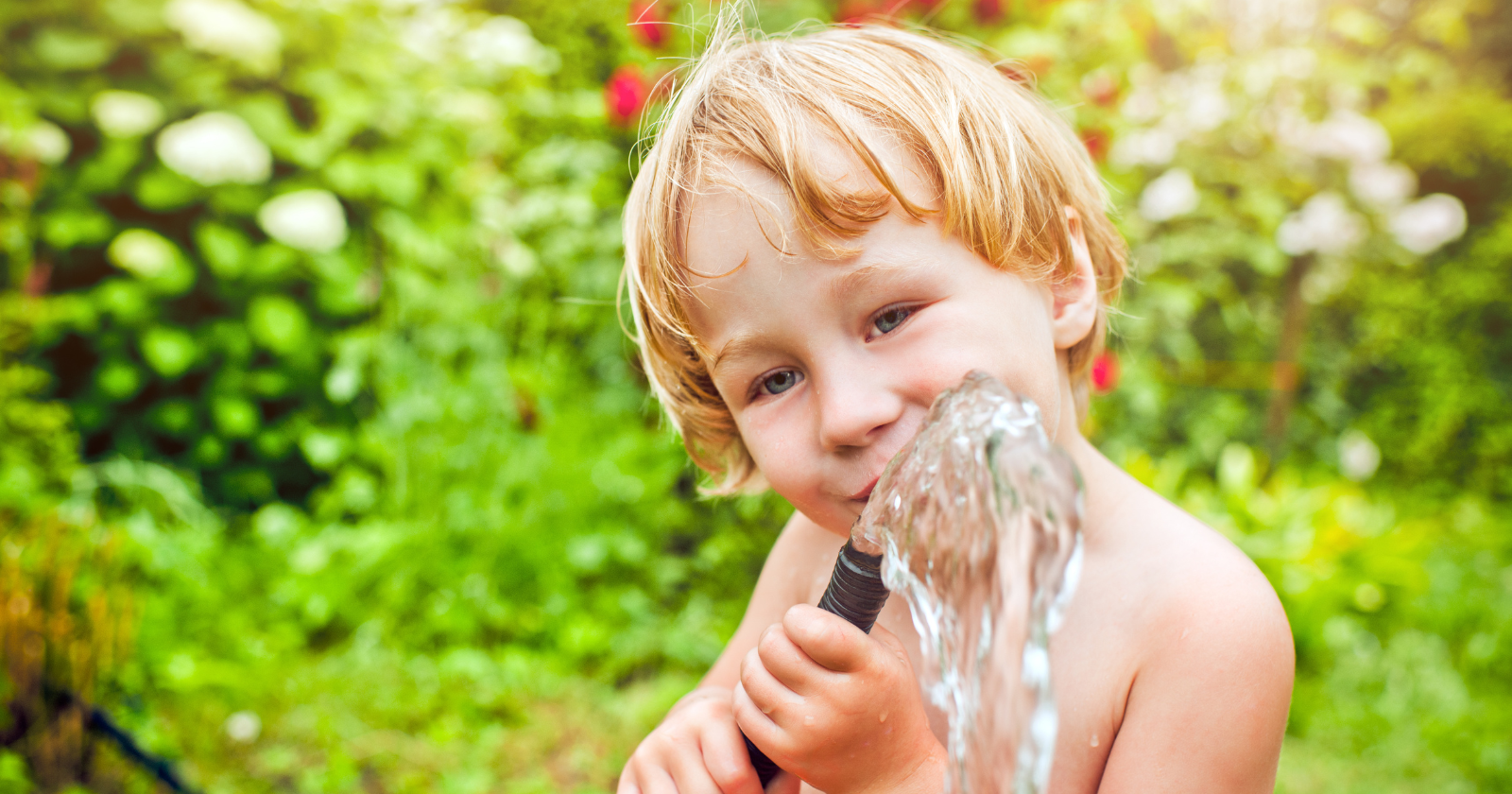
One version looks like this: a kid leaves the house after breakfast, wanders to a friend’s place three streets over, builds something in a field nobody owns, scrapes a knee, figures it out, and comes home when the sky turns orange and the streetlights flicker on.
The other looks like this: a scheduled playdate, an adult present, a helmet for the scooter, a location pin shared with a parent who checks it twice before lunch.
Both of those kids are loved. Deeply loved. That’s not the question.
The question is what happens to a child’s sense of themselves, their capabilities, and their place in the world depending on which version of childhood they grew up inside. And it’s a question worth sitting with honestly, especially for those of us who remember being the first kind of kid and are now raising the second.
When the story around childhood changed
Ask any grandparent today and they’ll tell you something like this: we played outside from morning until dark, nobody knew exactly where we were, we drank from garden hoses, we rode without helmets, and we were fine.
And statistically? They’re mostly right. That generation survived. Many of them thrived.
But somewhere between then and now, the cultural story around childhood safety shifted dramatically. It wasn’t gradual or invisible. It happened fast, driven by 24-hour news cycles that made rare dangers feel omnipresent, by liability culture that crept into playgrounds and school policies, and by a genuine love that, without meaning to, started reading risk as threat.
We removed the high climbing frames. We banned running on concrete. We started scheduling every hour and supervising every interaction. And we called it keeping our children safe.
The grandparents watching from the sidelines recognized something was off, even if they couldn’t always name it. The kids in the GPS trackers didn’t know any different.
What we actually mean by safe
I want to be clear before going any further: I am not here to tell anyone they’re parenting wrong. I’ve been the parent who double-checked the car seat straps four times. I understand the impulse to protect. Deeply.
But there’s a version of safety that protects a child’s body, and a version that quietly shrinks their world. And I think we’ve spent so long focused on the first kind that we’ve underestimated the cost of the second.
Related Stories from The Artful Parent
- Behavioral scientists explain why children who grew up with unstructured outdoor play in the 60s and 70s show stronger problem-solving abilities at 60 than their grandchildren show at 20 — and the variable isn’t intelligence, it’s boredom
- 7 things your aging parents do every day that are silent cries for recognition (that most adult children completely miss until it’s too late)
- A family dinner in 1975 had no phones, no screens, no background entertainment — just people and food and silence that nobody tried to fill — and that boredom produced more genuine conversation in 30 minutes than most modern families have in a week
Because childhood risk isn’t just about the possibility of a scraped knee. It’s about the experience of attempting something uncertain, of making a call without an adult stepping in, of failing and getting back up and realizing you can. That’s not a side effect of childhood. That IS childhood. Strip the risk out entirely and you don’t get a safer experience. You get a smaller one.
The grandparents watching their grandchildren in GPS trackers aren’t just being nostalgic. They’re noticing something real. A quality of freedom that has quietly left the building, and they can feel its absence even if they can’t always articulate what’s missing.
The thing about scraping your knee
Growing up in a small Midwest town, I spent most of my childhood outside. Not in a curated, scheduled way. Just outside. My mother called us in for dinner and we appeared, usually dirty, often scraped, always fine.
What I didn’t fully understand at the time was that all of that unstructured wandering was doing important developmental work. Every time I navigated a disagreement with a friend without an adult stepping in, every time I misjudged a jump and landed badly and got back up, every time I had to find my own way home, I was building something. A quiet internal voice that said: I can figure this out. I’ve done it before.
That voice is what we’re actually trying to protect when we protect childhood.
And the uncomfortable truth is that overprotection doesn’t preserve it. It prevents it from ever developing in the first place.
- Research suggests the reason some people can live the same day on repeat for years without distress while others feel like they’re suffocating isn’t personality. It’s whether the routine was chosen deliberately or inherited by default, because the brain processes voluntary repetition as ritual and involuntary repetition as captivity. - Global English Editing
- Life isn’t a series of random events but a chess game where every move matters - Global English Editing
- Nobody tells you that the real threat to a long relationship isn’t the dramatic betrayal. It’s the Wednesday afternoon coffee where someone at work asks how you’re really doing and you actually answer honestly for the first time in months. - Global English Editing
When every stumble is caught before it lands, when every argument is mediated before it resolves, when every uncertain situation is pre-cleared by an adult, the child never gets to find out what they’re capable of. They arrive at adolescence having been kept very safe and having very little evidence that they can trust themselves. That’s not the outcome any of us are going for.
The GPS tracker problem
The GPS tracker feels like a good metaphor for all of this. Not because tracking technology is inherently bad, but because of what the impulse behind it reveals.
When a child knows they’re being tracked, something subtle shifts. The experience of independence, the feeling of being out in the world on your own terms, of being trusted to navigate and return, doesn’t fully land. The tracker is a very long leash. And children, even young ones, can feel the difference between freedom and supervised freedom.
When we treat every ordinary childhood situation as a potential emergency, we don’t make children more secure. We make them more anxious. We teach them that the world is a place requiring constant adult oversight to survive. That lesson, absorbed young and reinforced daily, is its own kind of harm. Not dramatic or obvious harm. The quiet kind, the kind that shows up years later as an 18-year-old who finds it hard to make small decisions alone, or a teenager who genuinely doesn’t know what they enjoy because they’ve never had long stretches of unstructured time to find out.
The generation that drank from the garden hose didn’t have perfect childhoods. But they had something that’s proving hard to replicate on purpose: long, unsupervised hours in which they had to become themselves.
What it looks like at our house
I want to be careful not to make this sound like the answer is just letting kids run wild with zero thought. That’s not quite it.
What I think most of us are actually looking for is the middle place: present enough to matter, hands-off enough to allow real growth. It looks different at every age, and every child is different.
Ellie at five is climbing things that make me hold my breath occasionally. Milo at two is determined to do everything his sister does, no matter how many times he lands hard trying. Matt and I have had to get genuinely comfortable with that held-breath feeling, because the alternative is hovering in a way that sends both kids a message we don’t want to send. That the world is too dangerous for them to navigate without us watching every second.
That’s not what we want to raise them with.
So practically, it looks like a backyard set up for real play, with a tree swing and a mud kitchen and loose parts and permission to get thoroughly muddy. It looks like going to the park and sitting on a bench instead of trailing two steps behind. It looks like letting friction between kids unfold without stepping in at the first sign of upset. It looks like slow mornings at the farmers’ market where the children set the pace, stopping to look at whatever catches their eye, getting into gentle conversations with the vendors who know us by name.
None of that is radical. Most of it is a quieter version of what the garden hose generation experienced by default. The difference is that we have to choose it, because the culture has drifted so far toward intervention that opting out takes a little conscious effort.
Progress not perfection, as I keep reminding myself on the days I’ve hovered more than I meant to.
The ceiling was never supposed to be safety
There are meaningful advances in child safety that I’m grateful for and would never walk back. Car seats. Outlet covers. Actual hazard awareness. Those things matter and I take them seriously.
But safety was never supposed to become the organizing principle of an entire childhood. It was supposed to be the floor, not the ceiling.
The ceiling is supposed to be made of something bigger. Curiosity. Independence. The very specific joy of a long summer afternoon with no plans and no supervision and the whole neighborhood to wander through. The experience of being trusted with your own time and your own body and your own decisions, in age-appropriate ways, before the stakes get higher.
Because here’s what I keep coming back to: the children who drank from the garden hose and came home at dark grew up to be the adults who figured things out. Not because hardship built character in some abstract motivational poster sense, but because they had years of low-stakes practice at being human. At failing and recovering. At getting lost and finding their way. At being bored and making something out of nothing.
That practice is what we’re at risk of skipping. And no amount of structured enrichment, carefully scheduled and lovingly supervised, is quite the same substitute.
Giving it back to them
The good news is that this isn’t gone. It just needs room.
It needs parents willing to sit with a little discomfort at the park instead of reaching for their phone while simultaneously watching their kid’s every move. It needs backyards and neighborhoods and community spaces where kids can be genuinely unsupervised for stretches of time. It needs a cultural permission slip that says a child wandering on their own two legs is not a child in danger. It’s a child becoming someone.
The grandparents who miss the garden hose days aren’t grieving helmets. They’re grieving something harder to name, the quality of freedom that came from being trusted to exist in the world without a tracker on your ankle.
Their grandchildren deserve to feel that too. We don’t have to do it exactly the way it was done before. We just have to leave enough room for it to happen.
