
Last weekend, granddaughter and I were sitting on a park bench, watching the ducks paddle across the pond. We’d been quiet for maybe five minutes when she suddenly said, “Grandpa, kids at school are being mean to my friend, and I don’t know if I should tell anyone.”
Now, here’s what struck me: her parents had asked her about school that very morning, and she’d given them the standard “everything’s fine” response. But here she was, opening up to me about something that had been weighing on her for weeks.
This happens all the time. My grandchildren tell me things they’d never dream of sharing with their parents. Not because their parents are bad listeners or because they don’t care. It’s because most of us grandparents accidentally do the one thing that shuts down real conversation before it even starts.
We talk too much.
The mistake I made for years
When I first became a grandfather, I thought I had it all figured out. After thirty years in human resources, helping people navigate workplace problems, not to mention raising my own kids, surely I could handle conversations with small children, right?
Wrong.
I’d pick up my grandkids, and the moment they climbed into the car, I’d start peppering them with questions. “How was school? What did you learn? Did you have fun at recess? What did you have for lunch?”
Sound familiar?
My grandchildren would give me one-word answers, and I’d wonder why they seemed so uninterested in talking. Meanwhile, their parents would tell me the kids never stopped chattering at home. What was I doing wrong?
It took me embarrassingly long to figure out that I was treating these conversations like workplace meetings. I was trying to extract information, gather data, solve problems. But kids don’t work that way. And honestly? Most adults don’t either.
What thirty years in HR taught me about listening
During my career in a large manufacturing company, I sat through thousands of meetings where people came to me with complaints about their coworkers or supervisors. At first, I’d jump right in with solutions. “Have you tried this? What about that? Let me set up a meeting.”
Related Stories from The Artful Parent
- I’m 35 and I love my parents but I also resent them — and I spent years believing those two things couldn’t both be true before I understood that love and resentment are not opposites, they are the specific combination that forms when you were raised by people who did their best and whose best had limits and whose limits became your wounds
- Psychology says when adult children avoid their parents, it’s rarely about one dramatic event — it’s about a thousand small moments where the child learned that being authentic around the parent felt more dangerous than being distant
- I finally understand why my father always backed the car into the driveway — it wasn’t about convenience, it was a man who spent his whole life making sure everyone else could leave first
But over time, I noticed something. The conflicts that actually got resolved weren’t the ones where I offered immediate solutions. They were the ones where I just… shut up and listened.
Nine times out of ten, people didn’t really need me to fix anything. They needed someone to hear them out. Once they felt heard, they’d often figure out the solution themselves. Or they’d realize the problem wasn’t as big as they thought. Or sometimes, just venting was enough to help them move forward.
The same principle applies to grandchildren, only more so.
Why silence creates connection
Kids have a different relationship with silence than adults do. We get uncomfortable with quiet moments and rush to fill them with words. But children often need that quiet space to process their thoughts and find the right words for what they’re feeling.
When I started applying my workplace discovery to time with my grandchildren, everything changed. Instead of bombarding them with questions, I’d pick them up and say something simple like, “Hey there, good to see you.” Then I’d just… be quiet.
At first, the silence felt awkward. I’d grip the steering wheel, fighting the urge to ask about their day. But after a few minutes, magic would happen. One of them would pipe up with something completely unexpected.
- WordPress plugin auto-updates: the convenience trap bloggers keep falling into - The Blog Herald
- Research suggests people who prefer reading independent blogs over mainstream media aren’t being contrarian — they’re seeking a fundamentally different relationship with information, one built on voice and trust rather than institutional authority - The Blog Herald
- Best fonts on Word: the classics, the updates, and what bloggers get wrong - The Blog Herald
“Grandpa, do you think dogs know they’re dogs?”
“I failed my spelling test and I’m scared to tell Mom.”
“There’s this girl who sits alone at lunch every day and I want to be her friend but I don’t know how.”
These weren’t responses to questions. These were thoughts and worries that had been bouncing around in their heads, waiting for a safe, quiet moment to come out.
The judgment trap that kills trust
But here’s where it gets tricky. Once your grandchild starts opening up, every instinct in your body will scream at you to jump in with advice, wisdom, or worst of all, judgment.
When my eleven-year-old grandson told me he’d been copying homework from a friend, my first impulse was to launch into a lecture about honesty and integrity. Thank goodness I bit my tongue.
Instead, I just said, “Hmm, that must feel complicated.”
And then he kept talking. He told me how overwhelmed he felt with baseball practice and his piano lessons. How he was falling behind in math and didn’t want to disappoint his dad, who’d been a math whiz in school. How the copying made him feel guilty but also relieved.
If I’d jumped in with judgment or advice right away, he would have clammed up. But because I kept listening, he eventually asked me, “What do you think I should do?”
That’s when you know you’ve earned the right to offer guidance. When they ask for it.
Creating the right environment
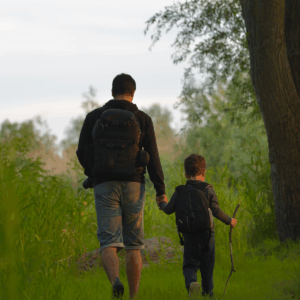
I’ve found that certain settings make this kind of conversation more likely. The car is good because you’re not making direct eye contact, which can feel less intense for kids. Our walks to the park work wonderfully too. There’s something about moving together, side by side, that makes talking easier.
The worst place? Sitting across from each other at a table, which can feel like an interrogation. I learned this the hard way when I tried to have a “serious talk” with one of my grandchildren about why she’d been acting out at home. She literally slid under the table and refused to come out.
Timing matters too. Right after school or when they first arrive at your house, kids often need time to decompress. But give them an hour or two, maybe after a snack or some play time, and they’re much more likely to open up.
When parents feel left out
Sometimes parents feel hurt when they learn their kids have been confiding in you instead of them. Both of my sons have expressed versions of, “Why does she tell you these things but not us?”
I always explain that it’s not about being a better listener or having some magical grandparent power. It’s about the different role we play in their lives. Parents have to enforce rules, set boundaries, make sure homework gets done and vegetables get eaten. That necessary authority can create a barrier to certain conversations.
As grandparents, we have the luxury of being a step removed from the daily discipline and logistics. We can be the safe harbor where kids can express their fears, doubts, and mistakes without worrying about immediate consequences.
This doesn’t mean we keep secrets from parents about serious issues. If one of my grandchildren told me something concerning about their safety or wellbeing, I’d find a way to loop in their parents. But for the everyday worries and wonderings? Those can stay between us.
Closing thoughts
The irony isn’t lost on me that I’ve just spent over a thousand words telling you about the importance of not talking too much. But if there’s one thing I hope you take away from this, it’s that the most powerful tool in your grandparent toolkit isn’t your wisdom, your experience, or your advice.
It’s your silence.
The next time you’re with your grandchildren, try it. Resist the urge to fill every quiet moment. Let the silence stretch a little longer than feels comfortable. You might be amazed at what emerges in that space.
After all, in a world where everyone’s talking and nobody’s listening, being the person who just sits quietly might be the most radical thing you can do. So here’s my challenge for you: Can you give your grandchildren the gift of your quiet presence this week?