
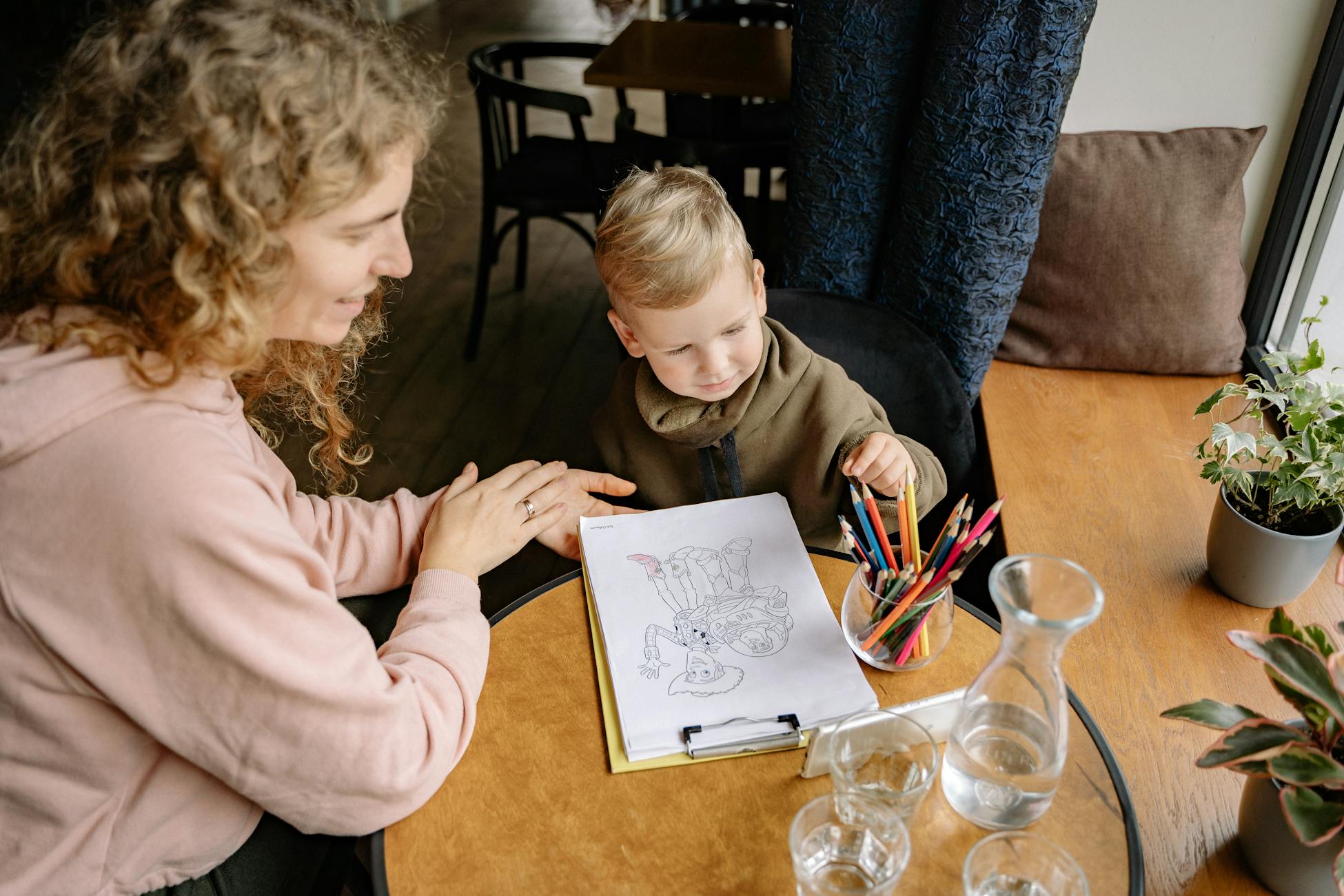
Creativity doesn’t die in adulthood. It gets assassinated in childhood, usually in a single afternoon, by someone who meant well. The weapon is almost never cruelty. The weapon is evaluation — a grade, a comparison, a correction offered at the exact moment a child was trying to show you something that mattered to them. And the strange, devastating part is that the person holding the weapon rarely remembers using it.
Most people believe that creative ability is distributed unevenly at birth, like height or eye color. Some kids are “artistic,” and most aren’t, and the ones who aren’t figure it out somewhere around second or third grade and move on to things they’re better at. That’s the conventional story. What many adults who describe themselves as ‘not creative’ report is nearly the opposite: the moment they stopped creating often had little to do with talent and much to do with specific interactions where meaning got replaced by measurement.
I’ve been thinking about this a lot since my daughter Ellie, who is five, brought me a painting last month. It was a riot of purple and brown streaked across paper, with a small green circle near the bottom. My first impulse — automatic, inherited, well-meaning — was to say “That’s beautiful!” But something stopped me. I asked her what the green circle was instead. She lit up. “That’s where the worms live when it rains,” she said. And then she spent ten minutes telling me about the worm world, its rules, its weather, its emotional dynamics. The painting was a map. I had almost called it beautiful and moved on, and she would have smiled, and that would have been the end of it.
The Moment That Doesn’t Look Like Anything
Some adults who describe themselves as “not creative” report being able to identify specific moments in childhood when they showed someone what they made and received an evaluation instead of engagement. A teacher who graded the drawing. A parent who said “What is it supposed to be?” A peer who laughed. A well-intentioned adult who held it up and said “That’s nice” in a tone that communicated completion rather than curiosity. The interaction lasted seconds. The identity it created lasted decades.
What makes this so difficult to see clearly is that evaluation feels like attention. A grade feels like acknowledgment. “That’s beautiful” feels like praise. None of these responses seem harmful, which is precisely why they’re so effective at shutting something down. The child doesn’t experience them as rejection. The child experiences them as finality. The conversation about the thing they made ends at the surface — at whether it is good — and never reaches what it meant, what it was for, what world it came from.
Carol Dweck’s research on mindset illustrates how a fixed mindset around creative ability becomes a self-fulfilling prophecy. When children internalize the belief that creativity is something you either have or don’t, every act of making becomes a test rather than an exploration. And the moment making becomes a test, the child who isn’t sure they’ll pass simply stops taking it.
That’s the quiet catastrophe. They don’t fail. They withdraw.
Evaluation as a Language of Power
I taught kindergarten for seven years before I started writing. I watched this happen in real time, over and over, and I participated in it before I understood what I was doing. We had art time every afternoon, and I walked around the tables saying things like “Oh, I love the colors you used” and “What a great job.” I thought I was being encouraging. I was being an evaluator. Every child at that table was learning, slowly, that the point of making something was to have it assessed by the adult in the room.
The shift happened for me when one boy — quiet, methodical, always working with brown and black crayons — showed me a drawing that looked, to my adult eyes, like a scribbled mess. I almost said “Tell me about it” the way you do when you’re stalling for something nicer to say. But he told me before I could. He said, “This is the inside of a tree when it’s sleeping.” I realized in that moment that I had never once, in years of teaching, asked a child what their work meant to them before I decided what it meant to me.

The distinction between extrinsic motivation and intrinsic motivation is well-documented in psychology. Extrinsic motivation — praise, grades, gold stars, parental approval — can be effective for rote tasks. But for creative work, it functions as a subtle poison. When the reward comes from outside, the reason for making shifts from “I had something to say” to “I want to be told I’m good.” And the second that shift happens, the child has lost the thing that made them creative in the first place: the willingness to make something without knowing whether it would be approved of.
Research suggests that fear of failure stops creative expression in its tracks. And where does that fear originate? In the gap between making something and having it judged. Children who learn early that their creations will be evaluated develop an anticipatory anxiety around creating. They begin editing before they start. They self-censor. They choose the safe colors. They draw the house with the triangle roof because they know it will be recognized and approved.
Eventually, they just stop drawing altogether.
What Asking “What Does It Mean?” Actually Does
When you ask a child what their creation means — genuinely ask, without a pedagogical agenda — you are doing something neurologically and emotionally distinct from praising it. You are communicating that the interior experience matters more than the exterior product. You are saying, without words, that the thing they made is a portal into how they think, and that how they think is interesting to you.
This is an experience of being known. And being known, for a child, is the foundation of every kind of confidence, creative or otherwise.
I’ve noticed this with Ellie. When I ask her what something means, she expands. She adds detail, narrative, contradiction. The painting becomes a story that becomes a game that becomes a question she wants to research. When I evaluate — even positively — she contracts. She smiles, she says thank you, and she moves on to the next thing. The praise closes the loop. The question opens it.
Milo is only two, so his art is still in the sensory-exploration phase, which means everything he makes is fundamentally about process rather than product. He doesn’t care if the playdough snake looks like a snake. He cares that it’s cold and soft and tears in a satisfying way. Nobody has taught him yet that there’s a right way to make a snake. I’d like to keep it that way as long as possible.
Schools, of course, make this complicated. Research suggests that intrinsic motivation is fundamental to student achievement, but institutional structures — grades, rubrics, standardized assessments — can systematically undermine it. The classroom is designed for evaluation. Art becomes a subject with objectives. The child’s interior world, which is the actual engine of creativity, has no column on the report card.
The Adults Who Never Recovered
I’ve written before about the quiet loneliness of losing something you can’t name. The adults who say “I’m not creative” are experiencing something similar. They feel an absence but can’t locate its source, because the moment it was taken from them looked like an ordinary interaction. Nobody yelled. Nobody said “You’re bad at this.” Someone just graded the thing, or compared it to someone else’s, or asked “What is it?” in a tone that meant “It doesn’t look like anything,” and the child’s internal world — vast, weird, full of worm kingdoms and sleeping trees — quietly closed its doors.
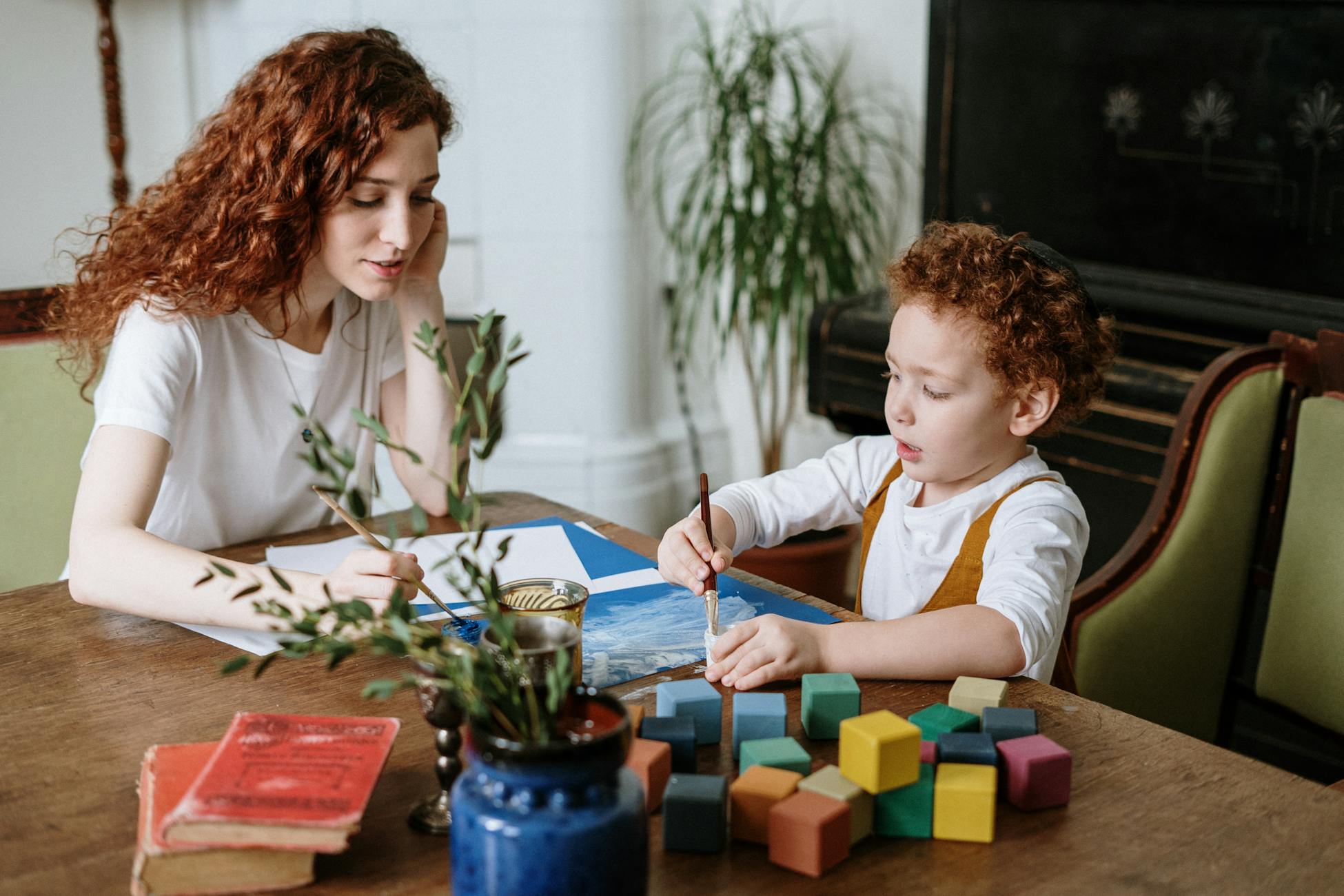
These adults show up at my community art classes sometimes. They sit down at the table with their hands in their laps and say things like “I should warn you, I can’t even draw a stick figure.” They laugh when they say it, but their bodies are rigid. They are genuinely afraid. They are afraid of being seen making something that will be evaluated and found lacking, and they have been carrying this fear since they were six or seven years old.
What I’ve learned is that you can’t talk them out of it. You can’t say “Everyone is creative!” and have it land, because a well-meaning authority figure talking them into a belief about their own ability is the same dynamic that talked them out of it in the first place. What you can do is set materials in front of them and ask a question. Not “What are you going to make?” but “What are you thinking about today?” The question has to come before the product. The interior has to matter before the exterior shows up.
Sometimes they cry. Not from sadness, exactly. From recognition. From realizing that nobody has asked them what they were thinking in a creative context since childhood, and that the absence of that question is the entire reason they’re sitting here with their hands in their laps.
The Generational Pass-Through
The hardest part of understanding this pattern is recognizing that the adults who evaluated our creative work were themselves evaluated. My mother, who made everything from scratch and kept an immaculate home, would sometimes watch Ellie paint and wince at the mess. She’d say things like “Oh, you’re getting it on the table” in a tone that communicated transgression. She wasn’t trying to shut anything down. She was responding from her own nervous system, which learned decades ago that making things had consequences and that the way to stay safe was to stay inside the lines.
Researchers who study repeating emotional patterns across generations have found that parents often replicate the exact dynamic they experienced, even when they’re trying to do the opposite. A parent who was told their art wasn’t good enough might praise their own child’s art effusively — but the effusive praise is still evaluation. The axis has shifted from negative to positive, but the orientation remains the same: the adult is the judge. The child is the defendant. The creative act is the evidence.
Breaking this requires something uncomfortable. It requires the adult to tolerate not knowing. When your child shows you something and you don’t immediately understand it, the discomfort of that not-knowing is the exact space where creative confidence lives. If you rush to fill it with praise, you’ve closed the space. If you sit in it and ask a genuine question, you’ve communicated that the unknown is welcome here.
Children who regularly watch adults struggle with difficulty and keep going — who see their parents attempt something without knowing how it will turn out — develop stronger creative resilience than children who are simply told they’re talented. Modeling creative uncertainty might matter more than anything we say about a child’s work.
What We Can Still Do
My daughter brought me another painting last week. This one was entirely black with a single yellow dot. Every instinct in me wanted to say something encouraging, something that would make her feel good about what she’d made. Instead I said, “Tell me about the yellow.”
She said, “That’s the only light on in the whole city because everyone else is sleeping and one person is reading.”
She is five. She painted a meditation on solitude and consciousness, and if I had said “Beautiful!” she would have said thank you and gone to wash her hands.
The adults who call themselves uncreative are not broken. They are interrupted. Somewhere inside them, there is a child who made something that meant something, and an adult who responded to the surface instead of the interior. The door closed so gently that nobody heard it shut.
The good news — and I say this as someone who spent years on the wrong side of those classroom art tables — is that the door isn’t locked. It was never locked. It was just never re-opened by someone willing to ask the right question. Not “Is it good?” Not “What is it?” But: “What does it mean to you?”
That question, asked with genuine curiosity, is the only tool required. The rest takes care of itself.