
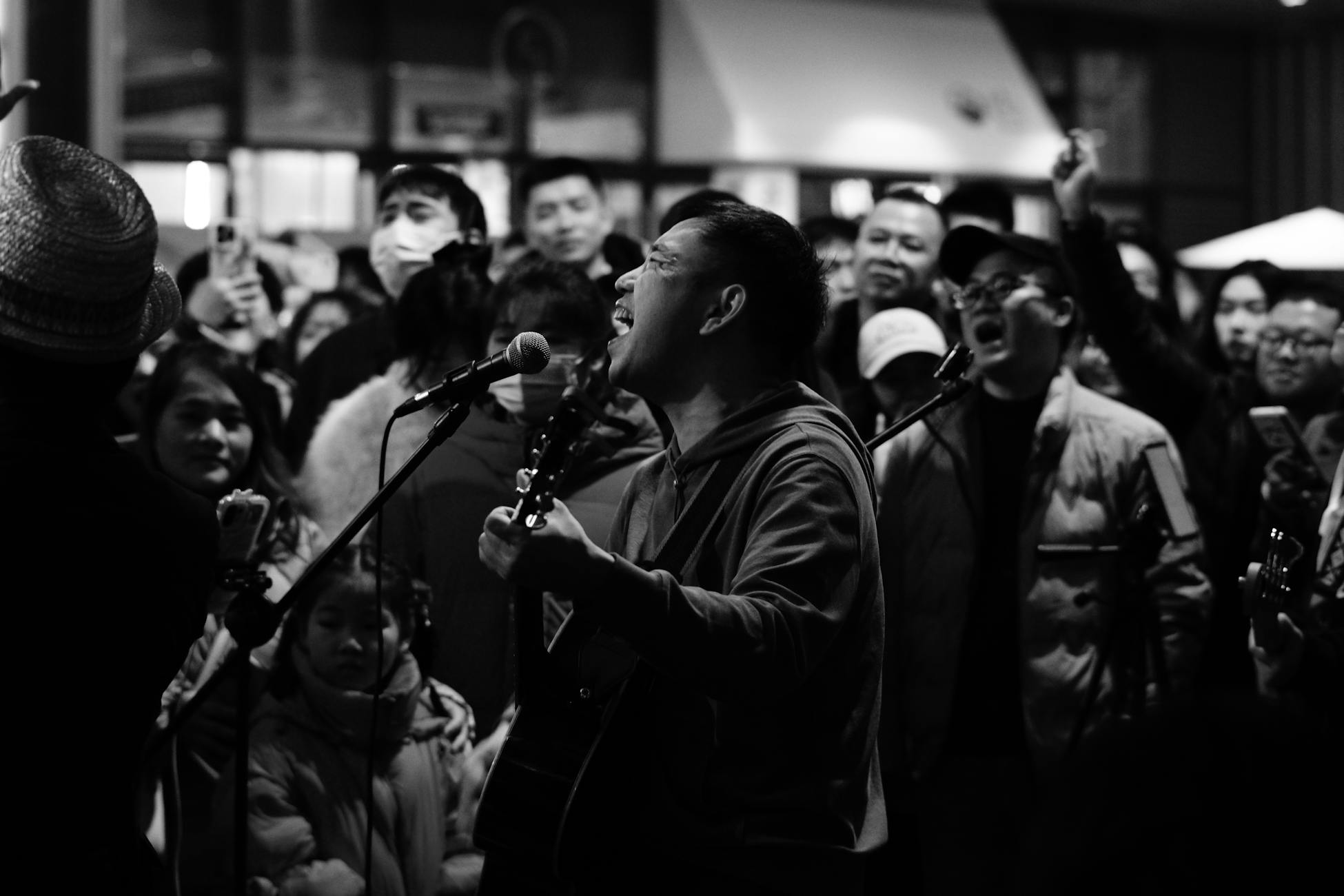
The loudest person at the family table is usually the loneliest one in the room. I’ve been watching this for years now, in my own family and in the families I write about, and the pattern keeps holding: the cousin doing impressions, the uncle with the bottomless reservoir of stories, the sibling who can read the room and crack the exact joke that breaks the tension before it spills — these are the people who walk out of holiday dinners feeling like nobody saw them. Not the quiet ones in the corner, who at least get asked if they’re okay. The performers. The ones whose absence would be felt only because the silence would be unbearable.
Most people assume the entertainer in a family is the most secure person there. They’re loud, they’re confident, they take up space, they generate warmth. The conventional read is that they love the attention, that they need the spotlight, that being funny is just their personality. That explanation is comforting because it’s clean. It also happens to be wrong.
What’s actually happening is older and sadder than that. Often in early childhood, this person figured out that being entertaining was the price of admission to their own family. Maybe a parent was depressed and the only thing that lifted the room was a kid willing to be ridiculous. Maybe there was a sibling whose needs were louder, more urgent, more legitimate, and the only way to be noticed was to be funny enough that attention came as a relief rather than an obligation. Maybe the household was just emotionally lean, and humor was the one currency that bought connection. Whatever the mechanism, the lesson landed: you are welcome here as a performer. You are not particularly welcome here as a person.
The role that swallowed the kid
Family systems theory has been mapping these roles for decades. Therapists and researchers describe predictable positions children take inside the family ecosystem — the hero, the scapegoat, the lost child, the mascot. The mascot, in particular, is the one assigned to defuse tension, to lighten the room, to absorb anxiety by converting it into laughter. It looks like a gift. It functions like a job.
And here’s the part that breaks my heart every time I think about it: the role works. That’s the cruelty of it. The kid who learns to be entertaining gets a real reward. People light up when they enter the room. Relatives ask them to perform. They become the family story — relatives repeatedly retell stories about what the child said or did years ago, reinforcing their role as the family entertainer — and the story gets retold for thirty years. The reward feels like love. It is shaped exactly like love. It just happens to be conditional in a way the child can’t yet name.
By the time they’re an adult, the conditioning is total. They walk into a family gathering and the script activates before they’ve taken off their coat. Family members immediately expect them to perform, asking for humor or entertainment upon arrival rather than genuinely checking in. And they do. Because the alternative — being vulnerable and asking for genuine emotional support — has never once worked. Not even as a child. Especially not as a child.

What the entertainment was really doing
I think a lot about why families do this. It’s not malice. Most families aren’t sitting around deciding to use a child as emotional infrastructure. What’s happening is more passive and more universal: the family discovered something this kid could do that made everyone feel better, and they started leaning on it. Then they kept leaning. And because the kid kept delivering, nobody had to develop the skill of asking what was underneath the performance. The performance was load-bearing. Removing it would have collapsed something nobody wanted to look at.
This is where emotional neglect becomes relevant, because what’s being described isn’t abuse in any conventional sense. It’s the trauma of what didn’t happen — the questions that were never asked, the inner life that was never inquired about, the sadness that was never witnessed because the kid had already converted it into a punchline before anyone could see it land. Neglect, in this frame, isn’t the absence of attention. It’s the presence of attention pointed at the wrong thing.
The entertainer gets enormous attention. They just never get attention pointed at who they actually are. They get attention pointed at what they produce. And after enough years of that, the distinction between self and output collapses. They stop being able to tell the difference. They start to suspect, quietly, that there might not be a self underneath the output at all — and that suspicion is so terrifying that they double down on the output to avoid testing it.
The holiday performance
Family gatherings are where this all comes to a head. There’s a particular kind of dread these events produce for people who carry this role, and it doesn’t look like dread from the outside. It looks like enthusiasm. They’re the ones who arrive early, who bring the elaborate dish, who organize the game, who pull the shy nephew out of his shell. The labor is invisible because it’s been rebranded as personality.
What I’ve watched, in my own extended family and in the families of friends, is that these are also the people who go home and crash for three days. They get sick the week after Christmas. They snap at their partners on the drive back. They cry in the shower for reasons they can’t articulate. The performance cost something. It always does. But because it doesn’t look like work — because everyone, including them, has been calling it fun for forty years — there’s no language for the exhaustion. They just feel inexplicably hollow and assume something is wrong with them.
Something is wrong, but not with them. What’s wrong is the contract. The contract was written when they were too small to negotiate, and the family has never agreed to renegotiate it because the current terms are working too well for everyone else.

The test nobody passes
I once watched a friend try to break the role at a family gathering. She’d been in therapy for years and decided, this Thanksgiving, she was going to be quiet. Not sullen, not punishing — just present without performing. She wanted to see what would happen if she stopped doing the job.
What happened was that nobody talked to her. Not in a hostile way. In an absent way. People walked past her chair to ask her brother about his work. Her aunt, who had known her for thirty-four years, asked her cousin to pass the rolls instead of asking her, even though she was closer. By dessert, when she remained quiet, family members expressed concern in ways that pressured her to return to her usual entertaining role.
She told me later it was the loneliest holiday of her life. And also the most clarifying. Because she finally understood what the family had actually been asking for all those years. They hadn’t been asking for her. They’d been asking for the show. When she stopped providing it, she discovered there was no relationship underneath — not because the family didn’t love her, but because love had been allowed to substitute itself with appreciation for the performance. The childhood role had quietly written itself into every adult interaction, and removing the role left a vacuum nobody knew how to fill.
This is the cruelest mechanism of the whole thing: the performer can’t test whether they’re loved without losing the only proof they have that they are.
What the entertainer actually wants
What the funny one wants, almost always, is to be boring with you. To sit at the table and say nothing clever and have someone keep talking to them anyway. To be asked a question that has no joke in it. To be allowed to be tired, or sad, or uncertain, without the family treating those states as a malfunction. They want what the quiet sibling has been getting all along — the assumption that their inner life is interesting enough to inquire about, even when they aren’t actively packaging it for consumption.
This connects to a broader pattern I keep finding in my work — the way having needs gets coded as inconvenience early enough that the child stops developing the muscle for it entirely. The entertainer’s version of low-maintenance is the joke. As long as they’re producing, they’re not asking. As long as they’re not asking, they’re welcome.
I’ve written before about the easy child who didn’t know how to ask for anything without first proving she deserved it, and the entertainer is a close cousin to that role. The mechanism is the same: earn your place, then earn it again, then earn it again. Stop earning and watch the place evaporate.
The repair that doesn’t come
I wish I could tell you the families notice. Sometimes they do. There’s real research on what it takes for adult children and their families to repair these old patterns, and the work is possible. It requires the family to be willing to look at what they’ve been doing, which requires them to tolerate the discomfort of admitting they’ve been getting something for free that cost someone they love quite a lot.
Most families won’t do that work. Not because they’re bad — because the current arrangement is comfortable, and asking the entertainer to stop entertaining means somebody else has to start carrying the emotional labor of the room. Nobody volunteers for that job. The whole point of designating one kid as the mascot was to avoid having to do it.
So the entertainer keeps performing. They get quieter on the drive home each year. They start declining gatherings, then making themselves attend out of guilt, then declining again. They wonder why they feel so unseen by people who claim to adore them. They search online late at night for answers about feeling lonely around family members who claim to love them and find essays like this one and recognize themselves in a way that’s both relieving and devastating.
The recognition isn’t the cure. I want to be honest about that. Naming the pattern doesn’t dissolve it. The role was built over decades and it will not unbuild itself in a season. But the naming does one useful thing: it tells the entertainer that the loneliness isn’t a personal defect. It’s the predictable outcome of a contract they didn’t sign and can’t unilaterally cancel. The exhaustion is real. The hollowness is information. The fact that the funniest person in the room is also the one nobody actually knows is not a paradox. It’s a receipt.
