
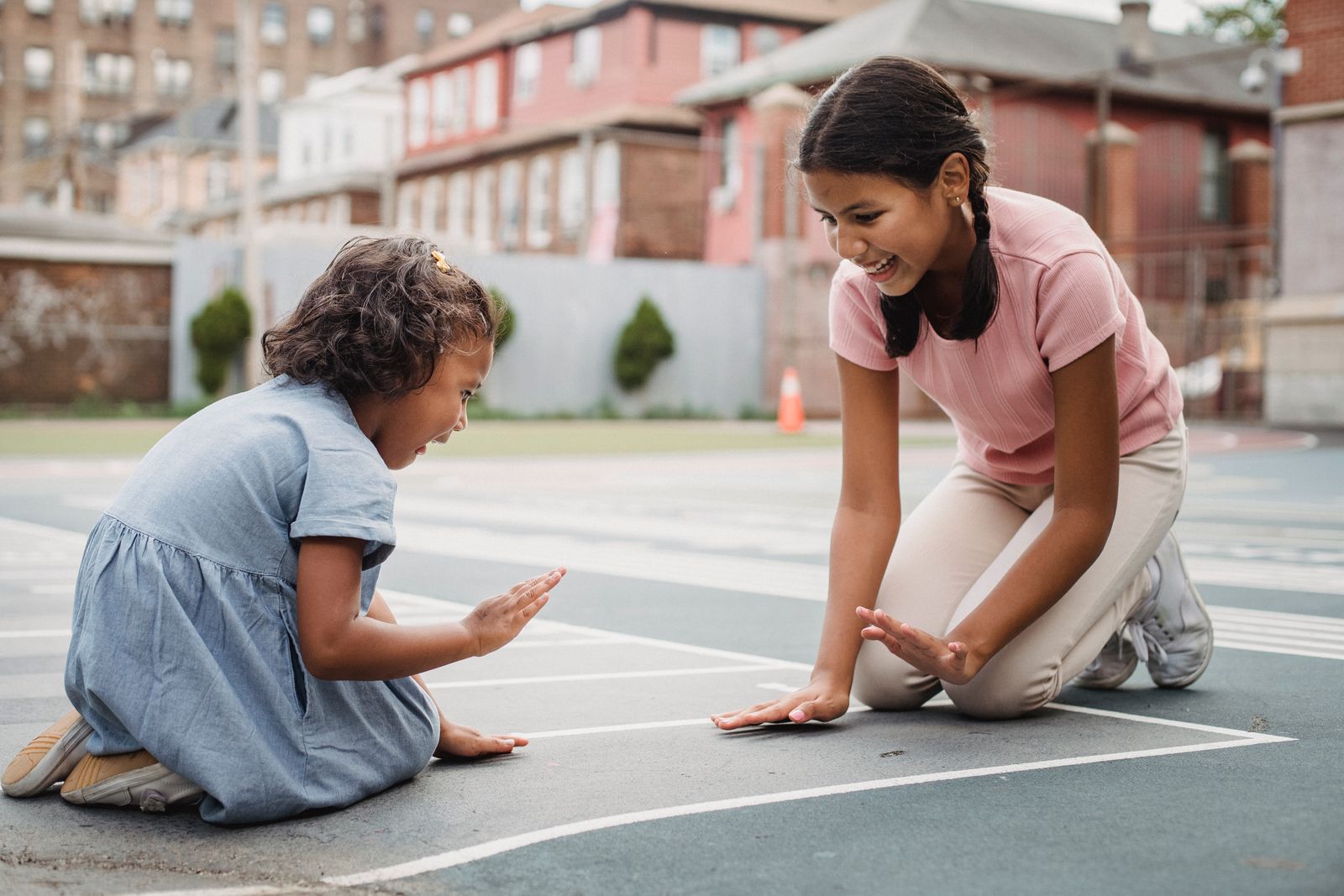

Should a child be left to dig into the things that fascinate them, or nudged toward the playground and the birthday-party circuit? Many parents feel they have to choose. A small University of Colorado study suggests the choice may be less stark than it looks, because the kind of free time it linked to better self-direction included both.
In a 2014 paper in Frontiers in Psychology, a team led by Jane Barker, with senior author Yuko Munakata, asked the parents of 70 six-year-olds to record how their children spent their time over a week. The children who spent more of that time in less-structured activities did better on a test of what psychologists call self-directed executive function: setting a goal and working out how to reach it without an adult telling them what to do next.
This is one study, not settled consensus. It found a link, and the authors are clear that it cannot show the free time caused the difference.
The Artful Parent
Family-life ideas and sharp reads, in your inbox.
What the study actually measured
The researchers sorted each child’s week into two kinds of time. Structured time was anything outside school that adults organized and supervised: sports practice, music or art lessons, tutoring, homework, chores and religious activities. Less-structured time covered free play alone, free play with others, visits to family and friends, parties, outings, museum and zoo trips, reading and screen time.
To measure self-direction, each child was asked to name as many animals as they could in a minute, then as many foods. Nobody told them how to go about it. Children who organized their answers into clusters (for example, farm animals, then sea creatures) and switched between them on their own scored higher. It is a narrow task, but it captures something parents recognize: a child deciding how to tackle a problem without being steered.
According to the University of Colorado’s summary, the more time children spent in less-structured activities, the better they did. Structured time pointed the other way, though in the paper that link was weaker. Munakata described the results as “suggestive and intriguing” and called the work “a first step.”
Free time included friends
The detail most easily missed is what counted as unstructured. It was not just a child alone with a stack of books. Playing with other children, visiting friends and going to parties all sat in the same category. In the paper’s exploratory analyses, social events with family were among the activities that predicted better self-direction, and play with others showed a weaker, borderline link.
So the study does not set “following your own interests” against “having friends.” What it separates is time a child shapes for themselves from time an adult runs for them. A child building a fort with a neighbor and a child reading about volcanoes alone were on the same side of that line.
Interests children choose for themselves
Other research suggests children’s own interests start early and are worth noticing. In a 2007 study in Developmental Psychology, Judy DeLoache and colleagues surveyed and interviewed the parents of 177 young children and found that roughly a third had an extremely intense interest, such as trains, vehicles or tea sets. These passions were much more common in boys.
A 2025 study in the Journal of Child Language, by Rajalakshmi Madhavan and Nivedita Mani at the University of Göttingen in Germany, followed a small group of toddlers. Parents’ ratings of how interested their child was in categories such as animals or vehicles at 18 months predicted how many words the child knew in those categories at 24 months. The sample was small, the measures relied on parent reports, and the authors note they cannot tell whether interest drives learning or early knowledge sparks interest. Still, it fits a familiar picture: children tend to learn most about what they care about.
Friends still matter, and one good one counts
None of this means friendships are optional. In a 1993 study in Developmental Psychology, Jeffrey Parker and Steven Asher surveyed 881 American children in grades 3 to 5. Having a best friend, the quality of that friendship and how well a child was accepted by classmates each predicted loneliness independently. Many children who were not popular still had a best friend and were satisfied with that friendship.
A Dutch study points the same way. Ellen Peters and colleagues measured the stress hormone cortisol in the saliva of nearly 100 fourth graders across two school days, reporting in Child Development in 2011. Children who were left out by classmates showed higher cortisol at school, and the effect was stronger for those with few friends or low-quality friendships. As co-author Marianne Riksen-Walraven put it, friends “cannot completely eliminate the stress of exclusion at school,” but “they do reduce it.”
I get the feeling that parents push their kids to have friends from school.
The research here gives some context for that. Both of these studies counted friendships within a child’s class, so they say little about where friends ideally come from. What they do suggest is that a close friend matters a great deal, and that a child does not need to be the most popular in the room to benefit.
When a child prefers time alone
Some children are happy on their own for long stretches. That is not automatically a warning sign. Researchers distinguish between shy children, who would like company but feel anxious, and children who simply enjoy their own pursuits. In Western studies, that second pattern, often called unsociability, is generally described as a relatively benign form of withdrawal in young children, a summary that draws on work by Robert Coplan and colleagues.
A larger study of older children adds a useful qualifier. Writing in the Journal of Youth and Adolescence in 2023, M. E. Borg and Teena Willoughby followed 1,071 young people aged 10 to 16. Time alone was linked to worse adjustment only when it came with a lack of sociability. Young people who enjoyed solitude but also liked being with others did not show the same problems.
That distinction may be the most practical one for parents. A child absorbed in a project for an afternoon is in a different position from a child who seems to have stopped wanting company at all.
What this does not prove
All of these studies describe links, not causes. The Colorado sample was small and drawn from families who had volunteered for research, and the authors raise the possibility that the effect runs the other way: children who are already good at directing themselves may simply be given, or seek out, more free time. Lessons and team sports are not shown to be harmful. And a verbal fluency game is a long way from a child’s whole capacity to plan and persist.
Taken together, the evidence does not ask parents to rank independent interests above friendships, or the reverse. It points toward giving children time that belongs to them, some of it spent alone with whatever they are curious about and some of it with a friend they actually like.
What fills that time is often best left to the child.