
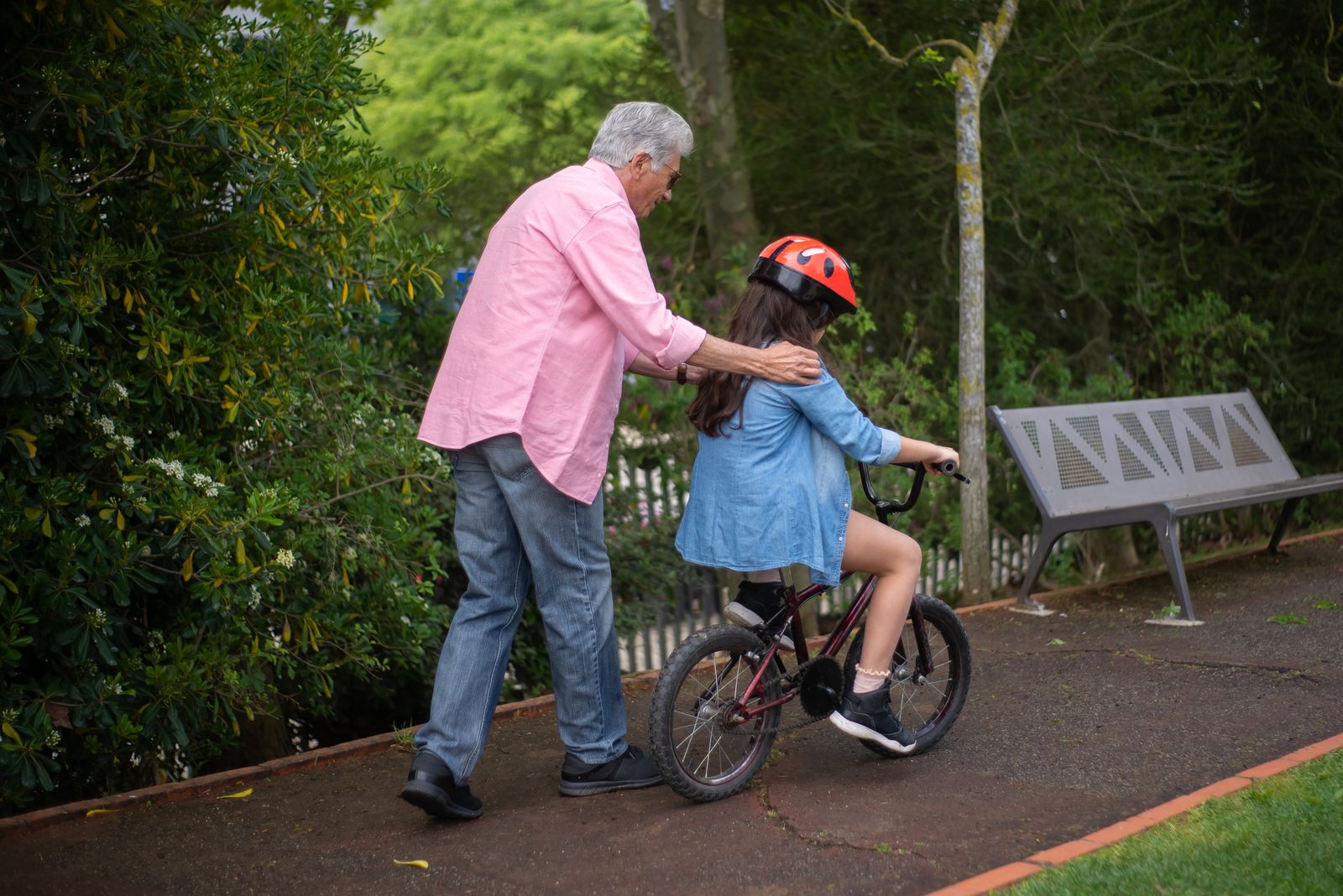

Older adults in Berlin who looked after their grandchildren now and then lived noticeably longer than those who gave no care at all. In a study that followed more than 500 people aged 70 to 103, grandparents who provided occasional childcare had a 37% lower risk of dying over the study period than grandparents who provided none and than people without grandchildren. The gap held even after the researchers took into account how physically healthy each person was to begin with.
The research, by Sonja Hilbrand, David Coall, Denis Gerstorf and Ralph Hertwig, was published in Evolution and Human Behavior in 2017. This is one study, not settled consensus, and it shows a link rather than proof that babysitting itself adds years. Read alongside other work on grandparents’ health, though, it points to something many families already sense: a fit, healthy grandparent and a close, hands-on relationship with grandchildren tend to go together, and each may help sustain the other.
What the Berlin study followed
The data came from the Berlin Aging Study, which began interviewing older residents of the former West Berlin in 1990 and kept track of who was still alive into 2009. The researchers compared people according to whether, and how, they helped others. According to the Max Planck Society’s summary of the work, about half of the grandparents who sometimes looked after grandchildren were still alive roughly 10 years after their first interview. Among people who did not help others, about half had died within five years.
The Artful Parent
Family-life ideas and sharp reads, in your inbox.
The pattern was not limited to grandparents. Older adults who had no grandchildren but helped their grown children, for example with housework, showed a similar survival advantage. Childless older adults who gave emotional support to people outside the family also lived longer on average than those who did not: half were still alive about seven years later, compared with about four years for people who gave no such support.
One exclusion matters for families. The study deliberately left out grandparents who were the main or custodial carers of their grandchildren. The finding is about the grandparent who takes the children for an afternoon, collects them from school or minds them during the holidays. It says nothing about the grandparent raising a grandchild full time.
Why “allowing for their health” is the key phrase
The obvious objection to a study like this is that healthy people are simply more able to help. A grandparent with bad knees, heart trouble or little energy is less likely to be chasing a four-year-old around the park, so any comparison of carers with non-carers risks mistaking good health for an effect of caring.
That problem is real. In a large US analysis of the Health and Retirement Study, economists Peter Eibich and Xianhua Zai found that grandparents who provided childcare looked healthier on every measure in straightforward comparisons, and they attributed much of that to healthier people being the ones who take on care. A 2026 study of 5,529 American grandparent couples, by Athena Chan, Abigail Stephan and Rodlescia Sneed, likewise found that health predicted later caregiving more than caregiving predicted later health.
The Berlin team tried to deal with this by adjusting for physical health, age, socioeconomic status and details about the children and grandchildren. The lower risk remained after those adjustments. That makes the result harder to dismiss, but it cannot rule out everything. Outlook, personality and family closeness are hard to measure, and any of them could make someone both more likely to help and more likely to live longer. The study also did not test why helping was linked to longer life.
Minding grandchildren keeps grandparents moving
One plausible route is simply that looking after children gets people on their feet. A Belgian study gave 92 grandparents aged 50 and over motion sensors to wear for a week. On days they looked after grandchildren, they spent about 4 percentage points more of their waking time in light activity, such as easy walking and playing, and about 3.7 points less time sitting, Vanhove and colleagues reported in 2024 in the European Review of Aging and Physical Activity.
The increase was in gentle movement. More vigorous exercise, the kind that noticeably raises heart rate and breathing, did not change across the whole day, and it dipped slightly during the hours the children were actually there. The authors argue that the shift toward more light movement and less sitting may still benefit grandparents’ health. A morning at the playground delivers it without anyone calling it exercise.
There is such a thing as too much
Ralph Hertwig, one of the Berlin authors, has cautioned that helping should not be mistaken for a cure-all. In the Max Planck summary, he said moderate involvement appears to be beneficial, while more intense involvement can cause stress that harms physical and mental health.
A small Australian study points the same way. Researchers from the Women’s Healthy Aging Project in Melbourne tested 186 women aged 57 to 68, 120 of them grandmothers. Those who cared for grandchildren one day a week did best on two of three thinking tests, while those caring five or more days a week scored significantly worse on a test of working memory and processing speed, according to the study published in Menopause in 2014. It was an early study, and the researchers had not expected the five-day result.
The US analysis by Eibich and Zai sits less comfortably with the Berlin result. Using a statistical method designed to separate cause from coincidence, it estimated that providing 100 or more hours of grandchild care over two years worsened grandparents’ physical limitations and self-rated health, with larger effects at higher hours and mostly among grandmothers. A hundred hours over two years is not a heavy load. The two studies covered different countries, decades, age groups and methods, and the authors of the US paper caution that the size of their estimates should be read with care. The honest summary is that researchers have not settled where helping stops being good for grandparents, though the evidence for heavy, sustained care is the least encouraging.
What healthy grandparents pass on
Health runs in the other direction too. A 2017 systematic review led by Stephanie Chambers at the University of Glasgow pulled together 56 studies from 18 countries on grandparents who were not children’s main carers. Overall, grandparents had an adverse effect on grandchildren’s risk factors for later illness, particularly weight and diet, through treats, overfeeding and low physical activity, as well as smoking around children and ignoring parents’ rules on second-hand smoke. Chambers stressed that these risks were unintentional. Most of the studies reflected parents’ views, and the review did not weigh the emotional benefits children get from time with grandparents.
The more hopeful side shows up in Australian research. In a 2024 survey of 1,190 grandparents who regularly cared for a grandchild aged 3 to 14, Michelle Jongenelis and colleagues found that grandparents who supported activity had grandchildren who did more structured activity, more unstructured activity and more outdoor play. Grandparents’ own activity and screen habits were also linked to their grandchildren’s. Because it was a one-time survey, it shows an association, not proof that the grandparents’ example shaped the children’s habits.
A relationship that works both ways
Put together, the research describes a loop. Grandparents who are fit and well are more able to take the grandchildren. Time with the children keeps grandparents moving. And grandparents who stay active, and who keep treats and smoke away from children, model habits the children may carry with them. The Berlin study adds the most striking piece: among people in their 70s and older, occasional care was linked to a meaningfully longer life even after their health was taken into account.
What none of these studies can say is how much help is right for any one family, or exactly why the link with longer life exists. The evidence so far leans toward regular, manageable involvement over heavy, daily care. For many families, a more useful question than whether grandparents help may be how much help a grandparent can keep up comfortably, year after year.