
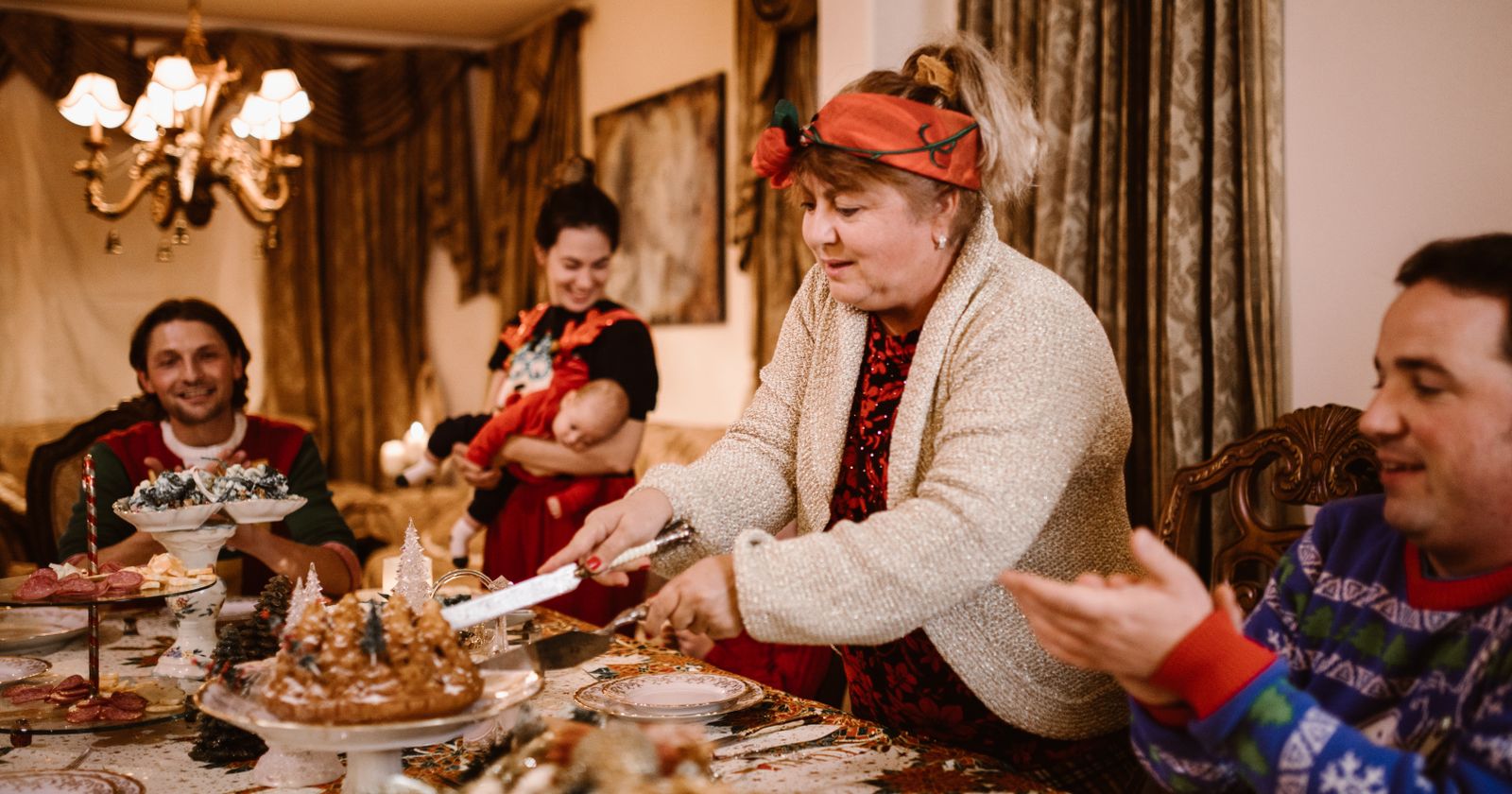
A few weeks before Christmas, your daughter texts to ask whether December 23rd would work. You agree on a time, and that afternoon she arrives with a duffel bag and a store-bought pie. Nobody had to ask her to come. She wanted to.
Food and traditions matter. The stuffing recipe, the ornament with the missing glitter, the same movie every Christmas Eve. But a table can hold the best stuffing in the state and still feel like a test.
What can make a home easy to come back to is quieter than any of that. It’s the feeling that nobody is counting: not the nights, not the gifts, not the years they couldn’t make it.
The Artful Parent
Family-life ideas and sharp reads, in your inbox.
Not every adult child can come home, and distance, money, work, health, and their own families all play a part. Not coming isn’t a verdict on anyone. But for families who’d like the holidays to feel lighter, here’s what not keeping score can look like.
1. Nobody grades how long they stay
Your son arrives on the 24th and leaves on the 26th. Before his coat is off, you say, “Only two nights?”
It usually comes from wanting more time together. But once the length of a visit becomes a number to comment on, the visit itself can start to feel like it falls short.
Two nights is two nights with him. “I’m so glad you’re here” is the whole sentence. If you’d love a longer stay next year, you can mention that in March, once, without the holiday riding on it.
2. The year they missed doesn’t come up
Last Christmas she was in Denver with her partner’s family, or working a hospital shift, or just too tired to travel. This year she’s here.
It can be tempting to mark the return: “Nice of you to join us this time.” Even said with a smile, it brings last year’s empty chair to this year’s table.
Let the past year stay where it is. If you missed her, “We missed you last year, and it’s so good to have you” says it without the invoice attached.
3. Nobody keeps a tally of who did the dishes
One sibling cooked for two days. Another arrived just in time for dinner. A third spent the afternoon on the couch with the kids.
Fairness matters, and it’s reasonable to want help. The trouble starts when the work turns into a quiet ledger, and comments like “Some of us have been up since six” start floating over the gravy.
It helps to plan before resentment has a chance to build. Before everyone arrives, agree on who’s cooking, clearing up, or bringing a dish, with room for people’s abilities and circumstances.
During the visit, ask directly, and ask everyone: “Could you two take the dishes tonight? I’ll do breakfast tomorrow.” A clear request is easier to say yes to than a grievance.
4. Gifts aren’t compared
One child gives you a weekend away. Another gives you a framed photo and a card. You say “Wow!” to the first one a little louder.
Budgets vary a lot between siblings, and between years. A gift that cost less may have taken more thought, or may be all someone could manage that December.
Thank each person for their gift on its own terms. “I’m going to put this right by my bed” lands the same whether it came from a department store or a drugstore.
5. The table isn’t a progress report
Over dinner, the news gets passed around with the potatoes. Your eldest got a promotion. Your youngest’s wife is expecting. Your middle child is still renting, still single, and still “figuring it out.”
Celebrating good news is part of family. But when one sibling’s milestones become the measuring stick, the others can start dreading the toast.
Ask each person about something that matters to them, not only the big announcements: the trip they took, the dog, the class they’re teaching. Everyone’s year counts, even the quiet ones.
6. Last year’s argument stays in last year
Two Thanksgivings ago, there was a fight about politics, or money, or who said what at the wedding. Maybe it was resolved. Maybe it just faded.
If it was never really talked through, it may still need a conversation, just not over pie with everyone watching. And if it was settled, bringing it back up (“Let’s keep things civil this year, shall we?”) can reopen it.
Let people arrive as who they are now. If something still needs saying, find a quiet moment for two people, not an audience of twelve.
7. New partners aren’t measured against old ones
Your son brings someone new home for the first time. Halfway through dinner, an aunt says, “Remember when Rachel brought that amazing trifle?”
It might just be nostalgia. To the new person at the table, and to your son, it can feel like a scoreboard they didn’t know they’d been put on.
Ask the new partner about themselves instead: where they grew up, what their family does for the holidays. And if someone mentions an ex, a gentle change of subject is a kindness to everyone.
Where to start
Most families keep a little score without meaning to. It comes from caring, from fairness, and sometimes from feeling left out ourselves.
This year, pick one tally to drop. Skip the comment about the short stay, or thank every gift the same way. And if a score slips out anyway, own it: “I’m sorry I said ‘only two nights.’ I know you’ve made time to come, and I’m glad you’re here.” Then pass the potatoes.