
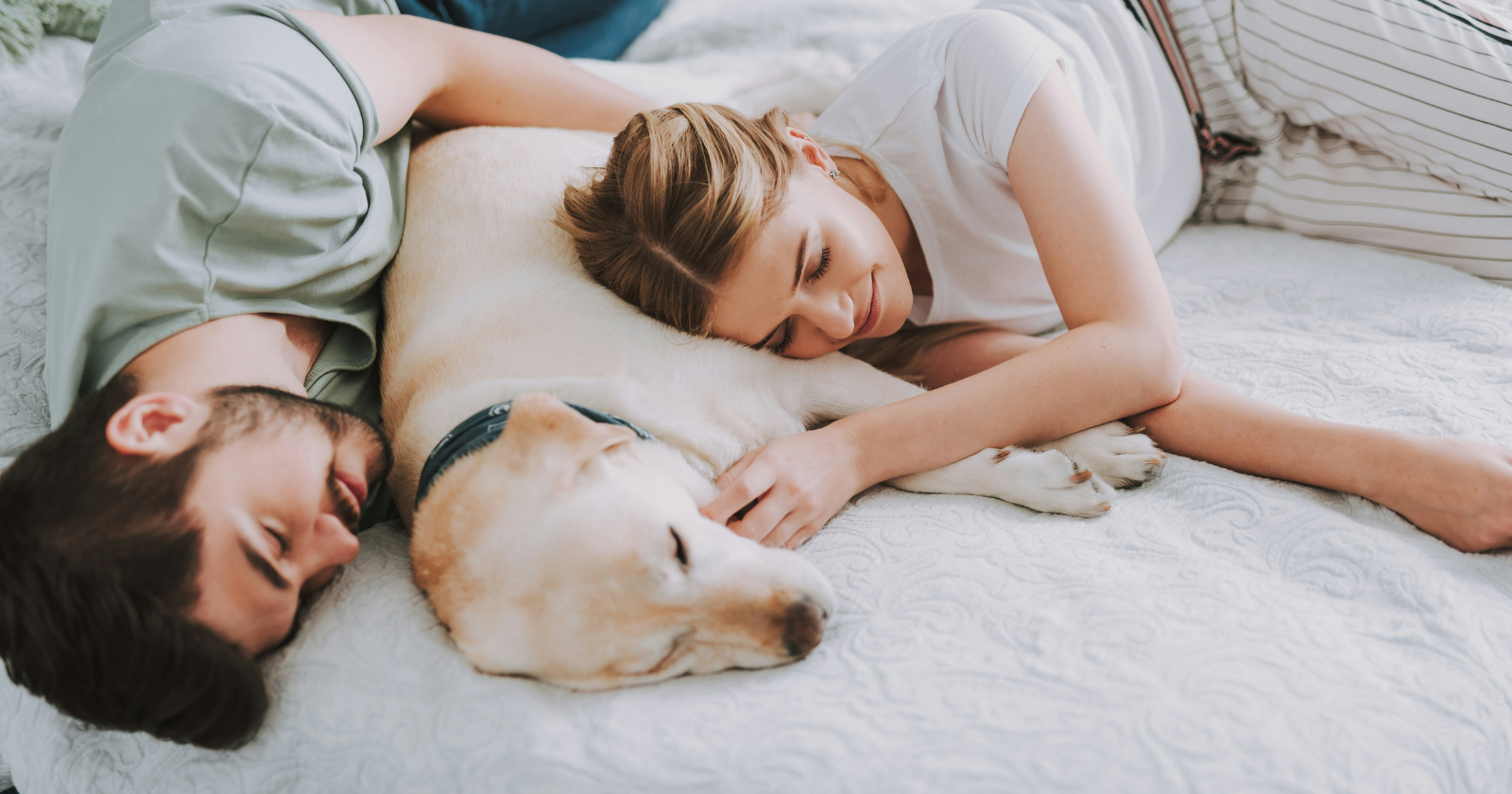
I don’t have pets yet, but I think about it often. Walking through Itaim Bibi, I see people with their dogs everywhere.
Some keep a careful distance, holding the leash tight. Others let their pets walk freely beside them, completely in sync. And then there are those who carry their tiny dogs in bags like they’re fragile treasures.
It got me curious about what our relationships with pets say about how we connect with people. Turns out, the way you share your bed with a pet reveals quite a bit about your attachment style. Here’s what I’ve noticed.
1. You find comfort in physical closeness
People who sleep with their pets often crave proximity. It’s not just about the warmth or the soft fur. It’s about feeling someone else’s presence nearby.
This usually points to a secure attachment style. You’re comfortable with closeness and don’t feel overwhelmed by it. Having your pet curled up next to you feels natural, not suffocating.
I see this with my friend Renata. Her pup sleeps right between her and her partner every night. She says it grounds her. The gentle breathing, the weight on the blanket. It’s her way of feeling connected without needing constant interaction.
If you’re someone who seeks this kind of closeness, you likely do the same in your human relationships. You enjoy being near the people you care about and feel most at ease when connection is physically tangible.
2. You use your pet as a buffer in relationships
Some people let their pet sleep in the middle of the bed, literally between them and their partner. At first glance, it seems cute. But sometimes it’s a way to create distance without having to say it out loud.
This can signal an avoidant attachment style. You want connection, but too much intimacy makes you uncomfortable. The pet becomes a soft barrier. A reason to maintain space without conflict.
I’ve watched couples navigate this. One partner wants to cuddle, the other places the dog between them. It’s a gentle rejection that doesn’t require words. The pet gets the affection, and everyone avoids the conversation about needing space.
If this sounds familiar, it might be worth asking yourself whether you’re using your pet to manage discomfort around closeness. There’s nothing wrong with needing space, but recognizing the pattern helps you communicate it better.
3. You struggle with being alone
For some people, sleeping with a pet is the only way they can fall asleep. The thought of an empty bed feels unbearable. The silence is too loud, the space too vast.
This often relates to an anxious attachment style. You need reassurance, even when you’re unconscious. The pet provides that steady presence that soothes the fear of being left alone.
Pets can serve as attachment figures similar to how children attach to caregivers. They offer unconditional presence without the unpredictability of human relationships.
If you find yourself unable to sleep without your pet nearby, consider what happens when they’re not there. Do you feel anxious? Restless? That might be your attachment system signaling a deeper need for security.
4. You prioritize your pet’s needs over your own comfort
There are people who let their pets take up most of the bed. They sleep curled at the edge, barely holding onto the mattress, while their dog stretches out in the middle. They wake up sore but wouldn’t dream of moving the animal.
This can indicate a pattern of putting others’ needs first, often seen in anxious or insecure attachment styles. You’re so focused on keeping your pet happy and comfortable that you sacrifice your own rest.
- Psychology says people who write anonymously online aren’t hiding — they’re finally saying the thing that their real-world identity was built to suppress - The Blog Herald
- Why writing about real estate rewards the writers who take it seriously - The Blog Herald
- The loneliest writers on the internet aren’t the ones with no readers — they’re the ones who write beautifully and honestly every week and whose own families have never once clicked the link - The Blog Herald
I know someone who does this with her two cats. She jokes about it, but she genuinely wakes up multiple times a night because she’s afraid of disturbing them. She’d rather lose sleep than risk making them uncomfortable.
If this resonates with you, it’s worth reflecting on how often you do this in your relationships with people. Do you regularly prioritize others’ comfort over your own? That pattern might be showing up in your bed first.
5. You treat your pet like a child
Some pet owners have elaborate bedtime routines with their animals. They tuck them in, arrange their blankets, make sure they have their favorite toy. The pet gets the full treatment, like a small child being put to bed.
This can reflect a caregiving attachment style, where you find purpose and security in nurturing. You feel most connected when you’re taking care of someone, and your pet becomes the focus of that care.
There’s beauty in this. Caregiving is a fundamental human need. But if you find yourself overly focused on your pet’s bedtime routine while neglecting your own needs, it might signal an imbalance. You’re pouring energy into caring for others because it feels safer than being cared for yourself.
6. You keep your pet close but maintain boundaries
Not everyone who sleeps with their pet lets them roam freely. Some people have specific rules. The dog can sleep at the foot of the bed, but not on the pillows. The cat can curl up beside you, but not on your chest.
This often indicates a secure attachment style with healthy boundaries. You enjoy closeness but also know where your limits are. You can be affectionate without losing yourself in the relationship.
My husband grew up with dogs and he’s exactly like this. He loves having them nearby but believes in structure. When we eventually get a pet, I know he’ll be the one setting the boundaries while I’ll probably cave and let the cat sleep on my face.
People with this approach tend to have balanced relationships overall. They’re comfortable with intimacy but also comfortable saying no when something doesn’t work for them.
7. You seek emotional regulation through your pet
After a stressful day, some people head straight to their pet for comfort. The act of petting them, feeling their warmth, listening to their breathing helps regulate emotions. They need that presence to calm down before sleep.
This points to using your pet as a co-regulator, which isn’t inherently bad. But it can indicate difficulty with self-soothing, a common trait in anxious attachment. You’ve learned to rely on external sources for emotional balance rather than developing internal tools.
Research by psychologist Dr. Sandra Barker has shown that interacting with pets can lower cortisol levels and increase oxytocin, the bonding hormone. This biological response explains why pets feel so soothing. But becoming dependent on that external regulation can make it harder to manage emotions when your pet isn’t around.
8. You feel guilty when your pet doesn’t sleep with you
If your pet chooses to sleep elsewhere, do you feel rejected? Do you try to coax them back to bed, offering treats or extra affection? Do you worry they don’t love you anymore?
This usually signals anxious attachment. You’re reading too much into your pet’s independent choice and making it about your worthiness. You need constant reassurance of the bond, even from an animal who might just prefer a cooler spot on the floor.
I see this play out with people who get genuinely upset when their cat decides to sleep in another room. They take it personally. They question the relationship. It’s the same pattern that shows up in human relationships when they need constant validation to feel secure.
Final thoughts
Looking at how we sleep with our pets is like holding up a mirror to our attachment patterns. The behaviors show up whether we’re aware of them or not.
I don’t think there’s a right or wrong way to share your bed with a pet. But understanding what drives those choices helps you understand yourself better. Maybe you’re seeking comfort, maybe you’re creating distance, maybe you’re trying to fill a gap that needs addressing in other ways.
The goal isn’t to change how you sleep with your pet. It’s to notice the pattern and ask whether it’s serving you or just replaying old habits. That awareness alone can shift how you show up in all your relationships, not just the ones with fur.